Aiza: A Sovereign Sovereign
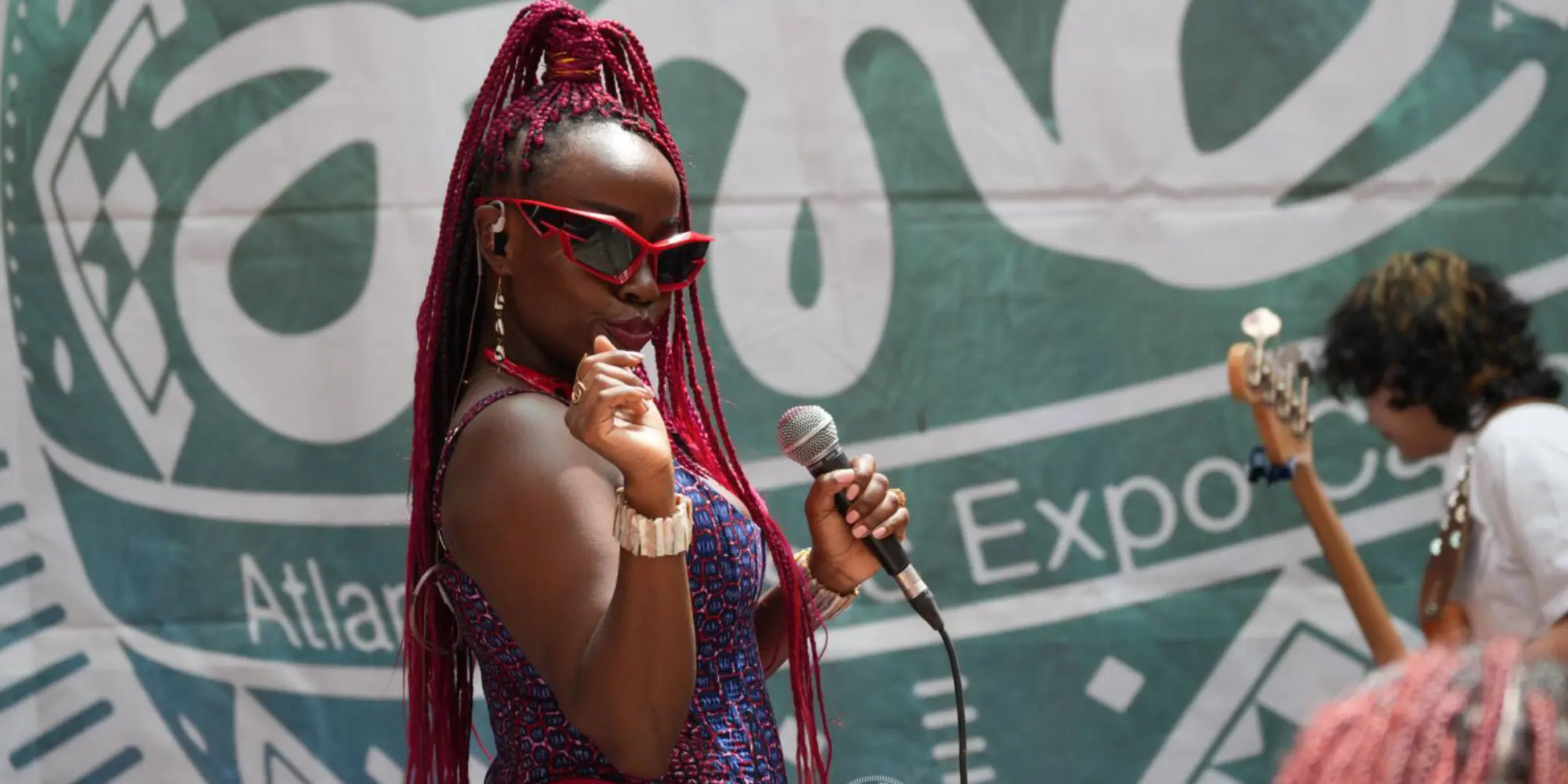
Banner photo by Richard Photography
The word “sovereign” is both a noun and adjective. As a noun, it can mean a king or queen. And as an adjective it could be used to describe a person who is independent and autonomous. And, for sure, we can think of no better way to describe Aiza Ntibarikure, whose stage name is just Aiza [@aizabby], other than that – an independent queen. And it's also right there in the title of her debut 2024 album, Sovereignty.
Born and raised in Montreal of two Burundian parents, and although this is the first time we've had a long chat, we've been following Aiza’s career since the mid-2010's when she was a regular in the Kalmunity collective and also singing backup with a number of local Montreal acts. But she was also simultaneously pursuing a career as an actress which eventually led her and her now fiancé, Christopher Cargnello [@c.the.reason], to move to Toronto. That year she also released her first EP, Adieu, and garnered the “Francophone Artist of the Year” award. She has been featured in motion pictures, has been a series regular on several television series, including Netflix's superhero series Jupitor's Legacy. She also stars and produces a CBC talk show Real Blackity Talk, and her voice can be heard on the children's cartoon series Jeremy and Jazzy, where she voices Jazzy.
Her showcase at this year's Atlantic Music Expo [@atlanticmusicexpo] in Cape Verde, was the first time we got to see her solo act. Aiza is not shy to refer to herself as a “star,” and she exudes all the qualities of one with a confidence and drive evident in all her accomplishments to date. And she impressed both us and the audience with her performance. The next day, we met with Aiza and Christopher in a park in Praia to get to know her better.
The following has been edited for clarity and length.
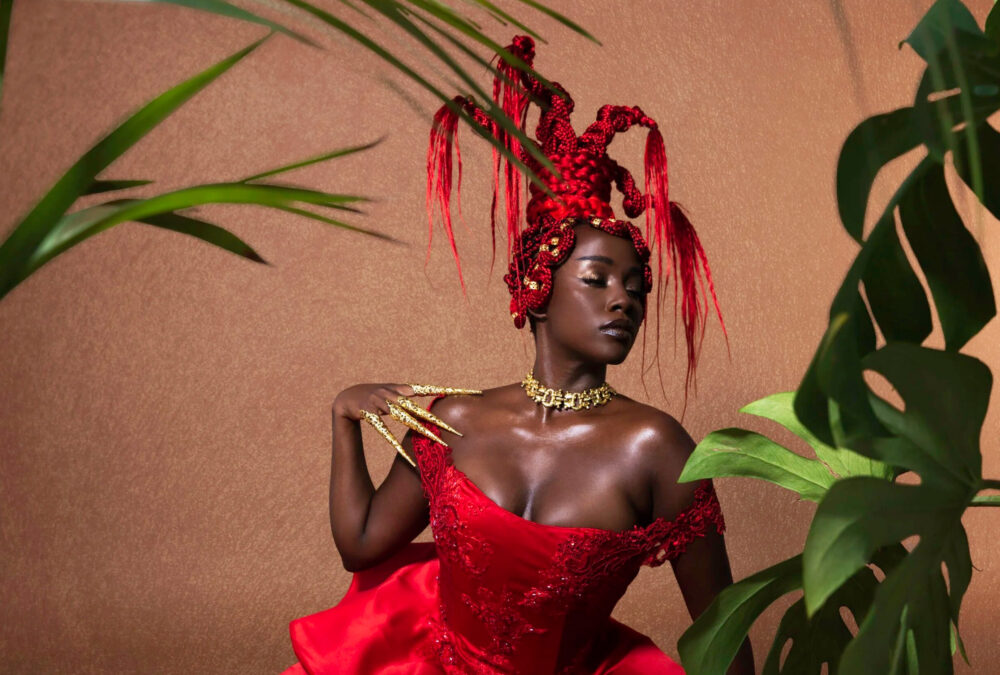
So, my first encounter with you was back in the Kalmunity [@Kalmunity] gigs in Montreal. First off, how would you define it for the uninitiated?
Kalmunity was a collective of MC's, musicians, poets, artists, getting together every single week to improvise music in front of a live audience. And it's very raw, playful, seasoned and exciting. It's a beautiful, beautiful gift of a community.
I'd say, especially over time, we were so blessed to live that out for years. It's almost like I didn't know there would be an end to it, you know? Everyone moves on. There are different projects, the venues closing, venues shifting, the new generation coming in, the pandemic. All of those elements made it so that it shifted. And I look back and I'm like, “Wow, those were some of the creative golden years in Montreal.” When we were there, we knew there was something magical happening, which was cool. There was such a strong sense of pride in what we were doing. And of course, it came just like with any community, a sense of frustration sometimes because it's like family, but we cared. We really cared about each other, about the music, about the people who came to see the show, and about imparting the sense of togetherness through improvisation. Kalmunity was definitely like a great springboard for me as an artist.
And how did you get involved with them?
I was always involved in the performing arts in some way. I studied theater in and after high school. I did musicals. I loved theater, music. I love entertaining. So once I graduated from the theater program at Dawson College, I just started acting and performing in different bands at the same time. I was part of a pop band for a little while. We released an album, and then not long after, we disbanded. And around then, I felt I was trying to find my musical community. And one night a friend was like, “You need to come to Kalmunity. Come and check out the show.” And I remember going. I think I saw Fredy [@fredyvmusic] and Wayne [@waynetennantmusic] on stage. And just the vibe and everything, I was like, “They don't know it, but they're my soul family.” And so I just started showing up every week. And within, honestly, two weeks, I was getting booked. So I was definitely involved in music before that, but this was like what cemented this practice – this weekly practice of putting myself out there – singing every week, getting my chops up as a vocalist, as a musician.
And later I remember you worked with Fredy V, didn’t you?
Fredy is a great friend of ours. I was just with him in Lisbon in August. He lives in Portugal now. You know, every person that I've met, maybe not every person – there are so many characters – but the community itself is so special and tight knit. And I met some of my soulmates during Kalmunity, and Fredy is one of them. And my fiancé Christopher and I, we co-wrote the lead single off of Fredy's new album, No Tribe, No I. He had called us and was like “Y'all are the Afropop connoisseurs. Can you help me just write something that's gonna feel like us.” So we're definitely pretty close.
[Interestingly, the direction the album took began when Fredy was at AME in 2022. He's stated that visit awakened him to the roots of American and Caribbean music he grew up with.]
So let's go further back. Your parents were from Burundi.
Yes, both my parents. Out of 10 kids, my father was the only one who managed to leave. Everyone else is in Burundi. On my mother's side, I have aunties from everywhere. They've moved to the States. They've moved to Europe. They've moved to other countries in Africa. But yeah, both my parents are from Burundi.
Growing up, did you get to go back at all?
I went only once so far. I had landed my first recurring role on a TV series, 19-2, a Canadian show. I was playing a cop named Officer Roxanne Dion. Go check it out if you want to see it. So around that time, I was making a lot more money than I had ever seen. And one of my dreams was to bring my father back to Burundi, because he hadn't been in so long. And when he left, it was quite traumatic. It was just a lot of political strife, a lot of assassinations. And so he fled the country. I managed to convince him, got us a ticket to go, and when we arrived, we connected with so much family. It was so interesting to go back to the village where my father was born, which is just outside of Bujumbura. You have to drive a little bit to get there up the mountains.
It was so special. Every time we'd drive past a house, there'd be children coming out, so curious, and they would follow the car up. And by the time we got to where we were getting off, there were hundreds of children chasing the car. We arrived in front and the women of the village were banging on traditional drums and singing. Everybody knew we were coming. Honestly, my father was treated like royalty. It was it was amazing to witness. They were just so excited to see him again after 30 years, and to meet me. And it was fun to see my father's little sister who was in the front leading the women with the traditional drumming – which is also not so common because typically for Burundians, drumming is very patriarchal. It's the men who play the drums, and the women dance, but they don't touch the drums.
And my auntie looked just like me. She was up in the front and singing. And I was like, “I do that, but in Montreal, in Toronto!” So this whole time there was my aunt doing the same thing, far, far away. There's just this thread of connection that hit me in that moment and it meant so much to me and it stays with me till now. To remember that I'm a part of something. These talents, these passions don't come from out of the blue. They've been passed down, and they connect me to my people, even the ones I haven't met. So that was very special. And it's incredible. And some of it feels almost like a download. You don't have to go through such a rational process. It's a very emotional, intuitive thing. And you're like, “Wait, I know this. This is familiar to me.” This is also the art of oration, like getting together, talking to each other for hours around a fire, around some music. That's very much part of the culture. And my dad does that so much. I do that a lot. I love that. And going there was like, of course, seeing that's what we do.
Was there something about that trip that changed your musical direction?
It cemented my desire, or my love, for sounds from across the Diaspora. And it kind of grounded my identity as a first generation woman in Canada. It just made me go, “Wait, I love all those rhythms. I'm just going to go for it. That's my lane. That's where I feel good.”
So at this time you're still living in Montreal.
Yeah. In 2018, I released my first EP, Adieu, in French, and then moved Toronto.
Did you feel that appropriately-named album was a turning point, but also indicative of this desire to utilize this history that you didn't know you had?
Yeah, I'd say part of my journey of anchoring myself in my multiple identities and kind of accepting every facet. But part of it was also accepting that I'm from Quebec. Je suis Quebecoise. Even though I'm born there, there's still this sense of like, unless you're a white French-Canadian person, you're not. You can't possibly be from Quebec. Right? And I'm like, “No, I was born there.” It's part of my culture and my culture is very rich. It comes from many different places. But in a way, connecting to speaking French, and singing in French, was another important piece that I had to embrace. And so Adieu, in a way, was my foray into the French language. It's my mother tongue. It's the first language I learned to speak.
But for a long time, I was kind of resisting that because I didn't feel like there was maybe a space for me in the French world. I was more interested in American music, you know, the R&B divas, Mariah Carey, Destiny's Child, Alicia Keys. So I was in that space because I was seeing women who looked like me, inspiring me. It was great. And so in Quebec, it felt kind of like, “Where are we? I don't want to be here if I'm not welcomed.” And so Adieu was, in a way, cementing that. And then after that, it was like, “I'm going to Toronto.”
So now, adieu, you're off to Toronto getting recurring roles on TV shows and also movies.
Yes, there were amazing opportunities for TV, for film there. And then it's just been a journey of, you know, after a year of living in Toronto, juggling my acting career, my music career, the pandemic hit. So that was an adjustment. But it did open some unexpected doors for me as a series producer of a show called Real Blackity Talk that I conceptualized. It's a series that shines a spotlight on Black women and non-binary Black people in Canada specifically. And it's a concept that my sister Kamana and I came up with Christopher, which was released a series on CBC Gem. And that idea was born out of an Instagram show that my sister and I hosted every week during the pandemic. So the pandemic was cool for that.
And while I was working on this series, a lot of these songs started bubbling up. So I was doing a lot of writing. And then eventually, once the show was released I had time to finally get back fully to the music, that's when we went full throttle with the production of my first full album, Sovereignty.
[The music video was shot in Ghana in 2023.]
At your showcase yesterday, you introduced a new song, “Saudade,” which you noted is using the Portuguese way of pronouncing the term. Still very appropriate to debut it in Cape Verde.
Yeah, it’s part of the new material that I haven't released yet. And it feels really good to have premiered it here in Cape Verde. And it was really good to feel the response. People really resonated with the song. And that's kind of the direction I'm going with, a more even-keeled balance between French and English, and more organic sounds. Very nostalgic, a little more mature sonically. I've changed a lot in the last three years. And so I'm excited about the new music that's on the way. And Saudade was a snippet that you heard of the new stuff. So we love morna. We love Cesaria Evora. We love that kind of music. And so... this song just came out pretty naturally. And it's very personal, too.
I noticed one song way back on Adieu, “Dis-moi,” which almost feels like a Cape Verdean morna.
Yeah, I was definitely being influenced by that music already.
Did you have some connection with Cape Verde or was it just through the music?
Through the music, but then also I was in Cape Verde 10 years ago with Malika Tirolien [@malikatirolien]. I was a backup singer for her. And it was such a beautiful experience. And I think it's just been bubbling up ever since. Then, of course again, I listened to a lot of different genres and that includes music from here. So it just made sense and just flowed out. It's a song that I'm excited for people to hear.
But you didn't know you were going to come here at that time.
Yeah. Yeah. It was pretty surreal. As a self-managed artist, my job is to be my own everything. And so a lot of festival applications, a lot of pitching the project, and then we found out just earlier this year that we were accepted. I took a chance and it worked out.
I guess my last question would be something that came up in the conference seminars. The usual channels for getting music out there are gone. So what is the most difficult part of getting your music out nowadays?
I would say two things. One is the amount of content that artists are expected to pump out. It can sometimes be overwhelming, but it's also a great way to connect with your audiences. And that's something that I'm still massaging, trying to find the balance between not burning myself out and also giving the people what they want and keeping them in the loop with everything that I'm doing. So I would say that the social media piece is still something that – because it's changing every day – is something that I'm continuously adapting and figuring out as I go.
It's that balance of how much do I share? How much do I not? Who am I within this space. I want to empower people with my content. I want to bring them behind the scenes, share the process. That's more my thing.
And then I'd say I spent the last year elevating my live show. So like how do we present this album that's very production heavy, turn it into something that can be presented live, but still stay true to the music – which has been a very fulfilling, challenging process. And the show is finally at a place that feels really good. Like you got a taste of it yesterday. And now the goal is to consistently gig. So I don't know if it's a challenge, but it's definitely the next step – to get more momentum for live performances. Because to me, that's the realest part of all of this. Aside from the writing and creating the music, it's connecting with the people who listen to the music. It's moving them. It's bringing people together through this music. So my goal is definitely to focus on the live aspect of things, build the team there so that the infrastructure is strong and we could just be touring and having a blast traveling like this.
This was great. So glad we got to do this.
Thank you. And definitely keep your eyes peeled for the next album.
Related Audio Programs
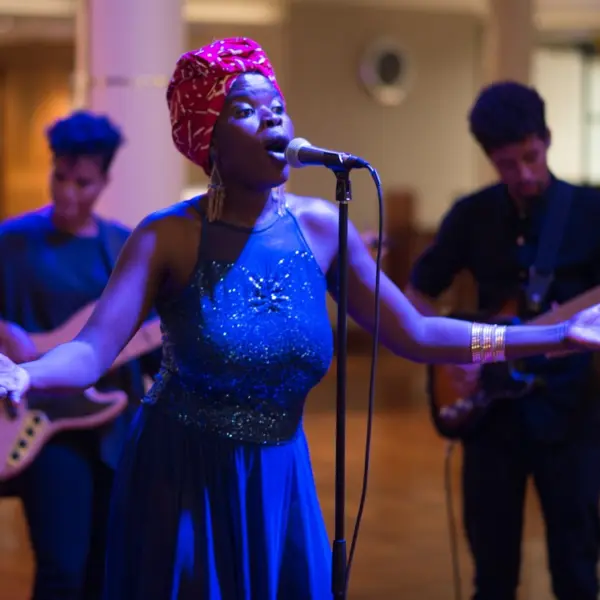
Cape Verde Sounds: Heard and Unheard