Alberto Koenig: “You Can't Become, If You Don't Go”
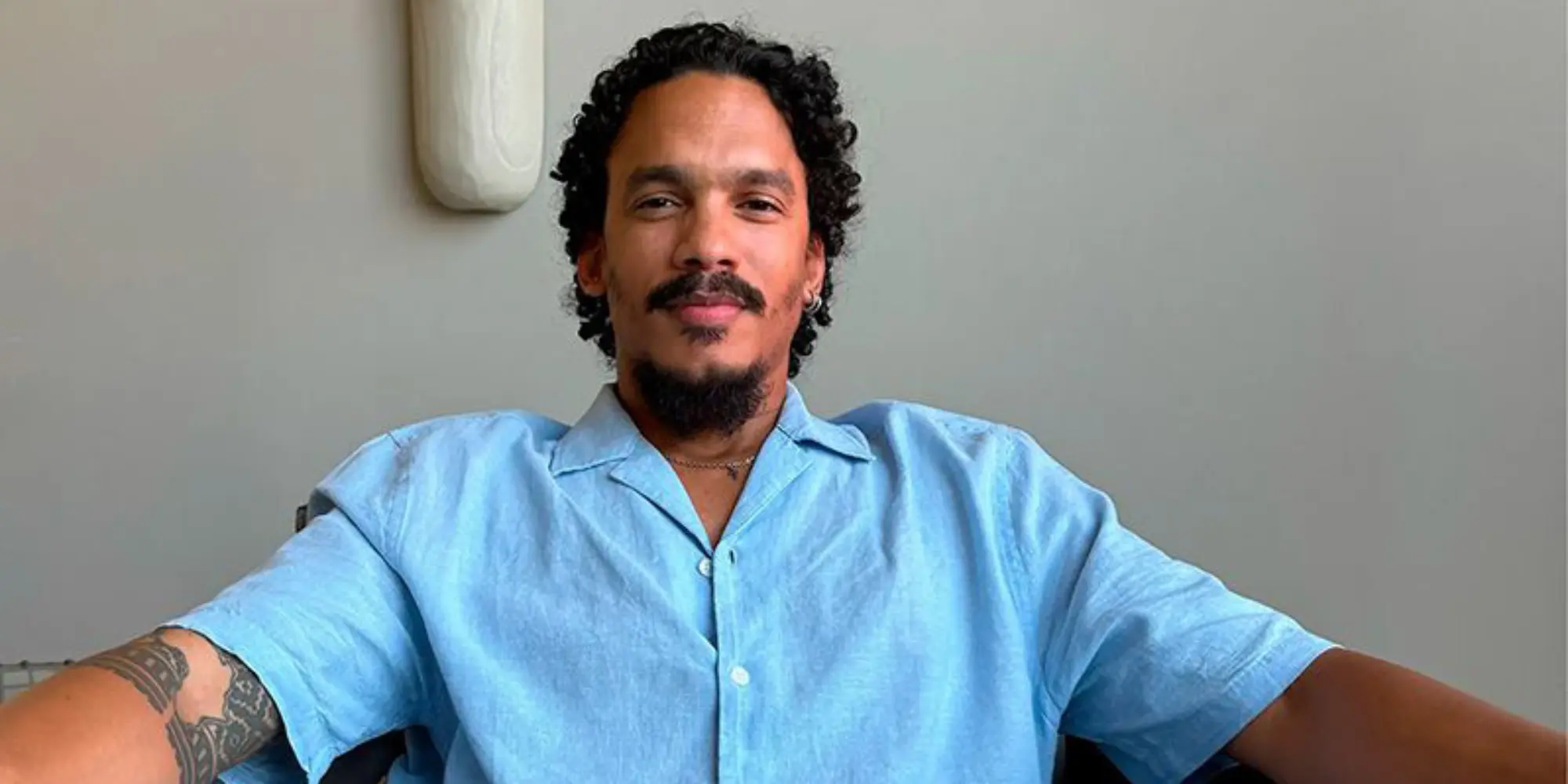
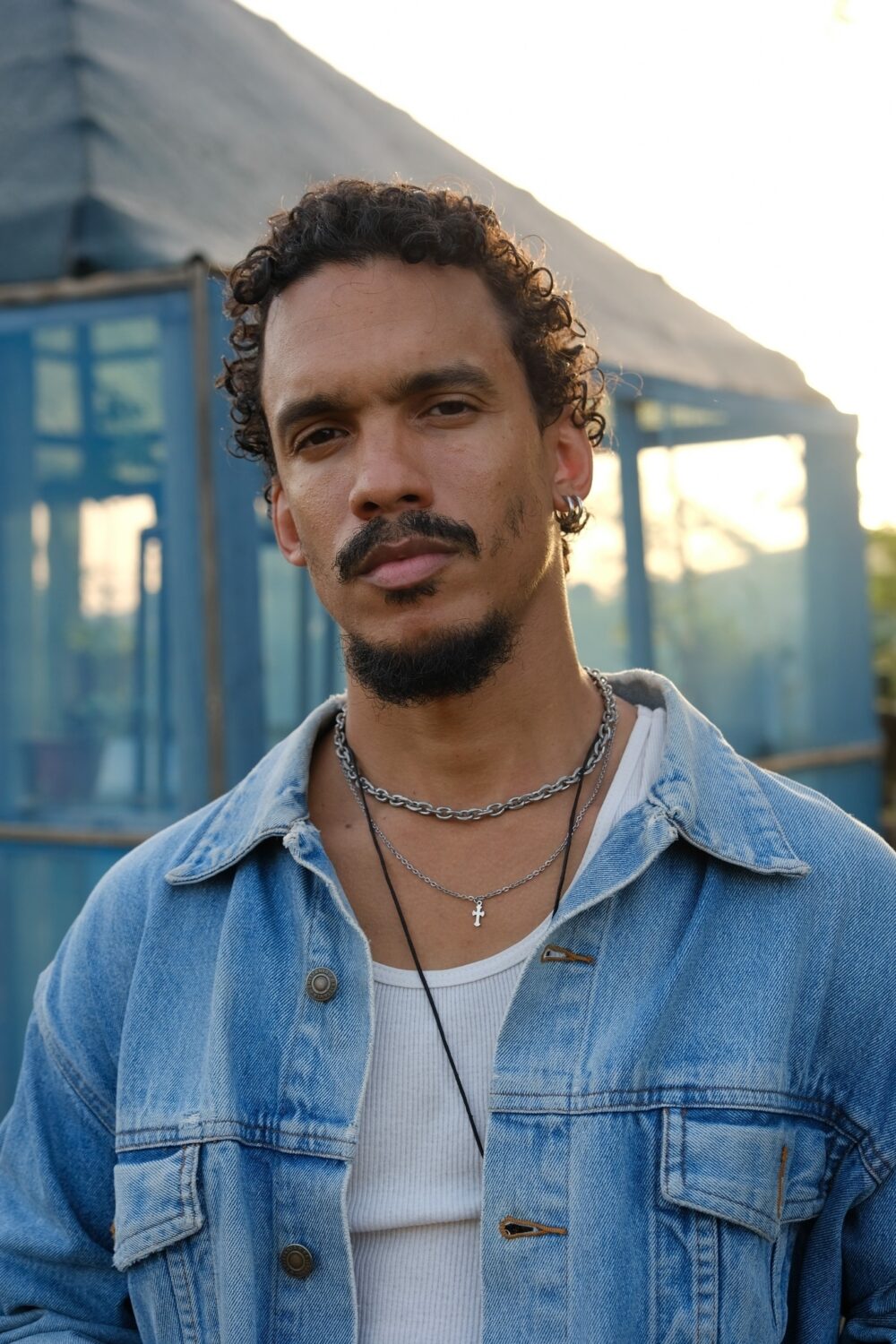
One of the bonuses of coming to the 12th annual Atlantic Music Expo [@atlanticmusicexpo], held in April in Praia, Cape Verde, was a chance to check out some local talent. We were very fortunate to be introduced to Alberto Koenig [@alberto.koenig], who performed in the opening concert of the conference. A few days afterwards, we had the opportunity to get to know each other and record an interview where he told us much about himself, his music and his country.
Koenig, who self describes as a cantautor—a.k.a. a singer-songwriter—said he was always composing music since childhood, but it wasn't until adulthood that he found the confidence to perform. He was actually born in Cuba, where his Cape Verdean parents were at university. “I am what they called their 'baby diploma,'” he laughs. And though they returned to Cape Verde when he was three years old, he notes: “There is a very beautiful saying here in Cape Verde, in Santiago, which says where your umbilical cord is buried you will have a forever connection with that place. So I would say that I feel Cuba in my gut. But also, I am the paradox of this saying because usually it refers to people who are born here and move out. But me, I was born out and then moved in.”

One could say Koenig was destined to either become a musician or to not become one, as his father is the well-known former minister of culture and music legend Mario Lucio [@marioluciosousa_oficial] who helped introduce the world to Cape Verdean music.
“I was born into it,” Koenig says, “but I usually say that the greatest influence my father had in me was not being an influence at all. He never said play this or listen to this. Never. So that allowed me to pave my own way. And I absolutely love that about him now, because when I was a kid and you just don't quite understand, you know? Why doesn't he teach me how to play the guitar? But nowadays when I play the guitar, he is amazed and says, 'How do you play like that? And that's because I had to learn how to play on my own. So at this moment in time, he appreciates our friendship a lot. And a lot of things are resolved now that I'm older.
“There is a very beautiful thing about this,” he continues, “and that is, the younger guys, they don't even know or care I'm Mario Lucio's son. The new kids, they're like, 'yeah, I heard of that guy.' But the older people they know, and they are pleasantly surprised when they see me on stage. It's nice because they would have expected me to be somewhere closer to him in an aesthetic or artistic way. So it makes me very happy.”
One needs to remember that in Cape Verde, music is not just perhaps their greatest export, but is something that deeply runs through their veins. So even as a youngster, it was natural that music was a part of Koenig’s life, even if his father hadn't been a musician. One of his closest friends as a teenager was another youngster, Fernando Jorge Marta Silva, who would have his first success at 12-years-old under his stage name Djodje [@djodje_sabboy] with the song “Volta.” Djodje is now considered one of most influential Cape Verdean artists of his generation. “When I met him,” Koenig says, “he already was writing his own songs, playing the guitar, and all of a sudden it didn't seem so far for me to do the same. Actually the first song I learned to play on the guitar Djodje taught me which was a Sara Tavares song. So I got hooked into it.”
But at the same time, Koenig explains, he shied away from taking music seriously because, he explains, “There is something very cultural about Cape Verde, which is our people are very beautiful, but our story has many ugly pages. Slavery has a lot to do with who we are and still are today. And mental slavery is the worst. When you are a slave, they rip you off of your name, but you still know it. But when you are the son of the guy who was ripped off of his name, you just don't know because it has been erased.
“And we inherited something else, especially here in Santiago – which is the island where slavery really happened. I came to understand that we don't praise each other that much. If you listen to people from Sao Vicente talking about their own artists, they take it as their own and they are like, 'You're good, you're great.' But here in Praia, in Santiago, it's a tough love. And they say it comes from the fact that the colonizers would look at someone's kid and say, 'Oh, he seems fit.' And the mother would be like, 'Oh, no, this kid, he's trouble. Forget about it. You don't want to work with this kid.' She would put him down so they wouldn't take him to work in the fields. So it's still in us in a way that if you start singing and you miss a note, people will mock you. And that makes you have tough skin.”
Since we were on the subject of the culture of Cape Verde, we asked Koenig to speak to us about the elusive emotion of sodade (also known in Portugal as saudade). There wasn't a day in Praia that we didn't hear someone singing the song of that name which Cesariá Evora made internationally famous. But as the days went by, we began to consider that this feeling of longing, first a Portuguese thing, was passed on to the Cape Verdeans and there was something sad and almost insidious to that. For as Koenig noted, what's inside of them was ripped away – their African identity – which was lost but they still long for through this sodade.
“Yes, this is exactly true,” he answers. “But that's also become an eternal source of inspiration because you're always trying to seek answers. It was inherited through colonization. Let me just say that you, as an outsider, you really have had an inside observation here. Because it is almost a paradox. Even though that's the origin, it's also the destiny. Because Cape Verde is a country of immigrants. There are three times more Cape Verdeans outside of Cape Verde than in Cape Verde. So we not only inherited sodade, we keep on producing it. It seems like an instinct. Like the turtle who is born in the sand, but knows that it must go to the sea. We are like turtles in that sense. We are born here in the land, but somehow we look at that big blue thing and it's like, I have to go. And one of our greatest artists, Eugenio Tavares, has a song, “Hora di Bai,” and that song has a double meaning. In it he says, “If we don't go, we can't come back.” But it also means, “You can't become, if you don't go.”
“I have a song called 'Ta Due,' which touches on that. Because, like we said, it's a paradox – how is it that to you have to move out to become? Usually you want improve yourself where you are, but it seems like it's in our DNA to cross the sea.”
So Koenig followed his destiny to leave Cape Verde, but not as a musician. He goes to Brazil to study architecture, which he feels is much like composing music. There is a famous quote he uses to describe this – “architecture is music petrified.” But destiny is not usually a straight line. It's full of twists and turns. And one night in Brazil, Koenig is invited to a birthday party of a friend.
“So I had always loved jazz music,” he begins this tale, “but I didn't have that live experience of hearing it. And when I got to that birthday party these guys were playing and it was the first time that I heard somebody actually play jazz, you know, with execution and feel and everything. So later that night, when I got up to sing, it was the first time I really gave my all. Because I was like, nobody knows me here. Nobody knows nothing about me. So I'd rather give it all. So I closed my eyes. And as Americans say, 'I sang my ass off' – for the first time in my life. And the place went silent. And when I finished, the place erupted. And it was beautiful for me. Having this experience of these amazing musicians play my songs unlocked, you know, my horizon. And I was like, 'Wow, there must be something here.'”
And this group of musicians at the party turned out to be music teachers. They invited Koenig to rehearse and play with them. He began spending more and more time playing music, learning from them, and eventually he had to make a decision.
“All my colleagues and teachers were like, 'Man, just finish what you're doing at school,'” he recalls. “But then my favorite teacher basically slapped me. He said, 'Man, just go! You don't know if what you have to live is going to be there.' And at that time, I had a colleague that was 78 years old and he's studying architecture. 'The school will always be here,' the teacher said. So I went home thinking about this, and then I packed my things and went for it.
“I stayed in Brazil for a year and a half just gigging around. And that's probably one of the best periods of my life because it was so much learning. Rather than a learning curve, this was a leaning mountain. And then the Brazilians are so intense in the way they live. So it felt like 20 years was lived in a short amount of time, but it was only a little bit less than two years.”
Koenig made his first recording during his time there, “You Are the One.”
“I think it's a good window to that moment in time in my life,” he says, “because I wasn't afraid. Also there is something very beautiful about the innocence of things.”
And still in his early 20's, he returned to Cape Verde. “When I came back I had a trajectory a little bit different where usually one records an album and then starts going on stages. But I was getting known from playing live. That's how I got to be known. And it came very quickly because live music was kind of dying at that time. It was the era of DJ's taking over around 2010. So there was not much live music going on in town. And so I was able to just take over.”
The first song Koenig said that really made him feel like he was a cantautor was “Piloto Automático.”
“It really made me feel like I had a voice,” he says. “The song describes a feeling that we kind of all have that sometimes if we don't take our lives in hand, it feels like we're living on autopilot. We're born, then we study, then we do it, then we die and it's done. So the way that people reacted to it – it was a moment just like in Brazil when I first sang and people reacted to my voice – people heard that song and reacted to the message. It was the first time people would say, 'Man, I really see myself in that song.” And then I realized I could express the feelings of other people through song.”
And Koenig also realized that when you have a voice, you have a responsibility to use it for the betterment of others.
“I try to also be an activist, you know? So I found myself making a project in a jail, the San Martino Jail. But it actually started in a different way. You see, I was known for walking everywhere with my guitar. One day, I was passing by and the Minister of Health saw me and asked me to come over. They were inaugurating the new maternity ward at this hospital. And there were just three women in the beds who were the first patients. But their stories couldn't be more apart from each other, because two of the women were with their children, but the third one was alone. She had lost her child. And those are the moments where words are not enough, but maybe music is. So I felt like I should be there and sing for them.
“And that led me to how every year I used to go to jail and sing for those guys, as well. And one time, I had a very special moment with three prisoners. They told me they had no music teacher there. We shared a moment and we all cried. And I said, 'You do have a music teacher now.' So for a whole year, I would go to jail twice a week to teach those guys. And I would teach about the music industry, not only do-re-mi or how to play guitar, but what is a manager? What are percentages? What's an agent? How do you get your music to radio? How to use the digital platforms? And then I said, 'It is possible for us to do an album.' And they said 'impossible.' But we made it happen. Even the officers from the jail played a part because we would record where they take their breaks. We made it sound proof with their mattresses. It makes me want to cry just thinking about it. I had a different hope in humankind after that experience, you know?”
You can listen to the entire album, Liberta Som, on You Tube. Koenig notes that the song “Mama ko Txora” had the biggest impact of them all. The then prisoner, Voz di Magua [@vozdimagua] is now a professional artist, and his song has almost a million views.
Koenig released his own first album, Trevoluson, in 2024. He says, the album was “a window also to that time of my life where the songs that people really liked became the album.” But at the same time, he feels now that because he didn't have full control over the production it's missing some things he would have done differently in retrospect. Nevertheless, the album was welcomed by fans and is quite an excellent listen.
One of the outstanding tracks is “Skeci um amor,” which features singer Fattú Djakité [@djakitefattu]. Born in Guinea-Bissau and raised in Cape Verde, Djakité, is a multi-award winning performer in her own right and also, like Koenig, very engaged in social justice. Koenig notes that “Cabo Verde isn't racist, but I'd say a 'colorist' country from the past that we have and she suffered it all. But her voice is amazing. Her presence is unquestionable. And her mission is a big one. The song, in English, is called “To Forget a Love,” which is one of the hardest things a human can do I’d say.”
Koenig is currently working on a new album, Nã Luz, which should be released by year's end. The title, he says, can have two meanings – “It's Mine” or “In the Light.” He adds “I'm going to have more feature artists that are my friends and that I respect a lot. The album is going to be different when it comes to me expressing myself – new perspectives on life. New things, new rhythms.”
He's already released a couple of tracks, the aforementioned “Ta Due,” and one featuring singer Nessa Onda [@nessa_onda]. “She's one of the great prospects,” he says, “one with great potential. She's 20-something years old and is a very special type of artist.”
It was time for us to part ways and we wished Koenig continued success and that our paths cross again in the future.
Related Audio Programs

An Atlantic Journey: From Cape Town to Cape Verde

Cape Verde Sounds: Heard and Unheard
Related Articles

Elida Almeida Discusses Her Third Album, Kebrada