Ali Farka Touré, 20 Years On
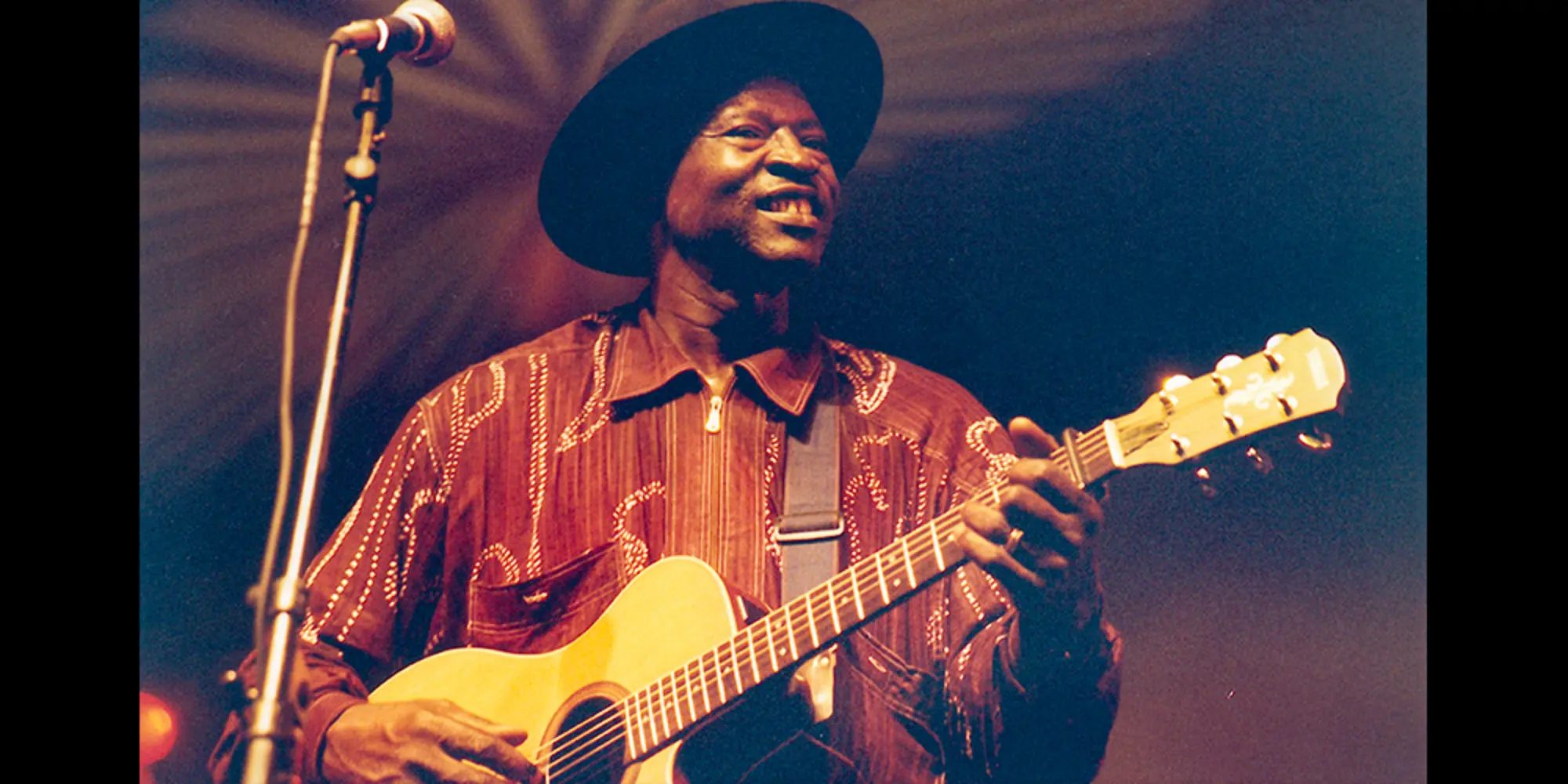
2026 marks 20 years since the great Ali Farka Touré, one of Africa’s most renowned and emblematic musicians, passed away in Bamako. Though two decades have passed, Ali’s indelible mark on African music history remains, and his legacy lives on. Through conversations with Ali’s friends and family, I realized that perhaps ‘legacy’ is the wrong word touse. Ali’s name was invoked as if he were in the room, and it became clear that his presence, his music and his character were still active and alive. I spoke to former World Circuit manager Nick Gold, and Ali’s son Vieux, alongside some young musicians from Niafunké and Europe, to find out why.
“It was immediately apparent - even before seeing him play - that this was an extraordinary man,” Nick told me, his room adorned with various posters of Ali in preparation for a forthcoming exhibition. Throughout my conversations, Ali’s warm, dynamic majesty was brought up frequently, such that my interviewees talked about Ali the man just as much as they did about Ali the musician. Nick, founder of the legendary label World Circuit had a long and fruitful relationship with Ali, and was one of the first in the West to come across Ali’s music in 1982. Nick made it clear to me that Ali had an almost supernatural ability to command the attention of everyone in the room, and that it was immediately evident that “you were in the presence of someone very important and special.”
Ali had a musical versatility that came naturally to him, and his mastery of the guitar seemed to be almost divinely ordained, and as Nick related to me, he viewed his skill not as a talent, but as a gift. “Ali found music very easy,” he said, “when he first saw a guitar being played, he thought immediately, I can do that, and transposed what he was doing on the one-string njarka to the six-string guitar.” The only challenge for him, according to Nick, was the fact that “Ali thought the other five strings would get jealous if he didn't touch them, so he tried to work out a way of touching them all equally!” Ali was also able to sing in seven languages and a plethora of styles, something very rare for a Malian musician at the time, which he picked up from his touring days at Radio Mali. Nick tells me that Ali would “arrive at a village, listen to the music, and by the evening, he would sit down and play their music back to them. He had completely absorbed it.”
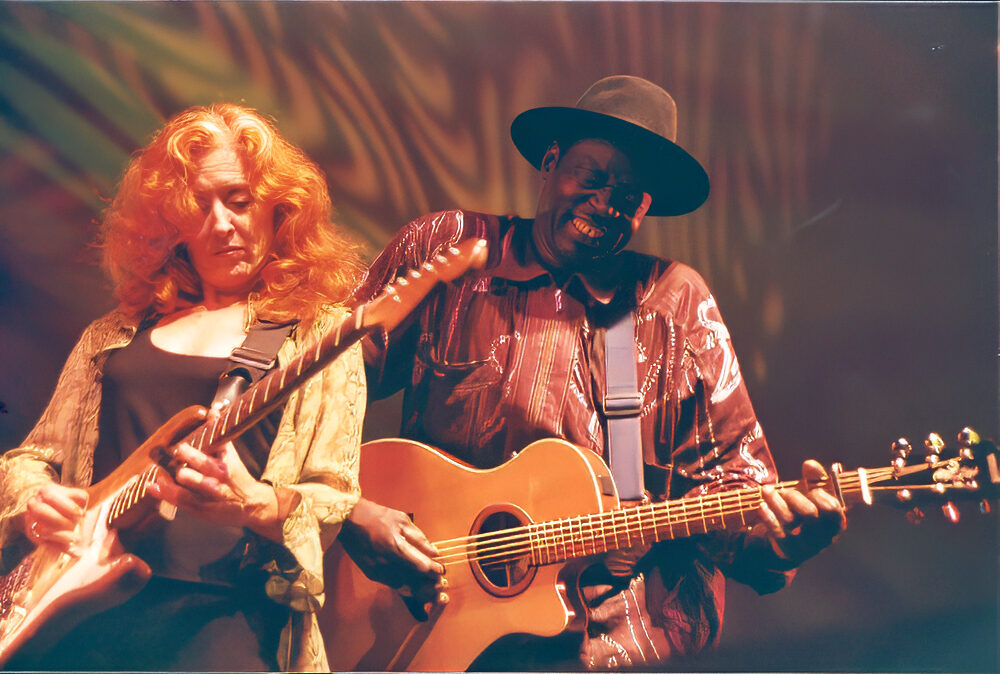
Despite his fame, output and ability, Ali’s priority was not music, but to provide for his community, both as a farmer and as a leader. Ali had worked the fields since childhood, and was elected mayor of Niafunké in 2004. For Ali, who viewed music as a gift, it was his responsibility to give back, not just to listeners abroad, but to the people of his town. This can be seen with the infrastructure projects Ali brought to Niafunké, informed by both the technical expertise and financial gain that Ali received as a result of his touring: “When he came to Europe,” Nick recounted, “and saw water pumps and irrigation, he knew what a huge difference those things would make.” Thus, Ali installed pumps, solar panels and heavy machinery in his town, and such was his dedication that he often turned down lucrative tours to remain with his community - being too far from home meant undermining his connection to the land where his music came from.
Ali’s philosophy was passed down to his son, Vieux. Vieux spoke to me from New Orleans, where he was due to perform in the 2026 New Orleans Jazz Fest, organized by the New Orleans Jazz and Heritage Foundation, and shared with me his father’s words of advice. “He told me all the time”, Vieux said, “I know you’re going to be a musician, but you have to be who you are. Never forget who you are.” Vieux listened to his father, and returns to Niafunké after each concert. Vieux also stressed to me Ali’s humility and generosity:
“Everyone would come to him, he was a friend to the kids, the women, the men, the elderly—he was everywhere. You’d see Ali sitting down, playing with people. People would come looking for him, and he’d be there playing with his friends. He never changed. He had Grammy Awards, he was a superstar, but he was always just Ali Farka, a simple, humble guy.”
Ali’s presence is still felt in Niafunké and the rest of the country. Speaking with Ali “Bounaly” Traoré, a young guitarist and member of Afel Bocoum’s band, he told me that Ali is still frequently brought up in conversation. Ali, he told me, “was an impeccable and incredible person, he loved everyone and helped everyone. The world has lost Ali, a great musician. We all mourn Ali.”
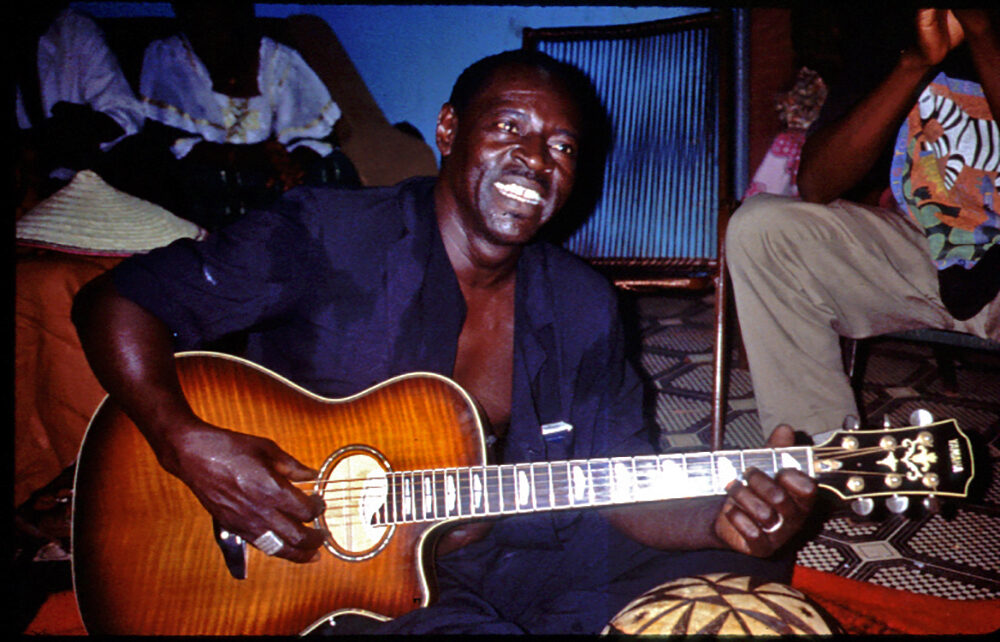
It cannot come as much of a surprise, therefore, that Ali and his music still hold an enduring relevance in the current day. “There’s a pulse to it that pulls you in,” Nick explained, “it seems quite simple at first, but it’s really sophisticated.” All those I spoke to emphasized the timelessness of Ali’s music. For Vieux, Malian music, especially his father’s, “is something that can stay for a thousand years.” He added: “Ali created his own world, his own music, his own style. Ali is really unique; he isn't comparable to other musician from Africa. If he touched the guitar, you’d know immediately.” Another young guitarist from Niafunké, Lassina Kane echoed this, saying “even if I listen to the same song a thousand times, it’s as if it’s my first time listening.”
Ali’s relevance and influence is not contained to just his home town. Olivier Nicolaas, a 31 year old guitarist from the Netherlands, first heard Ali’s music four years ago via the tribute collaboration between the Texas rock band Khruangbin and Vieux Farka Touré, 2022’s Ali (Dead Oceans). Uploading his videos to TikTok, he initially hoped to promote Ali’s music to Western audiences. The algorithm, however, decided to direct his videos to Malians, who warmly embraced him. Since then, Olivier has played with Samba Touré and regularly collaborates with other Malian musicians. For Olivier, Ali’s music “is only going to get more relevant as time goes by, as a different take on how music can be written.” As a Western musician, Olivier views Ali’s music as “really interesting and something completely fresh. The Western music culture might not know that they need it, but they need it.”
Twenty years on, the evolution of the music industry and social media have led to a wider audience for Ali and his music. Vieux touched on the evolution of communication, and how it has changed since Ali’s time, saying “Now, you call your kids on WhatsApp all the time. When Ali was traveling, for six months, we might never talk to him. We didn't have phones, no WhatsApp, nothing. He would just go, and they had to send a letter by post—it took one month to say, you have to be here at this time. It was very, very difficult. When I started in 2006, it was pre-WhatsApp, just Skype, and not everybody had Skype. Today, it’s very simple. I can speak to my daughter all the time.” In the same way, we now have instant and unbridled access to Ali’s entire catalogue.
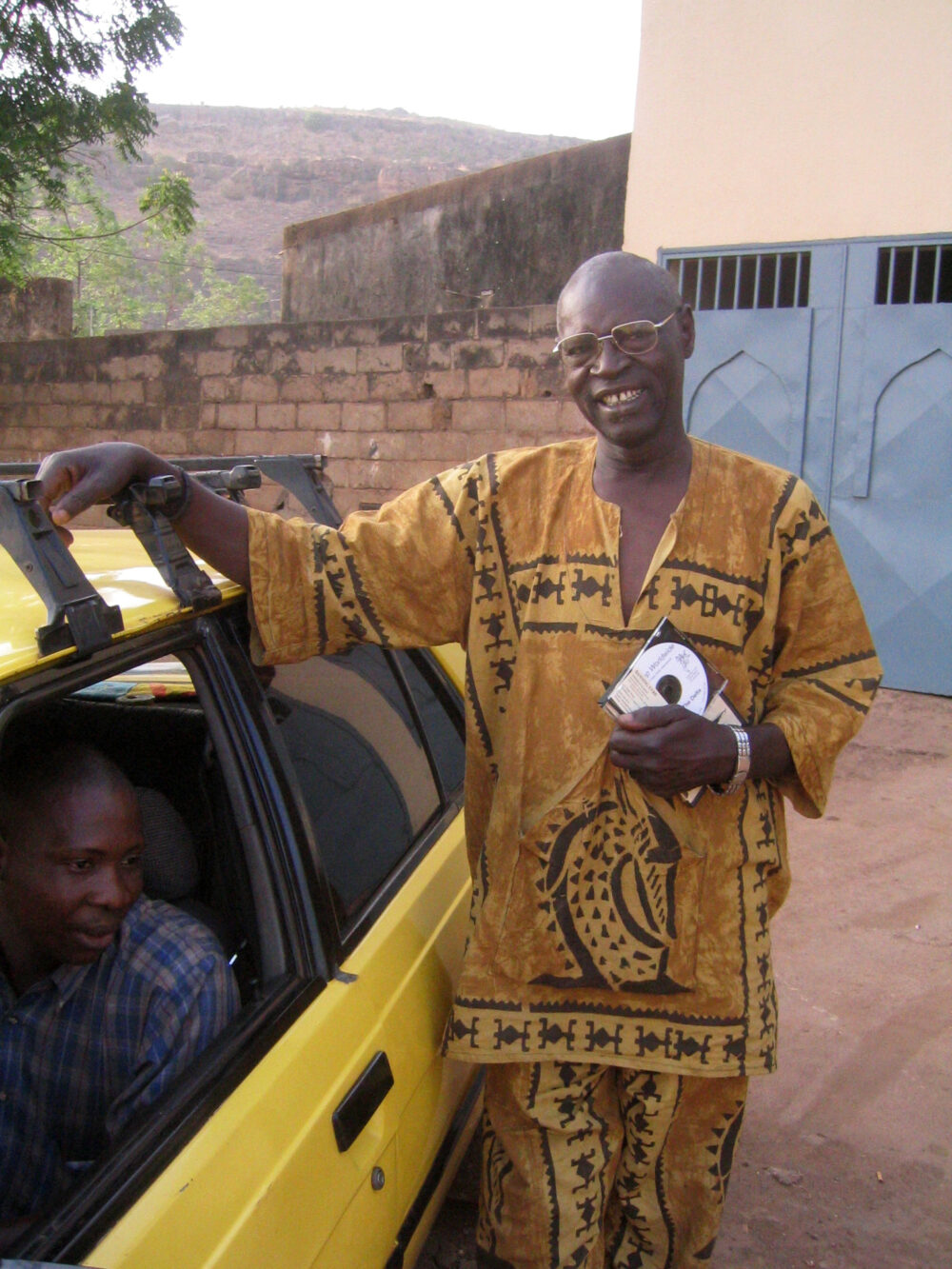
As the years pass, and the globalizing tide of modern music threatens to sweep away more long-standing forms of musical expression, preserving tradition has become increasingly important. When I brought this issue up to Vieux, he told me that balancing tradition and evolution was a necessary balancing act that all musicians must tackle: “I don't know if many new musicians are going to go very far, because they leave the tradition behind, and that is not good. You can be a rock star, but you have to respect your tradition. If you don't, you don't know who you are.” During his career, Ali managed this balancing act through a series of collaborations with international artists, wherein global influences enhanced, but never diluted, the final product. Notable examples include 1994’s Grammy-winning Talking Timbuktu (World Circuit) with American guitarist Ry Cooder, and further collaborations with British-Indian musician Nitin Sawhney and legendary bluesman Taj Mahal. 16 years following his death, his music was treated with a fresh round of fusion via 2022’s critically acclaimed Ali (Dead Oceans), a collaboration between Vieux Farka Touré and the Texan trio Khruangbin. For Vieux, Ali was a way to “let the new generation know who Ali Farka Touré was and where he came from.” “If you only play traditional music”, he continued, “they aren’t going to understand it. But with this collaboration, with this bridge between the traditional and the modern, they can feel it.”
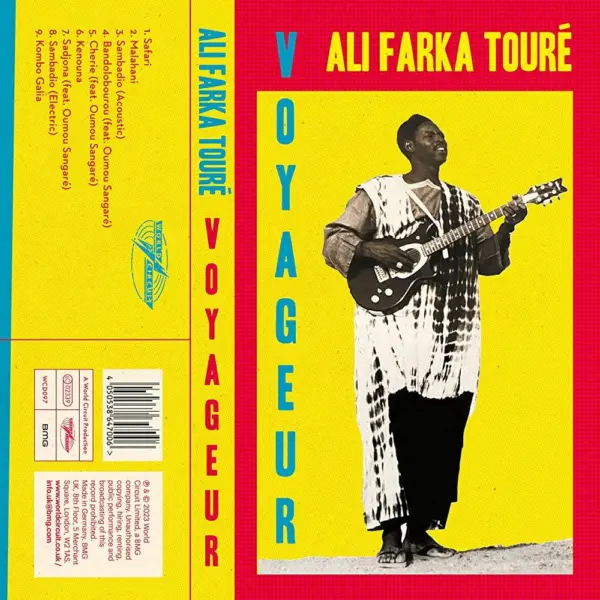
What then, are the efforts to keep Ali’s memory going in this new musical landscape? Aside from frequent releases of unheard songs, such as 2023’s Voyageur (World Circuit), Nick shared with me his endeavours to preserve Ali’s memory through the Ali Farka Touré Foundation. Following an exhibition that took place in Bamako in March, Nick plans to expand it to Paris and Dakar. “It’s centered around his own collection”, Nick told me, “his clothes, hats, boots, guitars, and awards. We hope to have it in Paris by September”. Donations to the foundation can be made here.
Twenty years on, Ali’s music and memory are still living and breathing. Near the end of our conversation, Nick shared with me one last anecdote about who Ali was as a person: "If you met him,” Nick said, “he would dedicate that moment to you. Ali never cared about the ‘important’ people; he would greet the person closest to him physically—the doorman, or someone carrying a box. He was a people person.” Ali Farka Touré had time for everyone, and through the sustained adoration and interest his music receives, many years after his passing, it is clear that we still have plenty of time for him too.
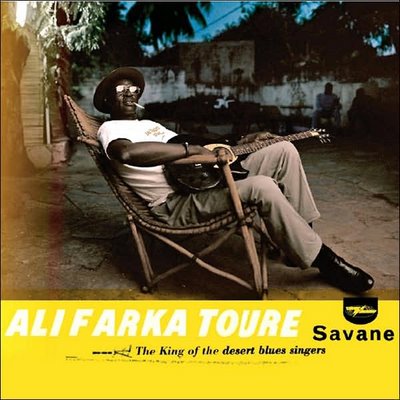
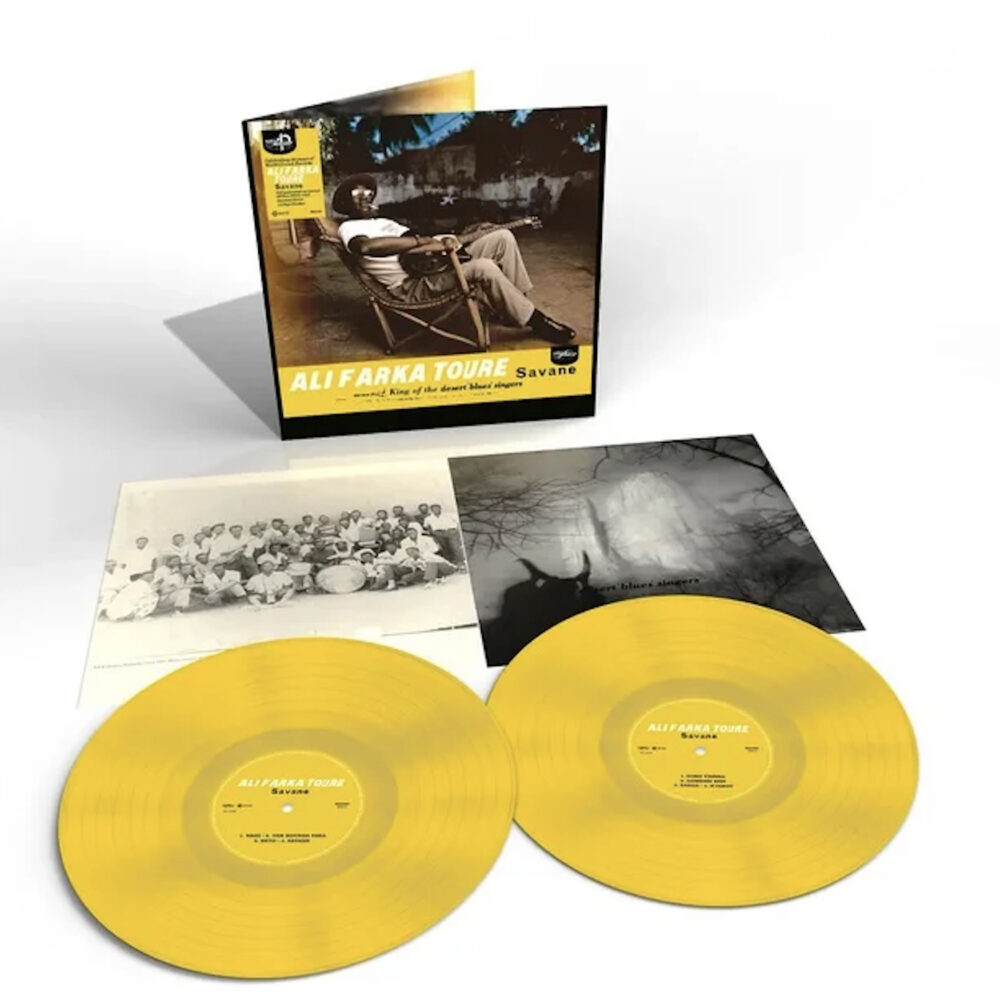
In honor of the 20th anniversary of Ali’s passing, World Circuit has released a deluxe, vinyl edition of his last studio album, Savane.
Related Audio Programs
Ali Farka Toure - Live In Niafunke
Africa and the Blues
Related Articles