Essaouira Gnawa Festival Report 2026
(Performance photos by David Katz and Claudia Bernard. Banner photo is of Maâlem Rist Jouhar)
The Essaouira Gnawa Festival is a feast for the senses. Taking place over the course of three days during the last weekend in June, it is a delight for fans of Gnawa music and for world music fusion enthusiasts, as well as anyone interested in the music and culture of Morocco and the broader Arab world.
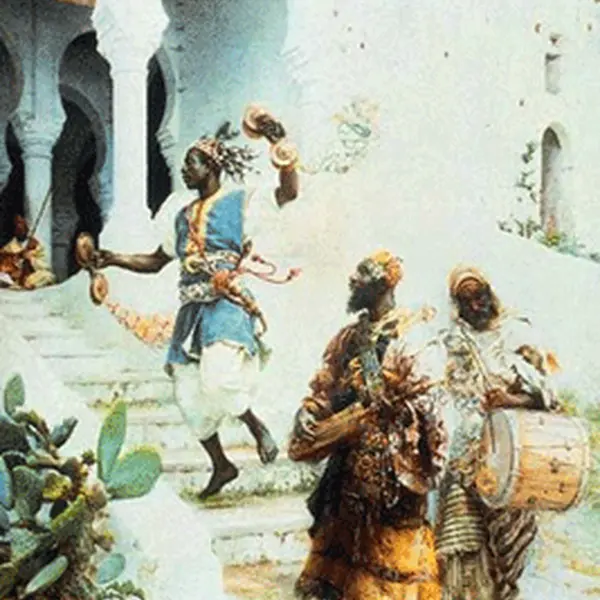
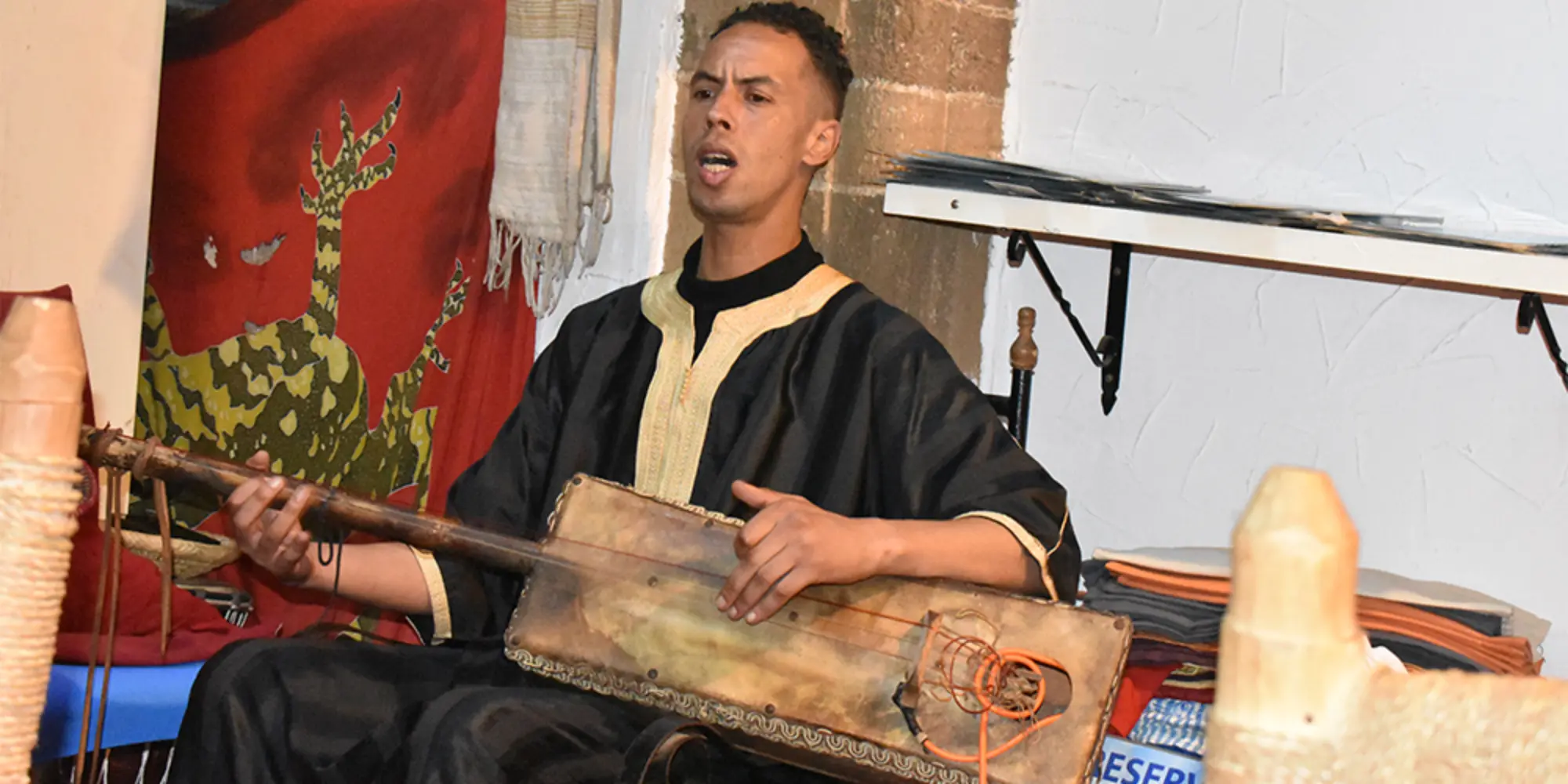
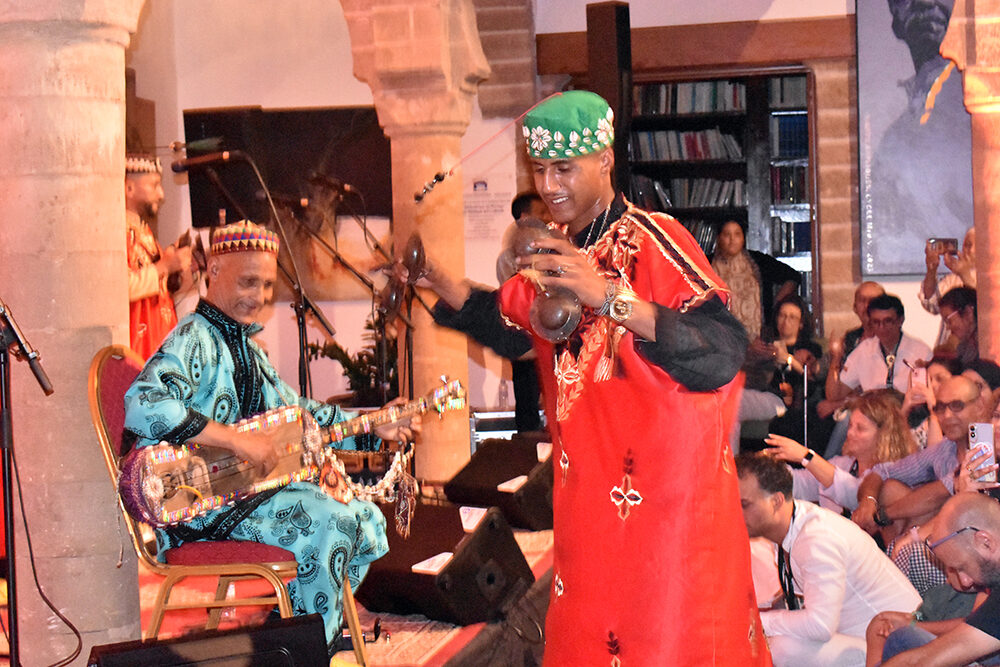
I was introduced to Gnawa music on my first visit to Essaouira, back in the late 1980s. Gnawa music has its roots in classical Sufism as well as pre-Islamic African animist beliefs. The Gnawa use their music for healing, most notably for various forms of mental illness—alongside scorpion stings. The guembri, a type of skin-covered rectangular lute, is used by the Maâlems (masters) to invoke a trance while the oversized castanets known as krakeb provide a supporting rhythm. Ecstatic dance and call-and-response chanting helps cement everything into place. I was blown away by this music on my first visit to Essaouira, and was fortunate to later catch some Gnawa performances in London thanks to the efforts of Jane Loveless, a Gnawa devotee who helped spread awareness of the form during the 1990s. To get to Essaouira in those days you had to take a bus from Marrakesh, and I remember seeing wild horses on the journey, and how the gentleman next to me was pulling up a can of water attached to a string to quench his thirst during a pit stop at a desert crossroads.
These days, reaching Essaouira and Gnawa music altogether is a much simpler affair. The trip, thanks to the city’s small international airport, which has direct flights from London twice per week. The road from Agadir is comfortably modern too, and—compared to my first visit—it is clear that the region has benefitted from investment and renewals. The music, thanks to the Essaouira Gnawa Festival.
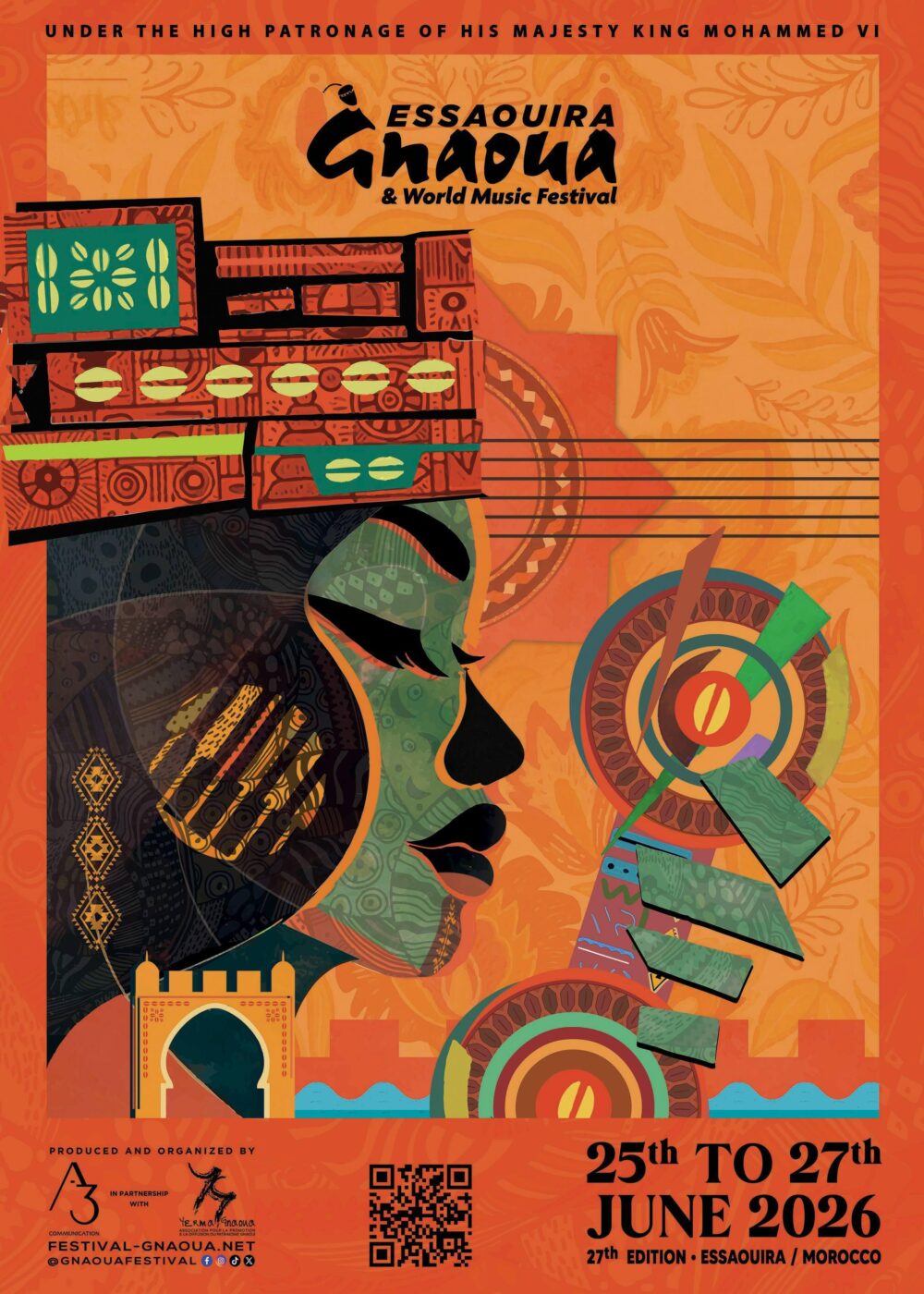
The festival was founded in 1998, and is still being run, by the Casablanca-based Neila Tazi, a communications professional and the first woman to be elected as vice-president of the Moroccan senate in 2015. It is currently said to attract some 450,000 people each year. I was told that, in the early days, there was only one stage and everything was free. Now, the program is surprisingly extensive: there are two main stages and a third rooftop stage, as well as five cultural centers with late-night events, a human rights forum, panel discussions, workshops, art exhibitions and jam sessions with students from the Berklee College of Music. Professionally run with top sound quality and in a setting both historic and gorgeous, it comes highly recommended and is well worth the effort it takes to get there.
This likeable city of some 78,000 inhabitants has a rich history dating back to at least the fifth century BCE. Various European powers tried to conquer the place in the sixteenth century without success, including Spain, England, the Netherlands and France, and the modern port city was mostly built in the 1760s by Moroccan King Mohammed III, engaging French engineer Theodore Cornut to realize his vision. Its buzzing medina was designated a UNESCO world heritage site in 2001—and rightly so: its labyrinthine souk remains an evocative place that seems little changed since its early beginnings. The Port of Essaouira was a key part of the caravan trade that brought goods from sub-Saharan Africa to the coast via Marrakesh, and then onwards to Europe. People were also trafficked across the Sahara in those days, the Gnawa of Essaouira descended from Black Africans snatched from the Sahel, most notably from the Soninke, Bambara, Fulani and Hausa peoples—indeed, the word Gnawa drives from a Berber term connoting a Black person. All this makes the Essaouira Gnawa Festival a far more evocative beast than your average European festival, with a seaside location that affords cooling breezes, festival sites housed in historical spaces and the distinctive Gnawa music at the heart of it.
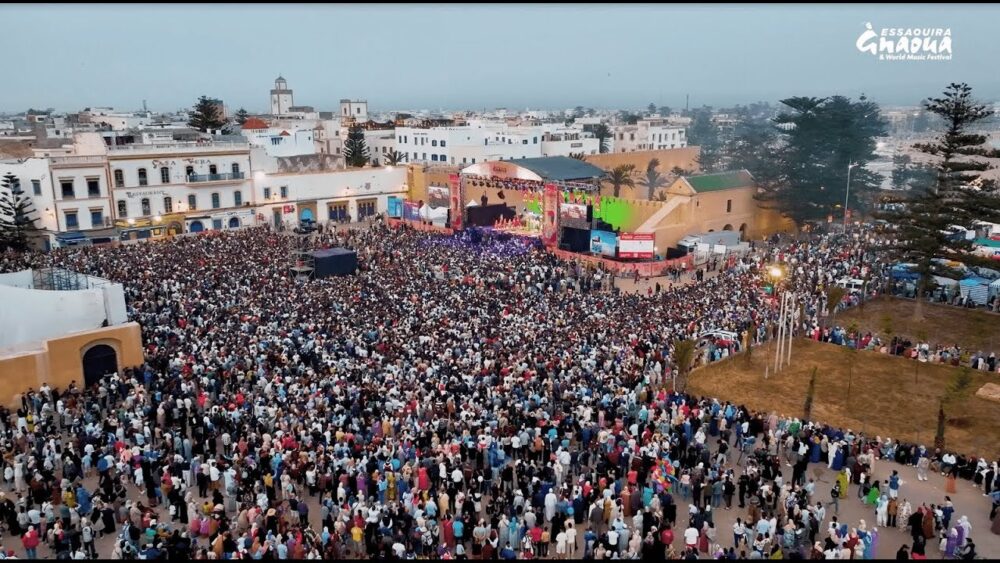
The festival began on Thursday evening. The opening parade saw local musicians working their way through the Medina. Later that same evening it was time to head to the massive Moulay Hassan Stage, where a sprawling fusion undertaking was unfolding before a thronging crowd of eager festivalgoers. Hailing from Taroudant, east of Agadir, Mehdi Nassouli is considered one of the new generation Gnawa and he here presided over a loose and somewhat unlikely collective that worked surprisingly well, with Moroccan jazz singer Sara Moullablad trading riffs with the Hindu chants of New York-born ganavya, as Brittany’s Sylvain Barou blew atmospheric flute and trumpet lines, and throughout it all, the Rwandan Cultural Troupe I Buhoro stomped around the stage in traditional dress.
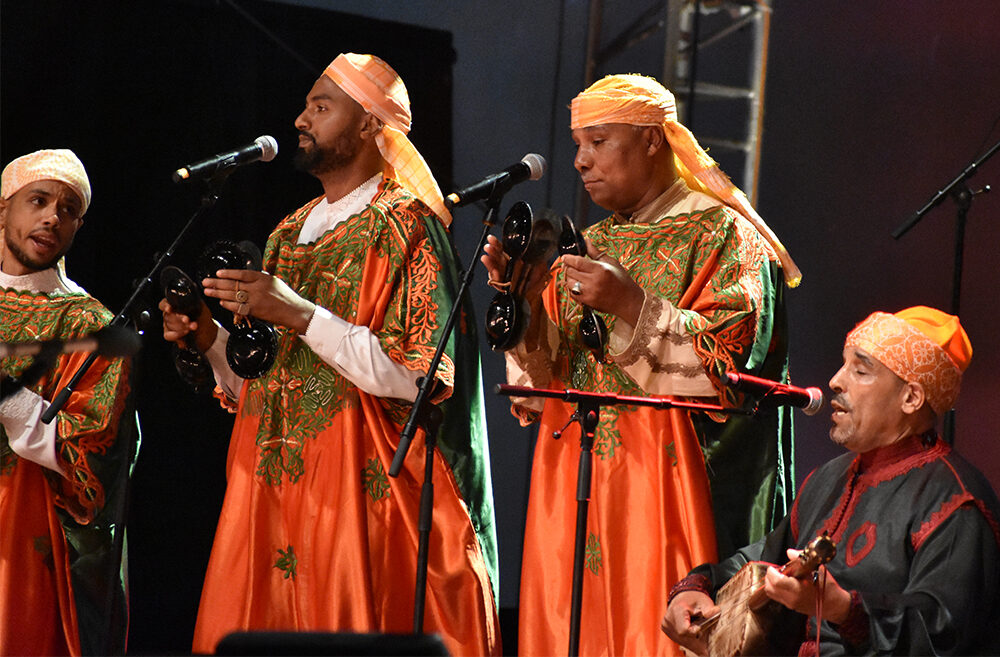
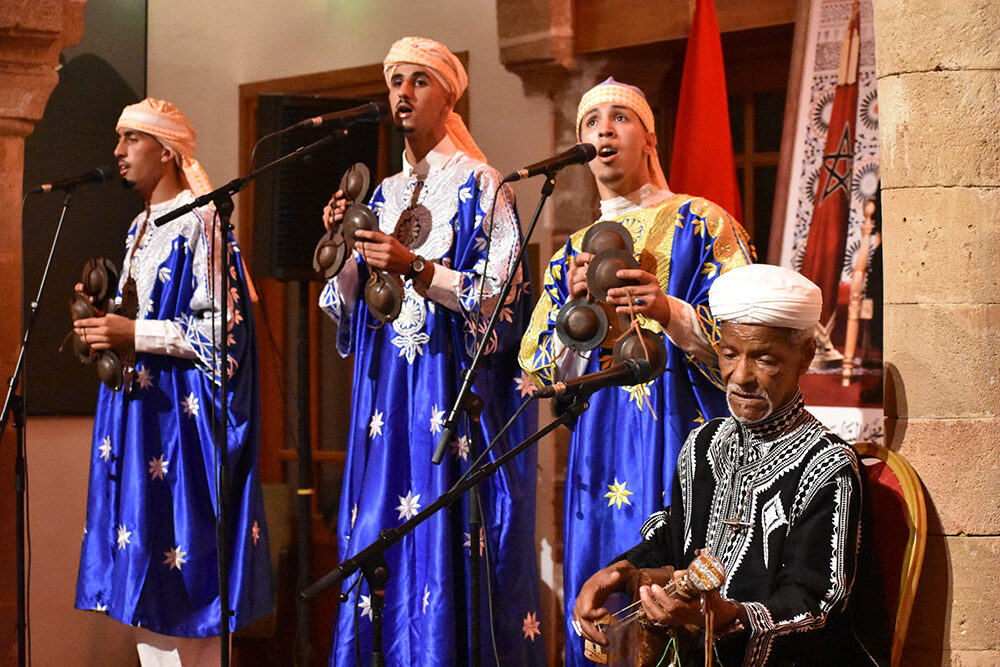
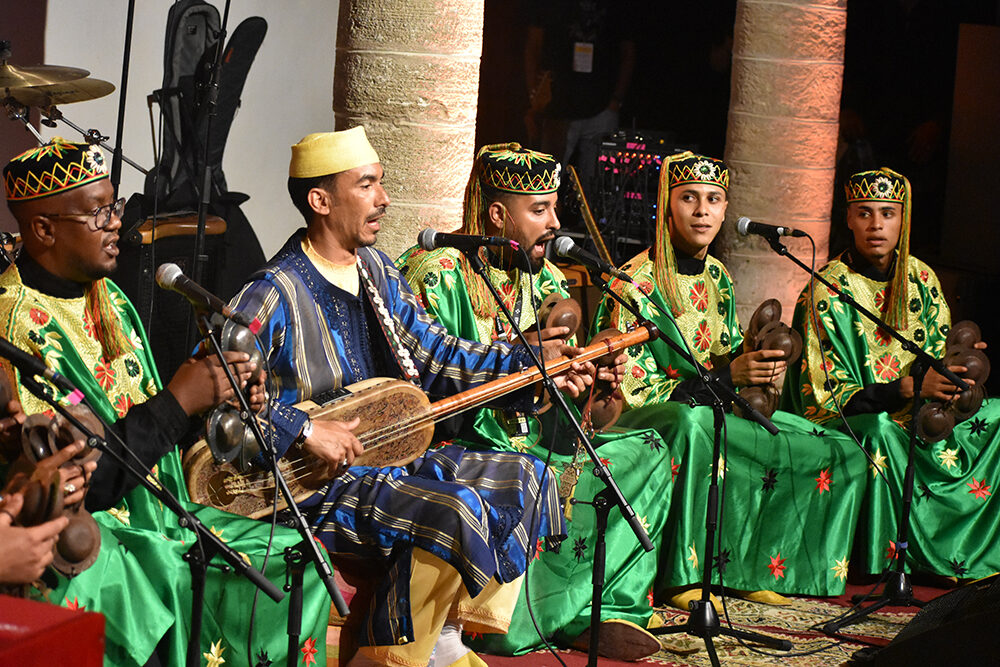
Maâlem Mohamed Kouyou from Marrakesh then came across as a seasoned master with an impressive guembri technique that involved downstrokes with the thumb and clenched upstrokes from his two forefingers; his seven krakeb players made a fine supporting cast.
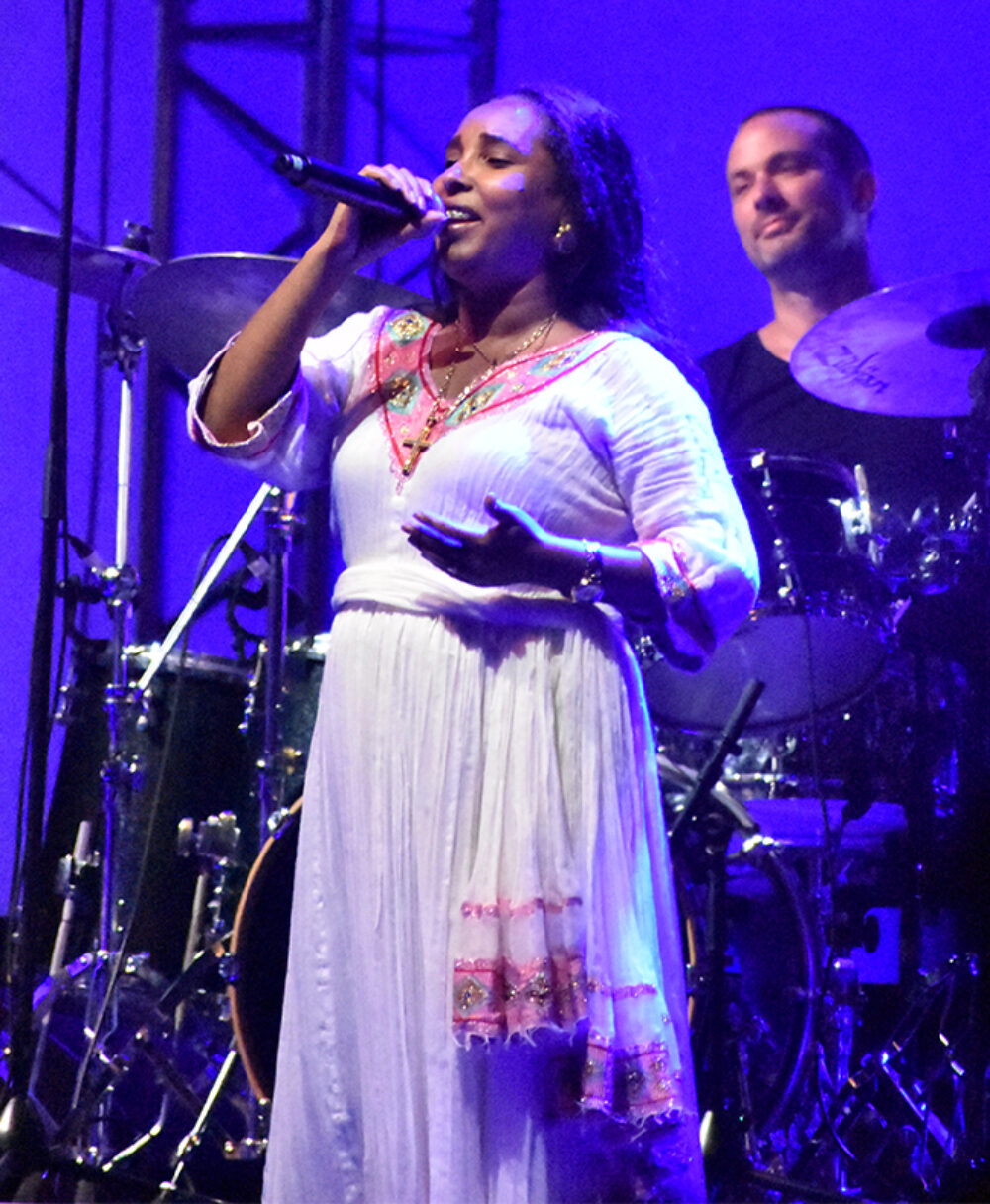
After that, the set by the Ethiopia-inspired, France-based Badume’s Band and Selamnesh Zemene somehow felt like an anti-climax. I enjoyed their accordionist’s melodic shadings, but the authenticity factor felt a bit lacking in places. In truth, I was too knackered to really take in any more—and the audience’s enthusiasm made it clear that most did not share my view—so I slunk away to rest my weary bones at our lovely riad.
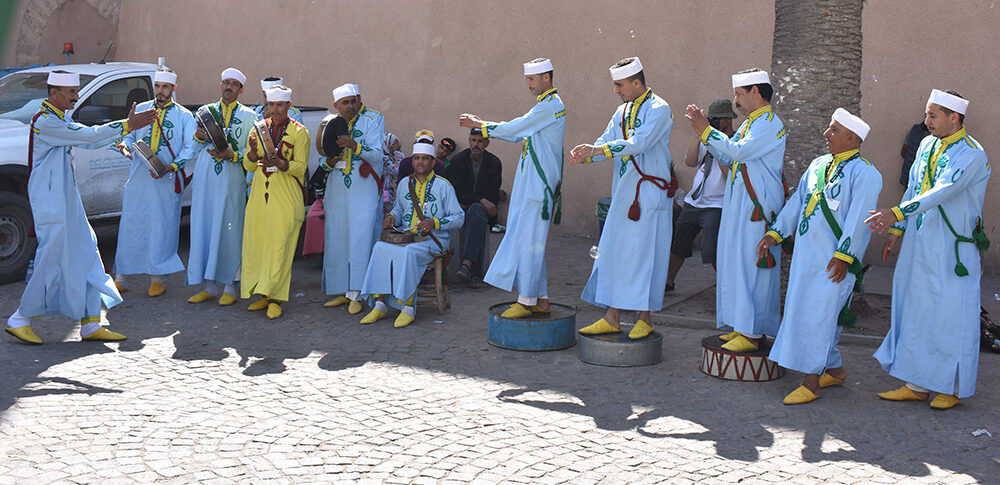
Early Saturday evening I was pleased to catch a bit of Ahwach Haha beside Essaouira’s clocktower. A group of Berbers from the Western High Atlas Mountains, they offered traditional Amazigh dancing and chanting, with tambours, a tire iron and some circular metal pans that added to the rhythmic din when stamped on.
Cameroonian American bassist Richard Bona’s rocking jazz set went down a treat on the Moulay Hassan Stage and, after that, Bona stepped up to the fusion plate for an extended segment with Moroccan singer Asma Lmnawar, accompanied by a gentleman blowing a thin wooden flute. Bona later described the encounter as a “genuine musical dialogue” that transcended boundaries. It’s the kind of fusion that the Essaouira Gnawa Festival excels at, with the audience spurring everyone on.
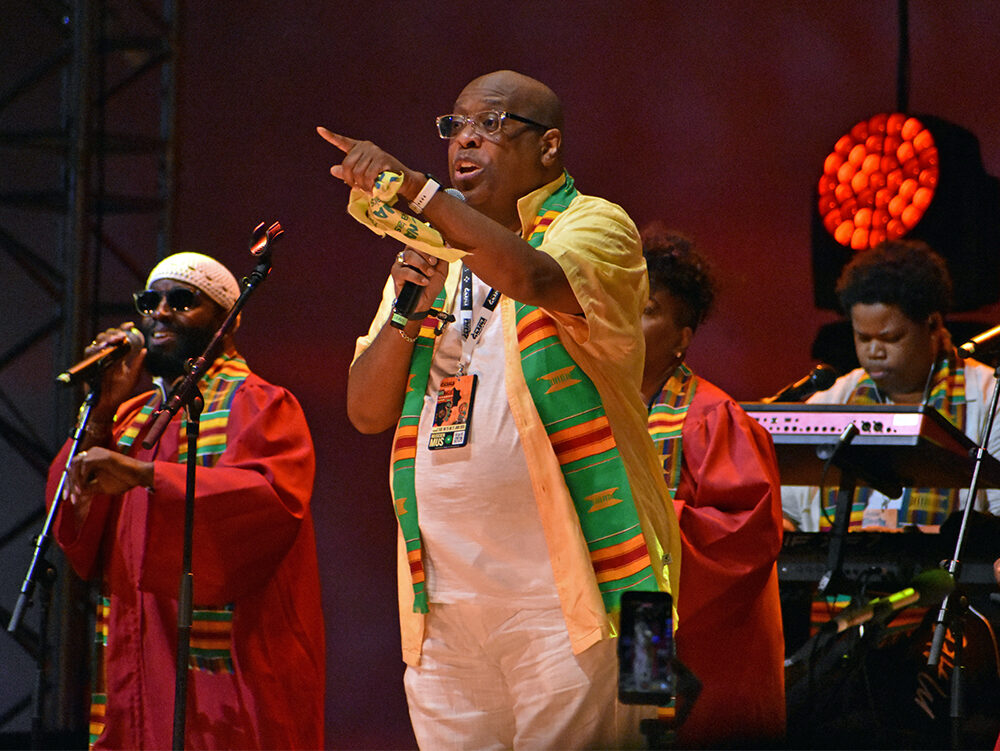
I was even more surprised by the rousing audience response that greeted The Harlem Gospel Spirit, led by Anthony Morgan. Their songs invoking the “Holy Ghost Power” and the changes wrought by faith in Jesus were apparently thrilling the overwhelmingly Muslim crowd; it again reminded me of music’s power to nullify borders with ease.
From there I made my way to Dar Souiri, a lovely and intimate cultural center in the heart of the Medina, for a couple of riveting traditional Gnawa concerts. Local hero Maâlem Aziz Soudani is the son of the renowned Maâlem Hajoub Goubani and in the early 1990s his group Tyour Gnaoua saw him travel to Europe and Brazil. In 2002 he branched into electronic music with Gnawa Family X, but on this night, he stuck to Gnawa music in its purest form, all while his supporting krakeb players engaged in ecstatic dancing as the concert gathered steam. Then Maâlem Abdelkebir Amlil from Rabat took over, his guembri style built on thumbed downstrokes.
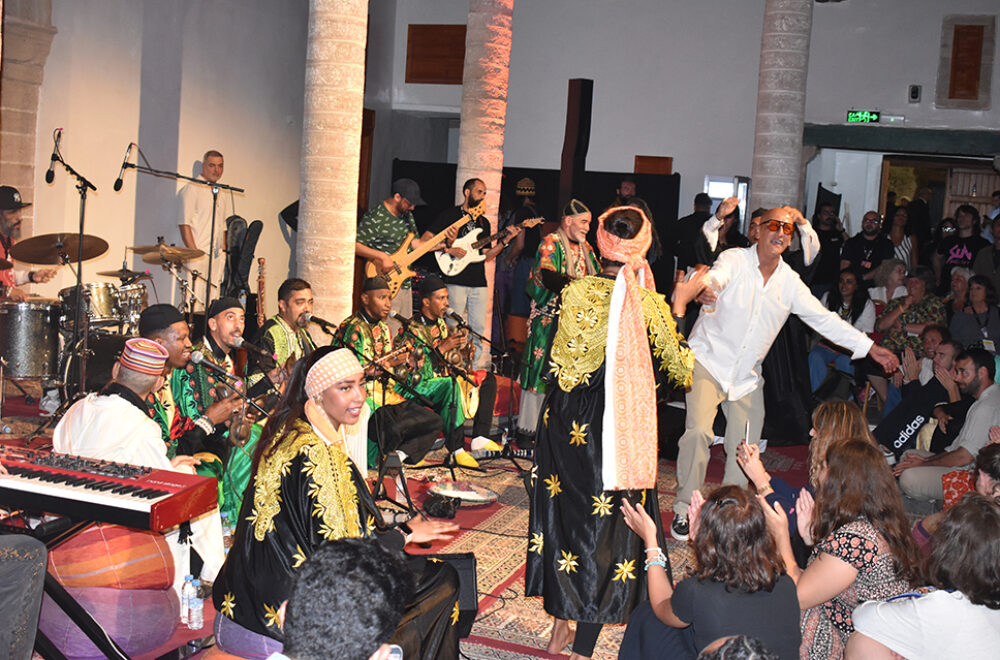
Hungry for more, I made my way to the nearby Former Danish Consulate, another evocative and intimate venue, where Casablanca’s Khalil Mounji was about to play. Mounji was seated and caressing the guembri, while several dancers enacted obscure rituals, including a man in whiteface who rubbed lit candles along his arms, aided by two Black women who danced at his sides. Later in their set the group was joined by some Berklee students for a messy jazz jam, before it was time for a set by local Maâlem Mohamed Boumezzough, a former member of the France-based Band of Gnawa, with a somewhat forceful guembri style. Again, the Berklee students joined in a now decidedly messy jam.
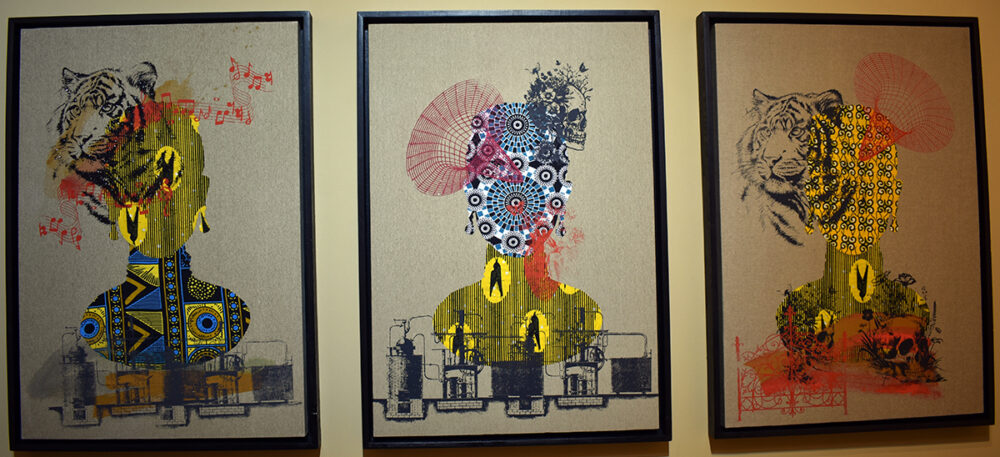
Sunday began with a visit to Borj Bab Marrakesh, once a munitions store on the edge of the medina that was home to an art exhibition featuring the work of Mostapha Romli and Salah Benjkane, who both incorporate textiles into their paintings. Romli’s tiger heads, female forms and sneakers got under the skin.
A subsequent wander through the Mellah gave glimpses of a time when the former Jewish quarter was home to nearly half of Essaouira’s population, though only a handful of Jews are currently resident. The Bayt Zakira or House of Memory had fascinating photographs and silent film footage of the area, and the Haim Pinto Synagogue was at the Medina’s farthest edge.
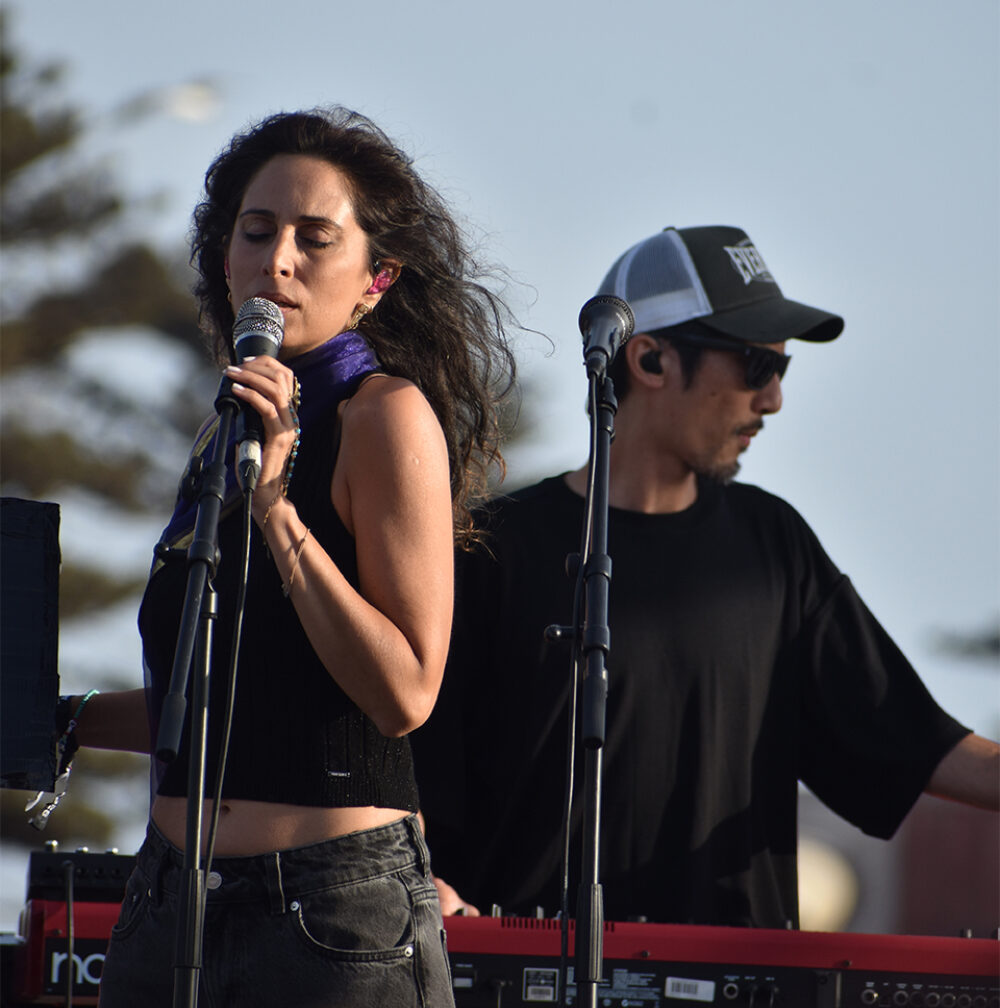
Borj Bab Marrakech’s rooftop stage was the setting for an unusual concert by the Beirut-born, Paris-based singer Yasmine Hamdan, a leading light of the Middle Eastern alternative and electronic music scenes. There’s no doubting the power of her voice, and the trio behind her conjured a pleasant backing of downtempo alt-rock with understated drumming, inobtrusive synth bleeps, and a rock-god guitarist who switched from feedback loops to bowed quietude at short notice. Some krakeb players momentarily joined to provide an unexpected Gnawa element, though Hamdan lamented that her laptop wasn’t working properly, so she was unable to add her own musical embellishments as planned.
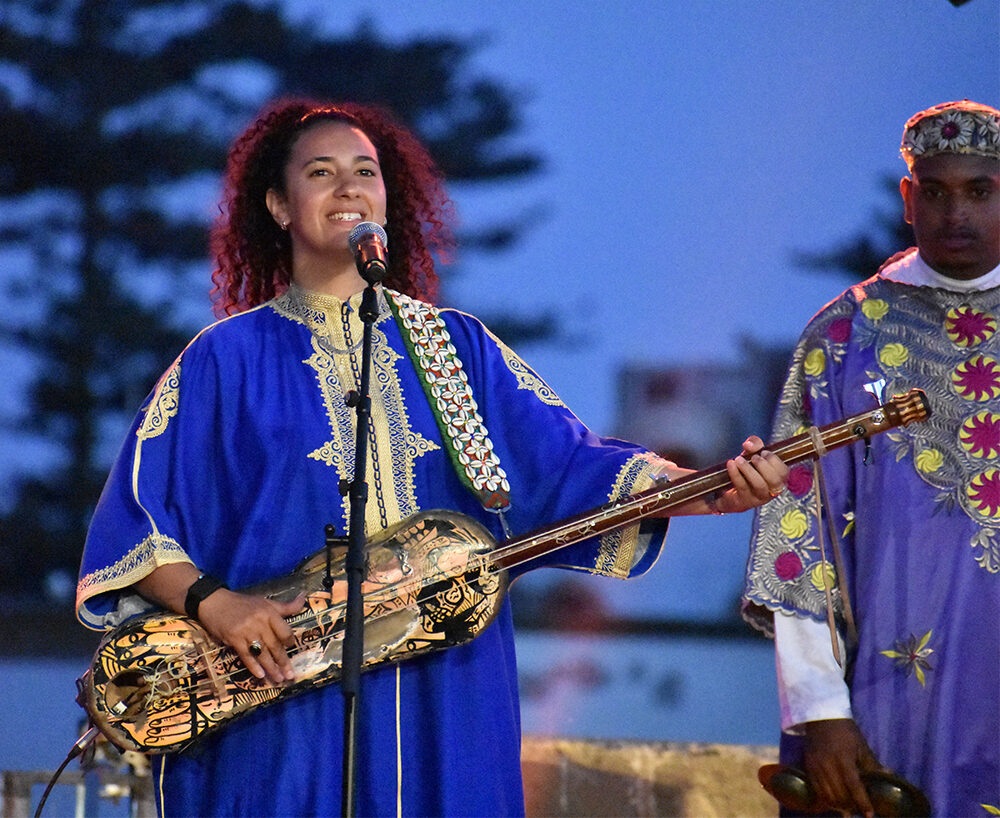
Much like the kora in West Africa, the guembri has traditionally been the preserve of men, as much as Gnawa music is typically male-centered. Local heroine Hind Ennaira is one of the rising Gnawa stars that are challenging the male hegemony, and her riveting set on the rooftop really bowled me over. Demonstrating a finessed command of the guembri and a confident stage presence, Ennaira belted out her songs as good as the best of them and her supporting krakebs furthered the cohesion. Hind Ennaira, we salute you—long may you reign!
Then the veteran Maâlem Najib Oubelquas from Marrakech dug deep into the Gnawa traditions, his set clearly benefitting from the wisdom of his experience. Each group really complemented the other to remind that there are endless ways in which Gnawa music can be performed.
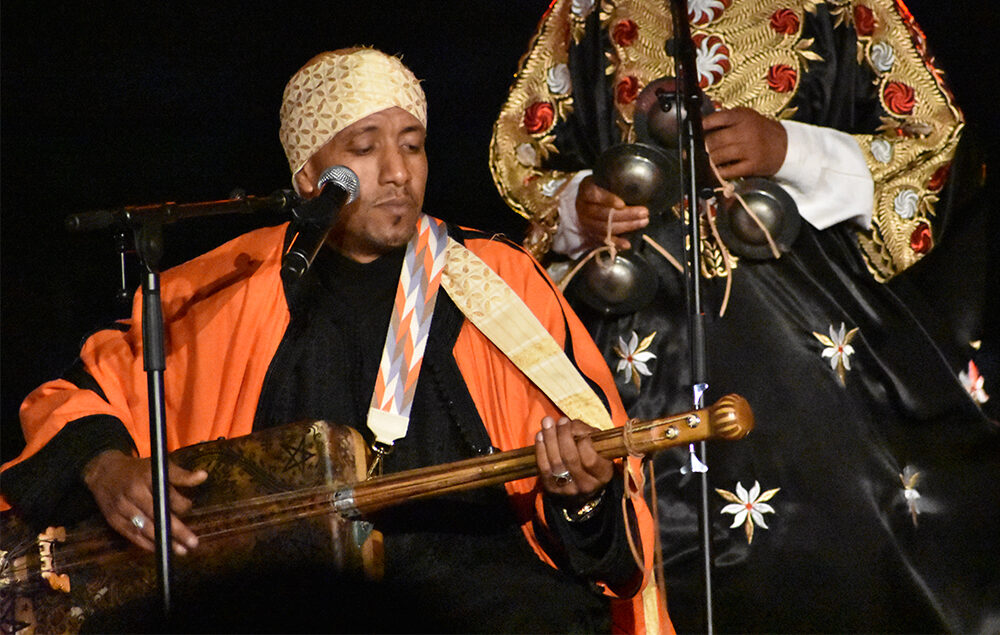
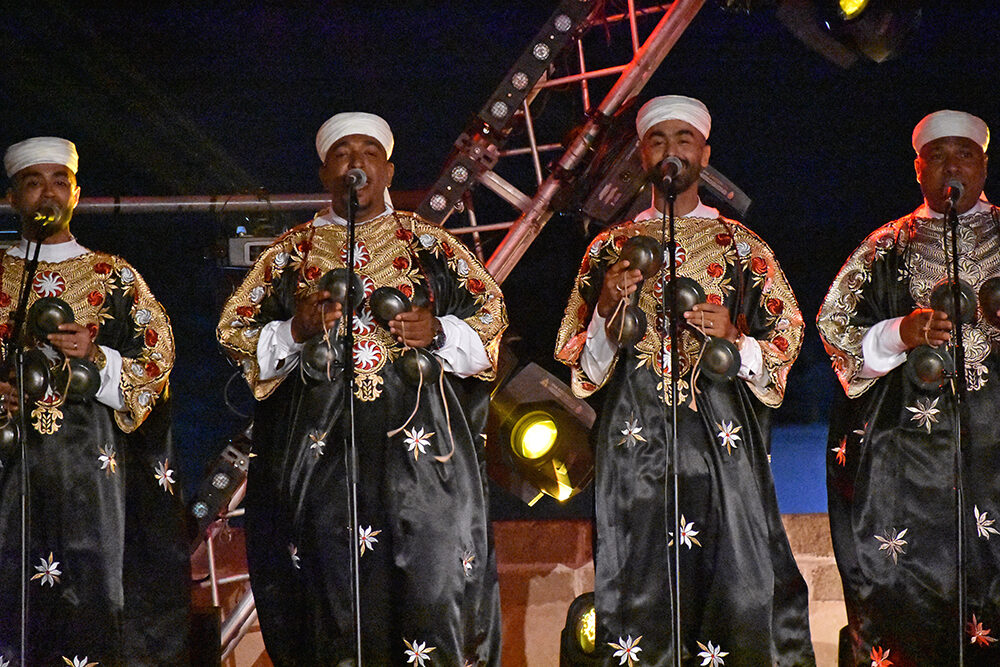
With so much great music happening in so many different locations, it was inevitable that I would miss some of the artists on my hit list. At the Beach Stage, there was an unusual set by Bob Maghrib, a quartet that aims to channel the work of the Jamaican bard through the strictures of Moroccan music. At the Moulay Hassan stage, I missed the set by the Bahia-based funkster Carlinhos Brown and the fusion set that followed with Maâlem Hamid El Kasri from Rabat, though a friend suggested that the melding of maracatu and Gnawa beats may have been somewhat baffling to the crowd.
Making my way back to my riad there was the sound of chanting, guembri and krakeb everywhere, echoing around corners deep into the night. It helped the music of the Gnawa to permeate my dreams and to prepare me for my long journey home. A big thanks is due to the entire team behind the mind-blowing 27th edition of the Essaouira Gnawa Festival—and here’s to many more!
Related Audio Programs
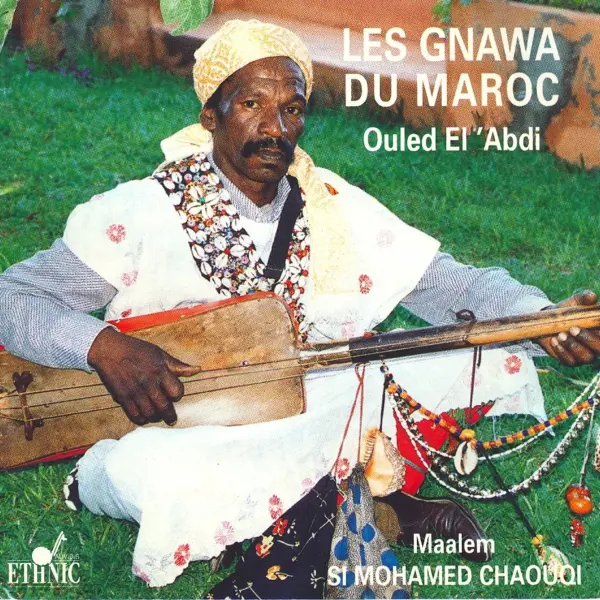
Spiritual Journeys: Traveling Spirit Masters, The Gnawa of Morocco
Borderless Sounds: The New North Africa
Related Articles
The Lure and Lore of Gnawa