On the Ground at the 46th Montreal International Jazz Festival
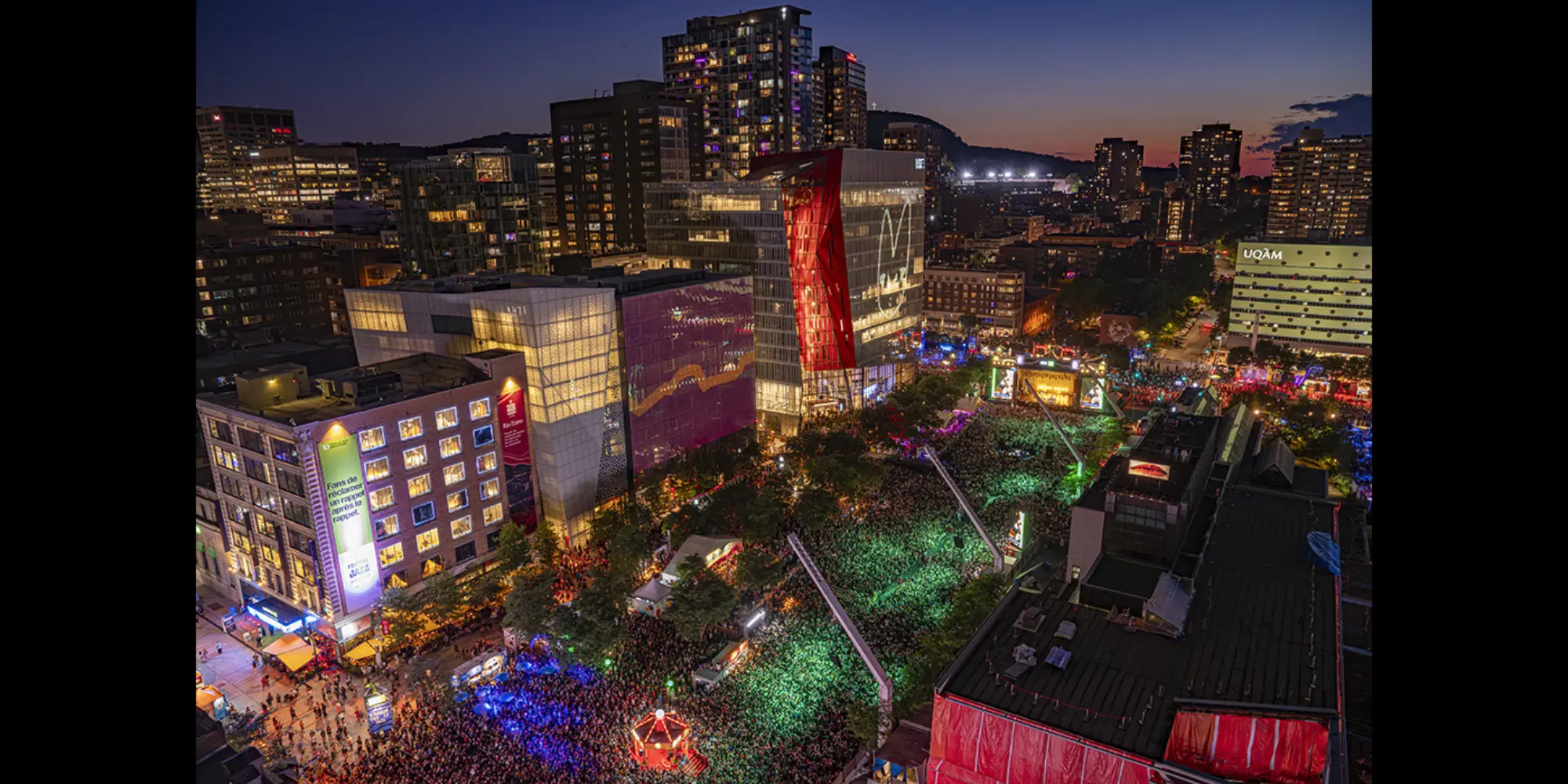
The 46th annual Montreal International Jazz Festival took place from June 25 to July 4, with over 350 shows—with two-thirds free to all—in the downtown area known as Place des Arts. This year, as in most of the world this summer, saw the Festival and audiences battling heat, humidity and some heavy downpours. But music fans are a pretty tough bunch, so extreme weather was mostly an annoyance when one has the opportunity to see some of the best emerging and legendary artists perform.
But before we run through our favorite shows, we need to deal with the elephant in the room. For those who try their best to avoid either social media or the news, six months ago, the band Angine de Poitrine was still a mostly unknown duo from a small city in Quebec that formed in 2019. Their name, in English, translates to “angina pectoris,” a serious chest pain condition commonly associated with coronary artery disease. The duo, now known as Khn and Klek, originally took on this stage name and wore polka-dot disguises as a joke when they had accidentally double-booked themselves at a local venue. The style of music they play is a subgenre of experimental music known as “microtonal math rock,” which also began as a spoof, but to their own amazement started to develop a following. But it took an appearance this February, performing live on Seattle's KEXP in-studio series, that the algorithm grabbed on and within weeks they were the top-charting act on Spotify. Whether you find their music good or bad is beside the point. Angine de Poutrine is now a global viral phenomenon—the musical equivalent of Dubai chocolate or Labubus. And that takes us to Saturday, June 29, when the festival had to stop admitting people due to the well-over 70,000 people who had arrived to see, hear and Instagram the duo's headlining show. If you'll allow us to theorize here, they represent two things that are quickly vanishing in the world—they are unmistakably authentic and, with their disguises, they are also anonymous.
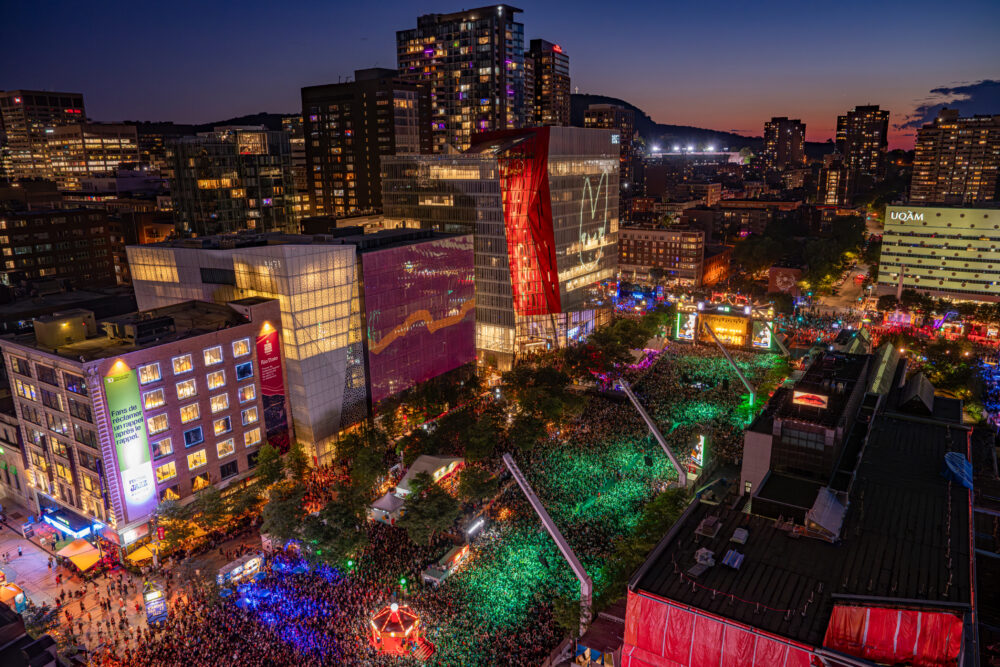
Thankfully, we were at the opposite end of the festival, several blocks away, for an opportunity to witness the Peruvian psychedelic cumbia band Los Mirlos. Formed in Lima in 1972, they released several hit singles and albums that were wildly popular across Latin America. In the last decade, a new generation of fans discovered them after their albums were reissued, which was followed by the 2022 documentary La Danza de Los Mirlos.
Their performance was a nonstop dive into the roots of this genre which has now globally exploded. Peruvian flags were flying and hardly anyone stood still. At the exit after their set, we realized the extent of Angine de Poitrine’s popularity as we got literally stuck in a crowd for several minutes that was not moving at all. Several people around us began having panic attacks—perhaps even suffering from angina pectoris. Eventually we managed to squirm our way out and get home safely.
Jumping to the very last show the following Saturday night, Chicha Libre, a Brooklyn-based psychedelic-cumbia group whose 2008 debut album ¡Sonido Amazonico! was, according to their website, “a tribute to the ‘70s Peruvian musicians from Lima,” aka Los Mirlos. The circle was completed for us. Chicha Libre quit touring in 2016 and started back up less than two years ago. The musicians in the group come from Latin America, North America and France. Their song, “Indian Summer,” sung in French, won the hearts of the Francophones in the audience. Personally, we loved their kitschy cumbia cover of the 1972 novelty hit “Popcorn,” which they closed their set with.
Jazzheads could spend the entire festival wrapping themselves in so many jazz greats, both young and old, including Joshua Redman, Bela Fleck, Charles Lloyd, Marcus Miller, Brandee Younger, The Headhunters, Avishai Cohen and Chief Adjuah. However, we tried to keep our focus on the world music offerings. Of the jazz acts we did catch, we were quite happy to be introduced to Tomoki Sanders, whose father is the legendary jazz horn player Pharoah Sanders, and who is just now making a name for themself. As well, we absolutely melted during Sullivan Fortner's solo performance. His touch is light, but his arrangements so intricate. His hands are like feathers, dusting over the piano keys. And of course, it's always a pleasure to see Kamasi Washington perform live.
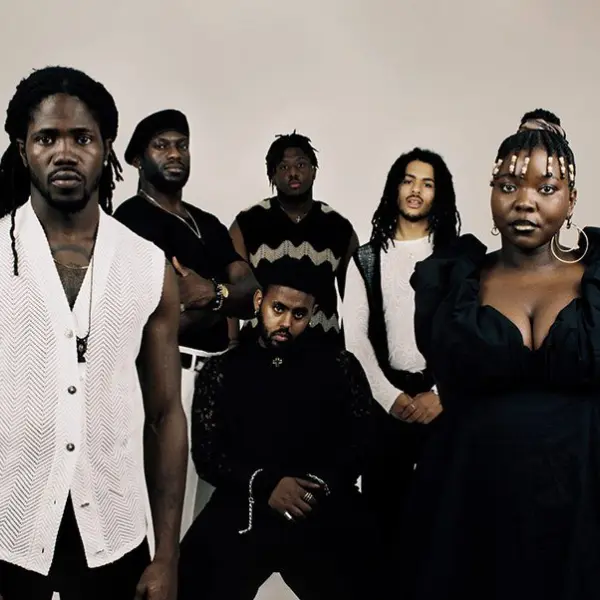
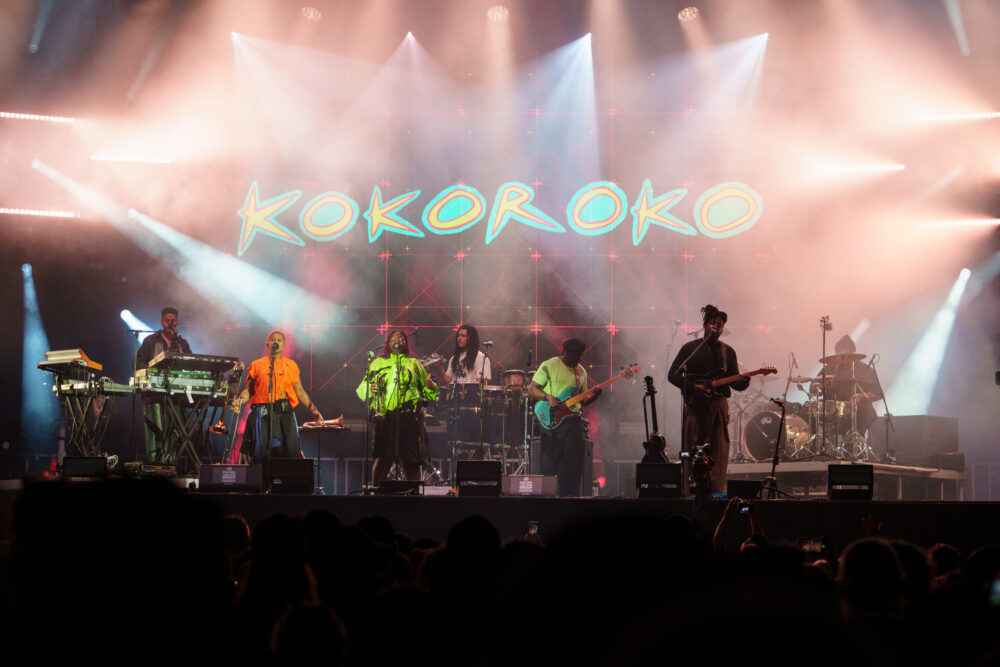
Seeing the London collective Kokoroko again was an absolute pleasure. You can check out the interview we did with them when they last played in Montreal three years ago. The Afrobeat/highlife-infused group received this year's Antonio Carlos Jobim award. The festival noted that: “Through its innovative approach and openness to a multitude of influences—from jazz to bossa nova, soul, funk, and electronic music—the group has helped broaden the horizons of contemporary jazz while reaching a vast international audience.”
The 84-year-old Taj Mahal also filled the Maison Symphonique with his Phantom Blues Band. Without a doubt, Mahal has played an integral role in opening the Western world to the music of Africa and the African Diaspora over the past half-century. Among the African artists he has recorded and collaborated over the years are Toumani Diabaté, Anqelique Kidjo, Baaba Maal, Ali Farka Touré, and Bassekou Kouyate. We were granted a few minutes to chat with Mahal, and we will be posting that interview in the near future.
We've been waiting 40 years to see the '70s funk band Cymande. Formed in London, their parents were all part of the Caribbean Windrush diaspora from the 1950s. They released their first single, “The Message,” in 1972, and while they were unable to garner much attention in the U.K., their music reached DJs in the United States where they then had several successful tours, even playing at the Apollo Theater in New York. Eventually, they split up in frustration, but in the late ‘80s and early ‘90s, their music began finding its way in samples by everyone from De La Soul to The Fugees. They are now considered legendary as one of the most sampled groups ever in hip-hop and rap. A one-off reunion concert was organized in 2006, which led to a reformation with some original members who continue to tour now. For more information of the band’s comeback, it is worth streaming their documentary film: Getting It Back: The Story of Cymande. Their concert at the festival’s main stage did not disappoint.
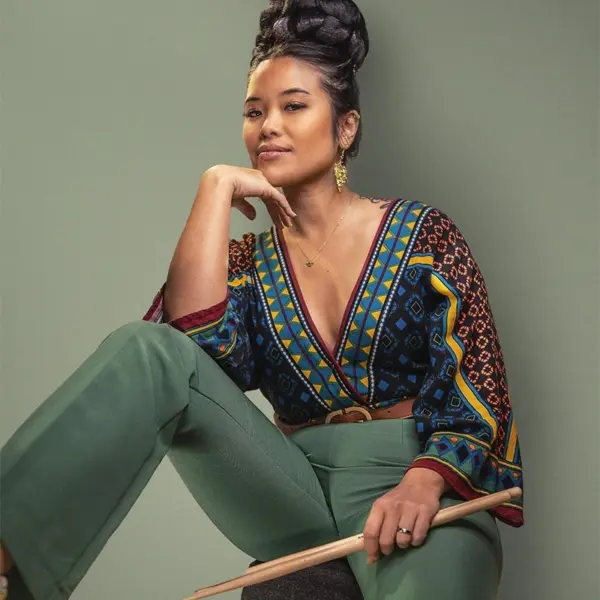
After Cymande, we continued that evening revisiting a local favorite act, Thai-Canadian drummer Salin, whom we featured in an interview two years ago. Salin plays Afrobeat-infused funk and has found connections with traditional Thai rhythms. Another favorite we caught up with was Grammy-winning Austin-based guitarist Adrian Quesada and his latest project Trio Asesino. Most famously, Quesada founded the Grammy-nominated group Black Pumas, but Afropop Worldwide listeners will also know he was a founding member of Grupo Fantasma, Brownout, Ocote Soul Sounds (with members of Antibalas), and The Echocentrics (with Argentinean singer Natalia Clavier and Brazil-based Tita Lima). There isn't a project he's involved with we don't love. He was in the difficult slot of being the opening act before Angine de Poitrine, but still managed to win over those in the crowd who were interested in more than just being at the viral event. The group has an eclectic range of material of both originals and covers, including jazz guitarist Gabor Szabo's "The Divided City" and The Turtles' “You Showed Me” (written by Gene Clark and Jim McGuinn of the Byrds).
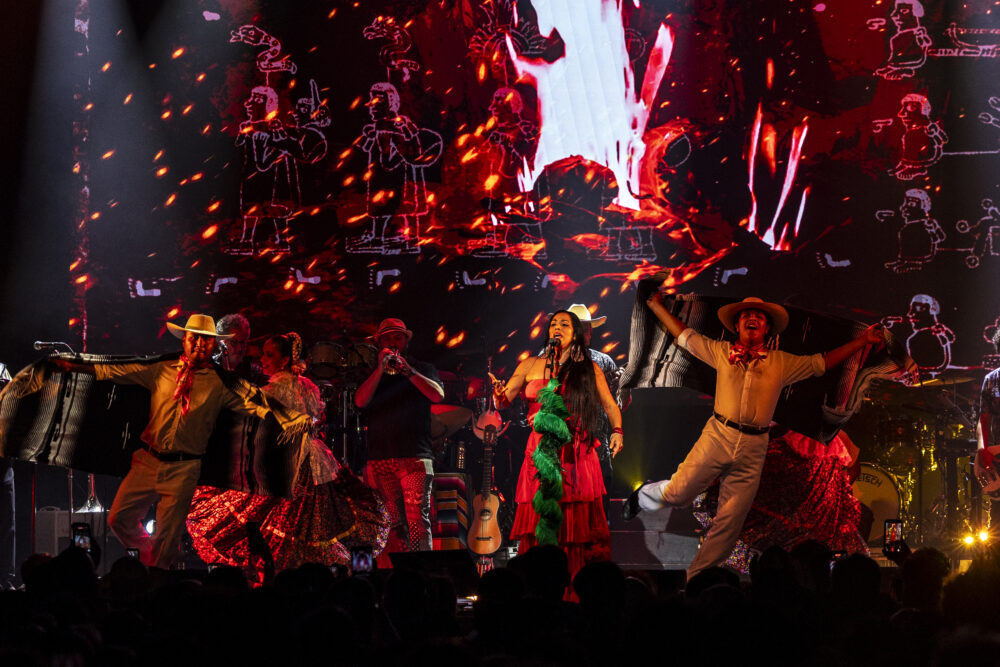
I first interviewed Mexican-American singer Lila Downs at the Montreal Jazz Festival way back in 2012 for a now defunct world music project by National Geographic. This year she easily filled the 2300-capacity MTELUS Theater with an all ages and significantly Mexican-Canadian audience. She peppered her set with traditional songs, and the audience was quite eager to sing along. Looking back at our conversation in 2012, she had explained she saw herself and her music as trying to navigate not just between two countries, but two worlds—the traditional and the modern. She also saw this to be the struggle of her beloved Mexico. "It's the struggle of the rural world and urbanism,” she explained. “And that's always been a thing in my music. It's a struggle between trying to keep both the urban and the traditional alive in the concerts. It's a challenge." And we'd say the same holds true today, though we'd add she seems to have succeeded in that mission. Not only was the theater packed, but she also had six musicians and six traditional dancers packed on stage with her. It was a real full-on stage production, choreographed and set-designed, where one could easily imagine being transported from Montreal to a fiesta in a pueblo two borders south.
Still staying on the Latin side of things, we were delighted to discover Colombian jazz flautist Anamaria Oramas. She plays not only the classical flute, but also the traditional gaita—the most iconic musical instrument of Colombia—and the gauta, a frankenstein-ed creation of a traditional gaita mouthpiece, made of beeswax and charcoal, and the metallic body of a classical flute. Oramas is credited as one of the artists who have brought the gaita from the village to the urban environment in Colombia where a younger generation is both looking back at its origins and forward to using it in other mediums. She also consciously draws on traditional Afro-Caribbean rhythms and melodies from both the Northern mountain and Western coastal region, rather than look to North American jazz for inspiration. We had a chance to meet up with Oramas and will post an interview with her shortly.
Unfortunately, there was little African music representation this year. According to festival programmer Modibo Keita it wasn't due to visa problems, it “just didn't turn out that way.” But local afrofuturist band Afrotonix performed. We’ve done a deep dive episode into afrofuturism and spoke with Caleb of Afrotronix back in 2023 that’s worth checking out. The other act that made the cut was South Africa's Thanda Choir. Born in the Khayelitsha Township in Cape Town, one of the most impoverished areas of the city, the choir's mission is to bring hope and opportunity to these young people. Their performance was both inspirational and entertaining.
We were so excited to finally have a chance to see the Toronto-based Kazdoura, a band we tearfully missed seeing at WOMEX last year. The Juno award-winning band is a project of Syrian vocalist Leen Hamo and Lebanese multi-instrumentalist John Abou Chacra. The name, Kazdoura, means “to stroll” in Levantine Arabic. Their big hit, “Khayal,” Hamo explained on stage, is about being a displaced person, feeling you are at once physically somewhere, but your spirit is wandering and unsettled. This feeling is beautifully realized in their video for the song.
Wrapping up, we were quite taken by anaiis and Grupo Cosmo. Anaiis is French-Senegalese, grew up around the world, and is now based in London. While she was mostly known as a neo-soul singer, on a whim she applied for a project sponsored by the British Council and was selected to visit Brazil for a month to soak up the music and culture there, just before the pandemic began. Post-pandemic she returned and gathered a group of incredible Brazilian artists including Sessa, Biel Basile and Marcelo Cabral. At the concert, she had also drafted a local string trio to complement the band. We had a lovely conversation with anaiis which will be available here in the future. Her concert was spectacular, taking us into many different musical spaces, but the Brazilian sounds were always there. Her lyrics consistently focused on her diaspora experience and being a Black woman in the world. She has said, “My work revolves around the Afro-Caribbean diaspora and all those who have been displaced. My music, everything I believe in, everything I fight for, is connected to that.” These feelings are most directly expressed in her song “B.P.E,” which stands for “Black People Everywhere.” She also co-directed the video for the song—yet another of her many talents, as she attended NYU's Tisch School of the Arts.
We saw enough great music to keep our souls buzzing for quite some time. And we hope you have now discovered some new music for yourselves here. As always, we look forward to next summer in Montreal. Stay hydrated.
Related Audio Programs

Black to the Future
Related Articles