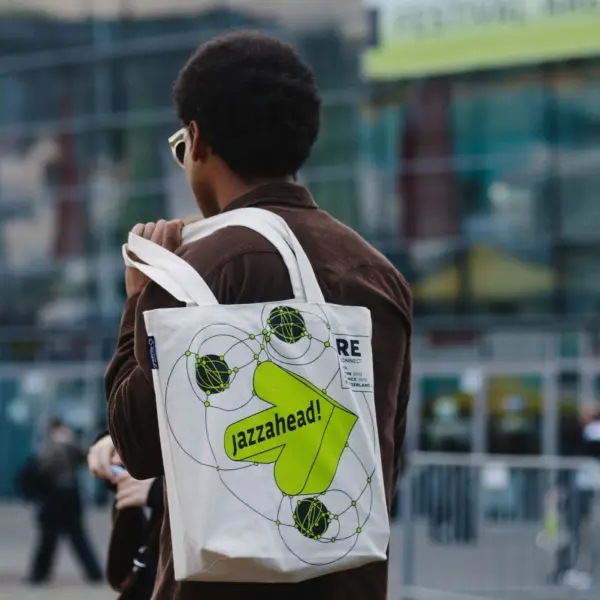
Jazzahead Field Report: 20th Anniversary and the Birth of the Africa Jazz Network
We were standing outside of Jazzahead's trade show area which ran from April 22-26 in Bremen, Germany. It was a sunny, but chilly day. The marketing director and a woman with a video camera came towards us and asked us if we would like to participate in a short Instagram video they were making to celebrate this being the 20th anniversary of the conference. All we had to do is come up with one word we felt described Jazzahead [@jazzaheadde]. After a few seconds of thought, they pointed the camera in our face and we said simply “um, jazz.” The marketing director yelled “cut” and both he and the camerawoman were a bit more thrilled than we thought was called for. We were then informed we were the only respondents asked who said “jazz,” which seemed was the obvious answer.
On Saturday night, the 25th, one of the final – and one of our favorite – showcases starred our dear Senegalese friend, Sahad Sarr [@sahadsarr] exclaimed from the stage, having fun with the conference's name: “Jazz isn’t for the head, jazz is for the heart!” (Check out Banning and Sean's recent report from their 2026 trip to Dakar, featuring Sahad.) Without getting into a long history of jazz, it was definitely born to be music to dance to. And then sometime in the 1950's, smoky nightclubs filled with goatee'ed beatniks scratching their beards with intent had become the look of a jazz audience.
Today, many musicians have brought jazz back onto the dance floor while others still prefer a more sedentary setting. Thankfully, there's room for both – and everything in between – at Jazzahead with a total of 38 official showcases from artists around the globe within the official conference perimeter. In addition, what they've dubbed “Club Night,” which offered off-conference performances in clubs, bars and other venues throughout the greater Bremen area – this year extended from one to two nights – added an extra 120 concerts to the total number acts one could presumably choose to see. While we were kept busy with the number of acts we did manage to see, it was not even close 20 percent of the offerings.
Having been blown away by Sahad at last year's Nuits d'Afrique in Montreal last year, we were prepared for the explosion of sound and rhythm he brings on stage. Though, as you'll see in the video below, the sound engineer buried Sahad's vocals for most of his set, which was extremely annoying.
We were also blown away by Togo drummer Kossi Mawun [@kossimawun]. This was only his second concert outside of Togo, and the showcase gained him instant international attention. The audience of jazzheads gave him rapturous applause for every solo he played. Basically self-taught, he has an original style and rhythm that comes from traditional Togolese drumming and listening to Billy Cobham records. We had a lovely chat with Kossi which we will be sharing here shortly.
Another discovery for not just us was South African trumpeter Sydney Mavundla [@SydneyMavundla]. Mavundla began playing every Sunday at this father's Salvation Army church. Eventually, he became a regular sideman around the country, and his first listed recording session was playing on Hugh Masekela's 2002 release Time. Mavundla released his debut album in 2016 entitled Luhambo, which means ‘The Journey’ in the Swazi Bantu language, and has said that the album musically tells the story of his life up till then. And the world waited until 2024 for his sophomore release, Dirge for our Fathers. Regarding this album, Mavundla has noted that it is a tribute the musical elders' wisdom and music that inspired him both musically and spiritually. Again, as with Mawun's performance, Mavundla was a revelation to attendees and he received a well-earned standing ovation at the end of his set.
We're going to pause here before looking at other artists who impressed up at the conference. Because the African artists we've mentioned above were there as part of a drive by Jazzahead to bring artists from the continent to the eyes and ears of the rest of the world. Three years ago, Jazzahead began to sponsor a “Jazz from Africa” booth at the trade fair. Many, many countries have booths at these music conferences – from Chile to Scotland – generally sponsored by their governments. African nations, for obvious reasons, are not able to provide financing to advocate for their artists. The motivation for this gift was born out of the perseverance of South African artist manager and label owner, Lesley Wells. Wells had come to Jazzahead a few times and, according to Nigerian musician and radio host, Peter Fisher [@jazzandconversations], she eventually convinced them to sponsor a Jazz from Africa booth. Wells then suggested that Fisher be involved.
We asked Fisher to tell us more of the story. “So Jazzahead said they're going to sponsor it for three years, which was great. After the first year, Leslie and I started talking, and we realized this is an opportunity to take jazz on the African continent and move it forward. And with the rise of Afrobeats and all these other things on the global stage, there was an opening for other genres on the continent to feature. And that's what's morphed into the Africa Jazz Network.
“It took a couple of years,” Fisher continues, “but eventually we pulled in some people from South Africa, Kenya, Ethiopia, Egypt, Ghana, South Africa and me in Nigeria. And that basically became the core group. And we had the biggest showing this year at the stand. It was quite obvious that the rest of the jazz community is very interested in what's coming out of Africa.”
We asked Fisher what obstacles have to be overcome to create this pan-African consortium.
“One of the problems is that outside of South Africa, there are no export offices for culture, for art, to support the musicians. It's the export office that typically does all those things. So there's a need for us to create a voice for the continent. And our hope and our desire is that AJN becomes that voice – both for artists and for promotion of jazz festivals.
“Also we're trying to coordinate a calendar so that it becomes possible to tour on the continent, which right now is very difficult for artists on the continent just to tour around the continent. We want to recreate and rebuild connections because that colonial legacy has basically broken a lot of these relationships. So in each country you've got jazz musicians but they know very little about what's happening outside their countries, because they only get to tour within their countries. We want to break that barrier and start making it possible for artists to talk across the continent. But in order to do that, they need support, they need financing, and AJN hopefully will become the body that fills that void.
“For instance, if we can even get one airline to come on board, it will make things a lot easier. Travel across the continent is a big problem. I mean, there's almost no trip across the continent that will not cost you $800 to $1,000 just for an economy seat. And then, of course, getting visas is a whole other problem. All the pieces you have to do across the borders.
“So I think the first thing has to be to enable collaboration across the continent. I think what we have to do is to deal within each region initially. And then we could start talking about going across the continent. That would be one of the targets. But the other immediate target that we have to do is we have to raise funding to ensure there is a Jazz from Africa stand next year at Jazzahead. Because Jazzahead sponsored the stand fully for the last three years, but next year it's not 100 percent on us, but we have to start securing funding. Otherwise, we've all been wasting our time for the last three years. But we believe we can. I don't see any reason why we can't succeed if we have enough people with the right motivation.”
Now back to another group we were thrilled to see for the third time, the Swedish ensemble known as Bitoi [@bitoi.music], which is an acronym for “Bass Is The Original Instrument.” As we've noted in the past, their music is kind of indescribable. Is it jazz? Is it experimental? Is it world music? Is it modern classical? It's beyond genres, but it definitely managed to find a welcome home at Jazzahead by the audience response they received. There are three singers from both Denmark and Sweden, accompanied only by Cassius Lambe, an Ethiopian-Swiss bassist. Lambe creates a background with his bass, which he feeds through electronics, while the singers vocalize a sort of language they've created based on the birdsongs of Northern Europe. As we said, it's hard to explain, but is beautiful and emotional music one has to experience to truly understand.
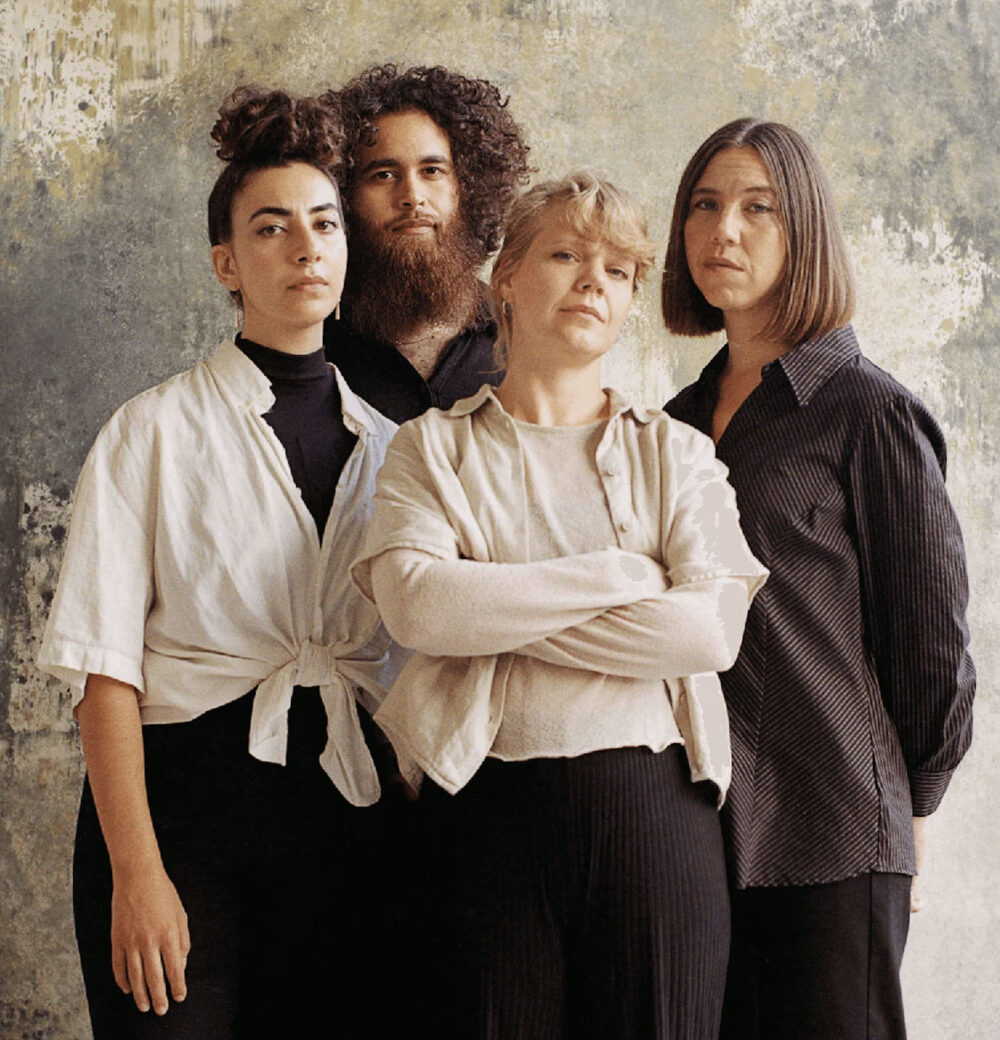
These days, the term “entertainer” is pretty much relegated to describing pop stars – those who sing, dance and generally don't just go on stage and play. This is something definitely unexpected on a jazz stage where typically musicianship outweighs stage presence, though there is a clear through line from artists like Cab Calloway (or more exactly his sister, Blanche Calloway, who Cab patterned his stage act after) to this African-American performer now based in Berlin who goes just by Sorvina [@callmesorvina]. She dances, jumps, twirls, and slides across the stage, as she storytells, preaches, raps and conducts her four-piece band (drums, bass, keyboard and the soulful voice of Charlotte Colace). Sorvina lives in her own musical dimension where Black gospel, hip-hop, jazz, and neo-soul meets.
Àbáse [@abase_music], aka Hungarian producer and keyboardist Szabolcs Bognár, has an amazing story, which we will soon share in more detail in an interview here. The word “àbáse” comes from the Yoruba language and stands for “collaboration.” He spent much time traveling throughout West Africa and later Brazil to embrace and immerse himself within these musical cultures. And he would unexpectedly find that these explorations would always seem to connect back to Hungarian folk music.
Another very interesting performer we were taken by was trumpeter Peter Somuah [@somuahmusic]. Originally from Ghana and now based in Rotterdam, Somuah taps into global musical references from highlife, post-bop jazz and beyond. We look forward to seeing him again.
In sum, there were many more artists we enjoyed, but suffice it to say we had a great time at Jazzahead and continue to applaud their desire to expand borders both geographically and musically for what has been called America's great contribution to music.
Related Audio Programs
Jazz re:Freshed in London
Related Articles