Juliata Cohen: Cabo Verde Came in a Dream
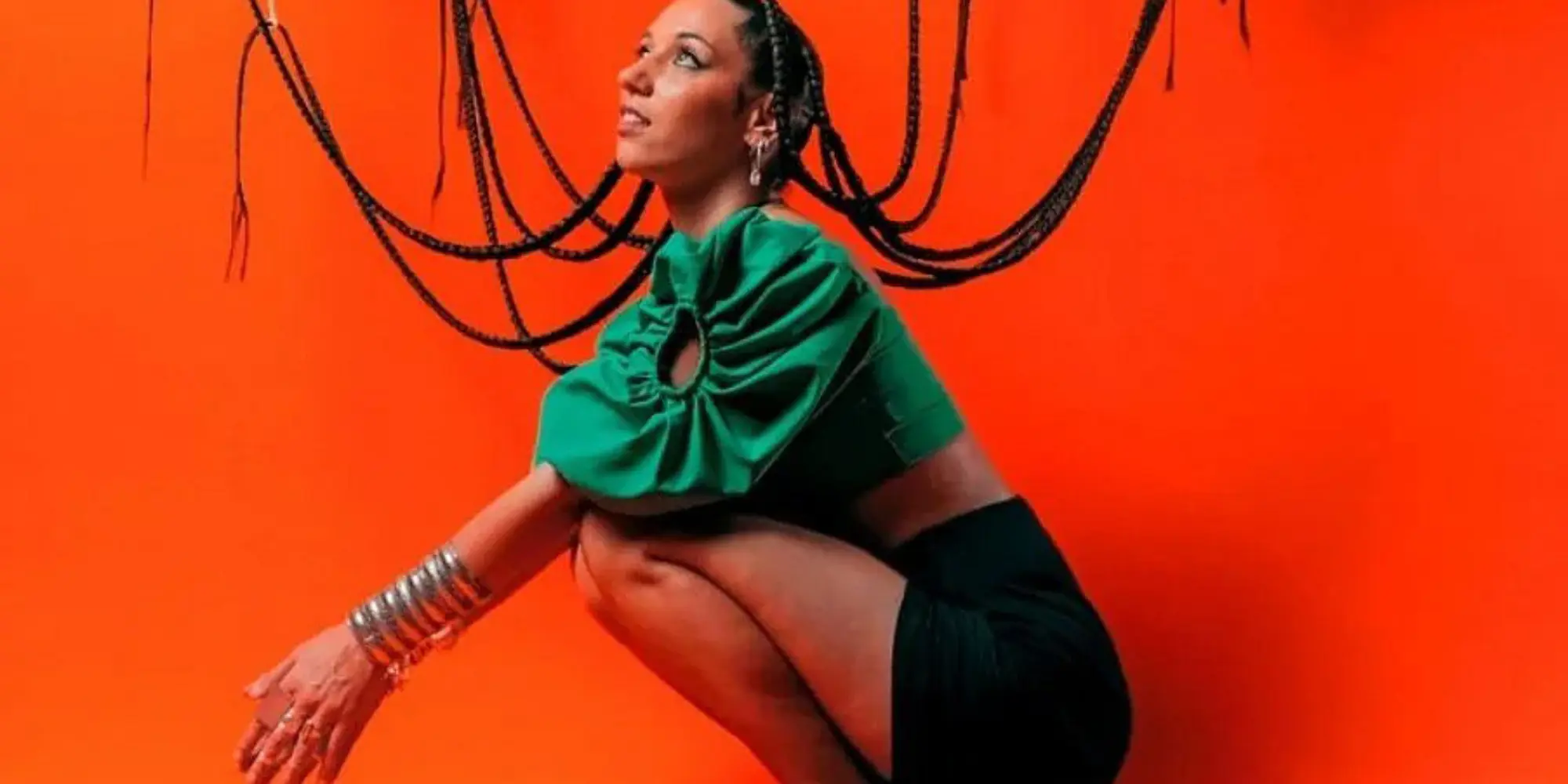
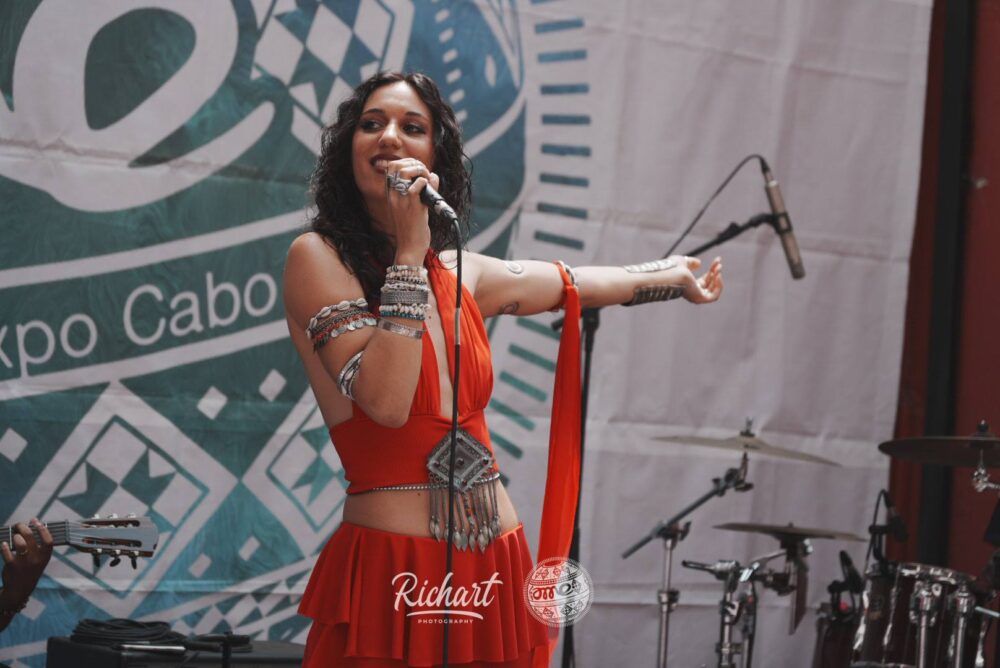
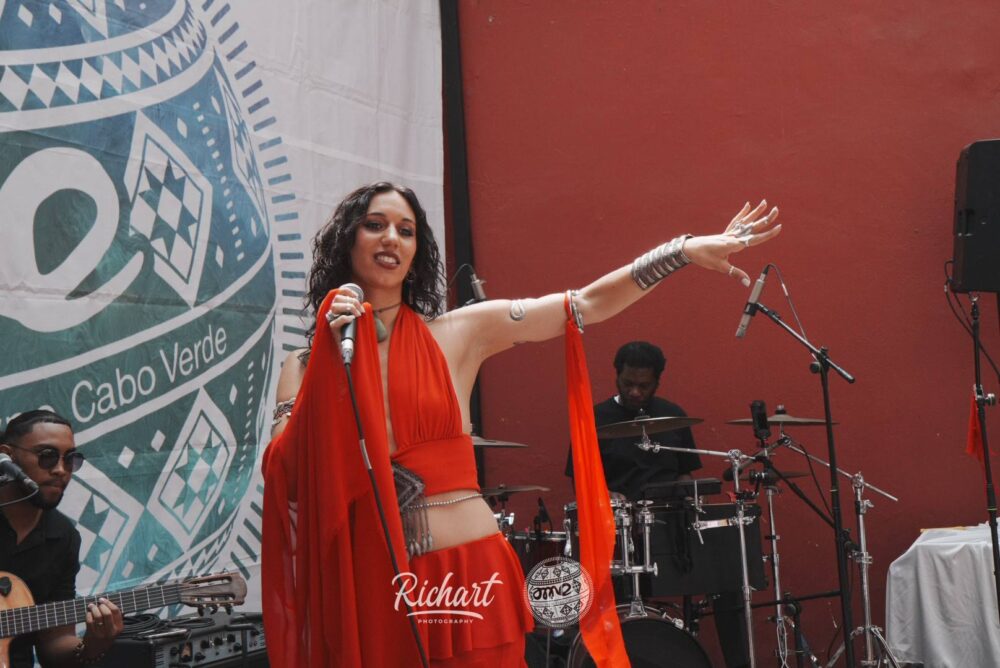
One of the most spell-casting experiences we had at this year's Atlantic Music Expo in Praia, Cabo Verde, was the discovery of 33-year-old Juliata Cohen. Born and raised in Paris of a Tunisian-Jewish father and Moroccan-Jewish mother, Cohen was surrounded by music as a child. Her father owned a musical instrument shop and her Moroccan grandfather played accordion and piano. But it was her uncle, her father's brother, an avid record collector, who showered her ears with music from around the world.
At the age of 21, Cohen began to travel alone through West Africa, and to especially connect with the music of Mali, which she had become obsessed with. Eventually, she found herself dreaming about Cabo Verde and it rapidly became a second home for her.
We had a chance to chat with her after her showcase to hear about her music, life and adventures.
Ron Deutsch: When did you start to sing?
Juliata Cohen: I was always singing since I was three. But my parents pushed me to develop and to learn about music when I was 15 years old. I went to a music school where I was learning solfège [a format for teaching music], instruments, vocal training, and everything, and theater also and dance lessons. So it was a kind of art introduction.
And I think I really took it more seriously around 21-22 years old when I started to travel by myself to West Africa. I really wanted to go back to the continent of my roots. I felt I was connected deeply with many languages through music. I wanted to explore Burkina Faso and Mali, also Morocco. And this is how I discovered Cabo Verde. This is how I fell in love with the country. So it was from all these artists that I met on my road, all the collaborations with different producers that put me in a situation so that I began to take it a little bit more seriously.
So when you say you decided you wanted to explore Africa, growing up, did you always feel that was something inside you?
Yeah, I didn't have a choice. Like I felt I'm a free bird and that if I stayed too much in France it will be too small for me, you know? This is why I just took my bag by myself. It was very hard in the beginning for my family because I'm the only girl with only brothers, so they were super-protective. But I let them know that it's more than a dream and no matter where I will go, I will never forget where I'm coming from. My grandmother was the only one who always gave me the blessings, no matter what. She gave me a lot of courage also.
Both your parents are Jewish. Were you raised in a religious family?
It was kind of a traditional family – not so religious, but more traditional. We were always doing the traditional parties in a way that it was very beautiful to join all the family together and celebrate. But it was never something like an obligation. It was just traditional. For me, to be Jewish, it's more about faith than really doing everything about the religion and following a specific mindset or way of living. For me, it's just something that I felt deeply inside of me and inside of my story and what my grandmother always taught me. I grew up in a family with a lot of tolerance and a lot of acceptance also about others religions and other cultures. And I'm very proud to share it because these days, it's growing hard sometimes to say that I'm Jewish because of the political situation that affects everything. So I believe that even if we are minorities in terms of spreading peace, spreading coexistence and spreading a message of unity, I would say that history always shows us that sometimes we have power enough to realize what we want. So I'm one of these kinds of voices.
Now I could understand you maybe wanting to go to Morocco, Tunisia, even Algeria or Israel to explore your roots, but what made you choose Burkina Faso and Mali? Was it to explore the music?
Yeah, it was totally musical driven, and also some connection with some humanitarian organizations that made me choose these countries. But especially one language called Bambara [or Bamana, lingua franca of Mali], which caught my attention with a lot of music from the desert with the blues from Mali. I really connected with it from my childhood naturally. So I really wanted to understand even more what they are saying in their songs. It was like touching my heart so deeply that I felt, “Okay, it's a kind of language that connects to my soul, and I'm sure there is a reason for that.”
And it was from this uncle of yours that you heard it?
My uncle really showed me a huge universe of music and from every continent. So this was a very good introduction for me. He was just a music lover. And this is why also I decided when I started to focus on my own composition and my own music, it was really important for me to write in many languages. Because I wanted to express my message, express my journey and my mission to everybody without borders. I started to write in French because it's my mother language. But afterwards I started to write also in English, in Hebrew, in Arabic and in Creole from Cabo Verde. So it was coming from a desire to share a universal language.
You were talking about some humanitarian organizations. Was it a job you took?
It was a volunteer job that I heard from someone that there was a very interesting mission in Burkina Faso about taking care of children that were in a treatment program for skin disease. So during all the time that I was there, there was a lot of healing. These children were just there alone every day there. So they were looking for someone who can create activities, education and music. I really felt that music was able to heal their pain in that moment. So that's why it was important for me. And it was an amazing experience because after that, I created a magical link with so many families. Then after my mission there for three months, the families just invited me into their houses. I was traveling inside Burkina Faso, going to visit families and trying to understand better the millions of cultures that they have there.
Tell me some of the things that you learned there.
I learned so many things. A lot about humanity, first of all. Because a lot of people before I was going to Burkina Faso were telling me, “No, you should not go there. It's the poorest country in West Africa. There is nothing there.” And I was like, “Okay, it sounds good. It sounds interesting. That's exactly what I want to do.” So this is why I got even more surprised by the people – the way they were hosting me, the way they were living, just their lifestyle. So I think I really learned to live in a community with a totally different mindset than mine, and coming from a totally different reality than what I was coming from in Paris.
There is that shock of, you know, understanding what privilege we've had that you didn't necessarily know. And that sort of thing can be very shocking at first, no?
Yeah, I passed through many things in that time. It was not that I felt in shock, because I think I was prepared for that and I built myself up for that also. But it was just a process to realize in this huge world how many differences there are and injustices also sometimes. And this is what, you know, what pushed me to share my story and to push also people to travel – to go out of their boxes and to not stay with prejudice.
This is not something a typical 21-year-old does. Do you feel that was doing something really out of the box for someone your age today?
Yes, yes, I felt it deeply. Because in my age, every girl of my age, they want to go to buy bags and shoes and go to, I don't know, new discothèque and parties and everything. So, yeah, I really felt that this need to travel in the African continent by myself was a courageous choice, let's say.
And then when did you start actually performing? Like you were traveling, learning these different languages, learning about people and the world, music and ideas. What was that transition to turning that journey into music?
I think it came naturally on the way. Like I didn't stop one moment and tell to myself, “Okay, it's about time to do it.” It just came as a natural process, let's say. But I was more feeling like I passed through many things and it's inside of me now and part of my soul. So it came from a natural process that I realized now it's time to do something with all the things and share my message and share my experience to the world. And this is why also I wanted to write songs in many languages just to create a bridge of peace.
I did not so much in perform in clubs. I never wanted to sing in bars, though I've done it sometimes. I really wanted to focus on places where people really pay attention to the music and where they respect artists for their work. And I really wanted to touch people at their source. I was always looking for places appropriate to do that. I also really love an intimate place with a special energy or a special context or a special decoration that brings a deep magical connection with the public. So it depends. I used to choose also small places with 50 to 100 people maximum, but with a very special magical background that was creating a special and unique moment.
Also, in Mali I had the chance to be on stage with one of the most amazing artists, Amadou and Mariam, upstairs in their house. They invited me for a song and to be in a video clip for a message of peace. I also got the chance to go on stage in France with Fatoumata Diawara, also an amazing artist. I got the best welcome, even more than what I was expecting. And this happened also to me in Cabo Verde where I had the privilege to open a show for Mayra Andrade and Chico Cesar.
And what did you learn and gain from these early experiences?
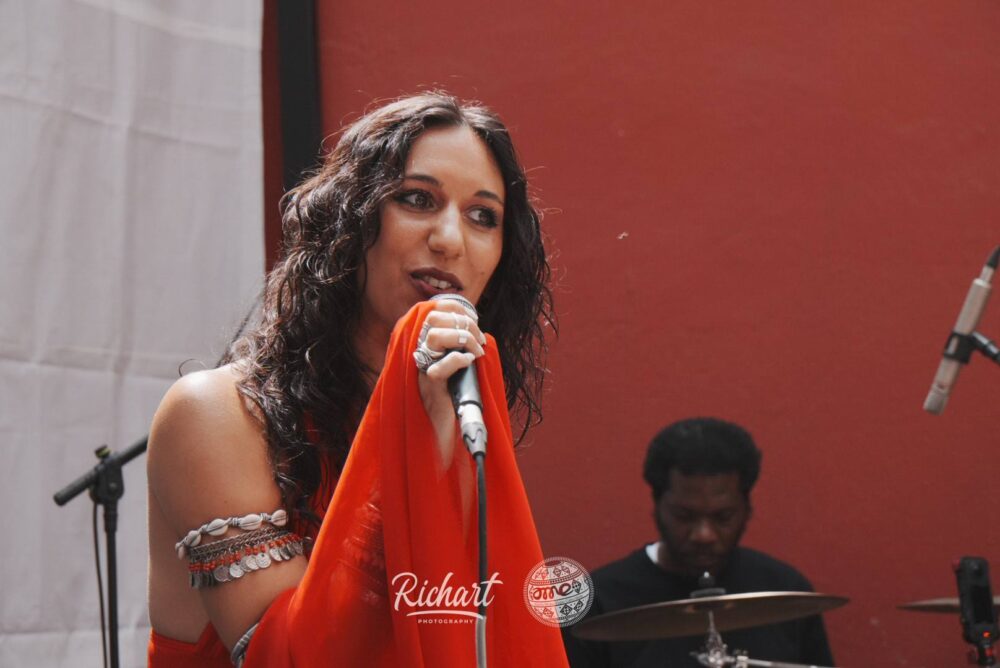
I think a lot of emotions. This is the most important for me after all my concerts or after all my shows, I think the most important is not whether I made a great show. Oh, no, no. It's just about whether I succeeded to touch the heart of the people? Yes or no? That's all. And if I'm well aligned to myself and I eat enough just before the show then I'm full of energy. In general, I always try my best to succeed in this mission.
What's your favorite thing to eat before a show?
I love to eat fish. It's gives me energy and also, as my grandmother says, it gives me protection.
So how did you wind up coming to and living for a time in Cabo Verde?
The most special thing that happened to me is that before I came to Cabo Verde, I started to dream about it, very strong dreams. Like I was just walking in the streets and grandmothers here were giving me blessings in my dreams. I was so attracted to the music and everything, and I wanted to discover the place. But when I started to dream more than one time about it in that way, I felt there is something very strong waiting there for me. And the first moment that I arrived, I got off from the plane, put my feet on the floor and I felt a kind of energy that spirits told me it was not the first time that I came here. After a few days, people would tell me, “Oh, you are a Cohen. There is a lot of families named Cohen here.” And this I discovered, I think, was the strongest experience because I really didn't know at all about this Jewish heritage of Moroccan people living in Cabo Verde. And it was like I just came back home in a way. This was in 2020.
I had only one contact when I arrived with an amazing artist called Princezito, who is performing a showcase also this week here at the Expo. And also it was when the COVID arrived, and I decided to stay. I had the chance to come back to France, but I decided to stay and I had no regrets about it.
And so how long did you wind up staying?
Between three and a half and four years, coming and going. That was all the COVID time, and after I used to come for six months working then coming back to record different projects here and traveling always like so.
So you really found a community of consistency here that you really connected with.
Yes. They were really open and really very attentive and delicate to understand my universe
and from where I'm coming, and for me to catch it along with other influences. So it was important for me to keep that.
And then through Princezito, you met his brother, Mario Lucio, the musician and former culture minister, who invited you to go to Lisbon and record some songs of yours.
Yes. We had a magical connection. And the day after we met, I let him listen to my compositions and he naturally started to play them exactly in the way that I was dreaming about. And after two days, he just told me, “Okay, let's go to Lisbon, I want to record your album.”
But at that time you were already about to start recording your album to be produced by Jose “Djo” da Silva [@lusafrica.music], the man who discovered Cesária Evora and also founded the Kriol Jazz Festival here in Praia.
I was just starting to record my album with Jose so I let him know that Mario Lucio offered me this opportunity. He told me, “Okay, go and when you come back from Lisbon you let me hear the recordings and if it's aligned with what I wanted to do with you, we can just release the album on my label [Lusafrica].”
And how has the album been received?
For the moment, after one year, I got the chance to perform in four continents. So for one year, I'm very grateful. I had a very good welcome in France and Portugal specifically. And after I came back to Cabo Verde, to some festivals, and I got the chance after to share it in Israel also. So for the moment, I'm very happy about it. But I still feel that it will fly and travel around the world. So it's just my first introduction to the world, in a way. It's my first album.
Is there a particular song you are most proud of?
The album has eight songs; five of them are my own compositions. There is one duet with Mario Lucio, a song that he wrote a long time ago that we made a duet on. But it's a mix of cultures and languages. I think the two first ones are a very deep introduction to my style musically. “Je t'aime ti di mas,” is like Afro-Oriental groove, written in French, Creole and Hebrew.
And the other one is one of my favorite compositions called “Le Masque est tombé.” And it's written in French and Creole. And it's about people wearing a mask and lying and playing a role.
And I start with a sentence that “truth always wins.” It always wins. This is something I believe in.
So what's next?
New inspiration, new compositions, new groove. My first album was a very intimate arrangement. Intimate. Intimate. Intimate. But I start to feel that I need to spread more my funky energy on stage. So I'm thinking about writing songs in the same way, but with a different energy. I'm working on some collaborations now.
Thank you very much.
No, thank you for that.
Related Audio Programs
Related Articles