Kongo Dia Ntotila (KDN): Congo Music Rocks the UK
Banner photo by Paul John Roberts
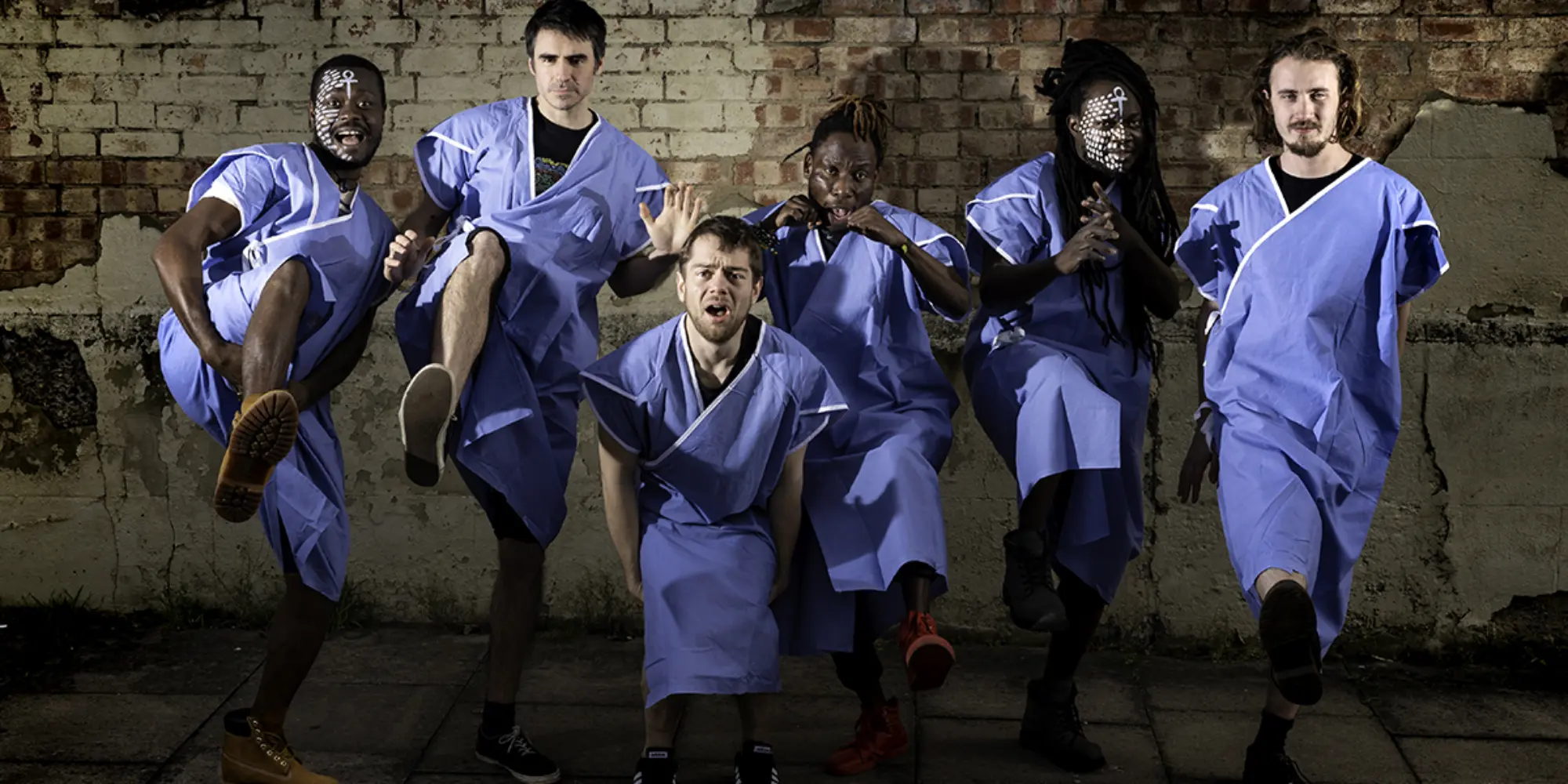
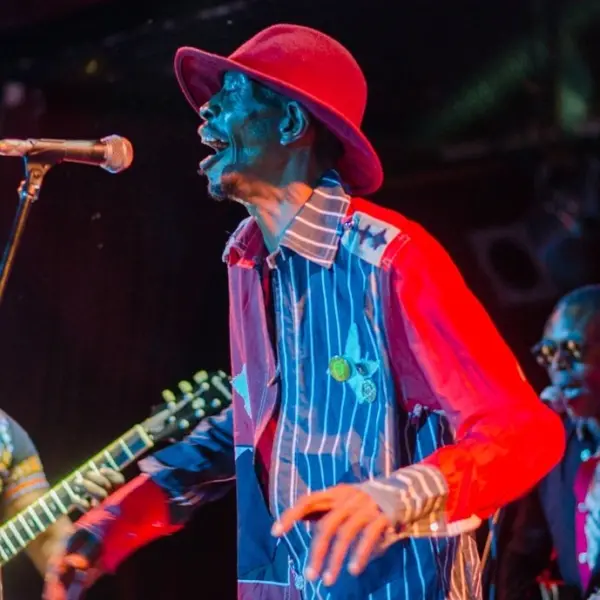
In recent years, Afropop has been in touch with an unusual band in the U.K. playing Congolese music, with a twist. The music of Kongo Dia Ntotila (KDN) is hot and driving, strong on the characteristic elements of Congo sounds, from rumba to ndombolo, but there are adventurous jazz touches as well, improvisation, chromaticism, turn-on-a-dime arrangements and more. The music stretches towards new horizons without losing its essence. The band’s brass section is particularly inventive, playing lines buried deep in the groove and in tight conversation with the guitars and occasional vocals. KDN’s music is primarily instrumental.
The band debuted in 2011 with the album Seben Steps to Heaven. Mulele Matondo Afrika (a.k.a. Ponpon Matondo), born in the Democratic Republic of Congo, wrote and arranged most of the music on that first album. He was then already a veteran of bands in Congo, Zambia, Zimbabwe and Botswana. But KDN’s music has grown out his partnership with British jazz guitarist John Kelly.
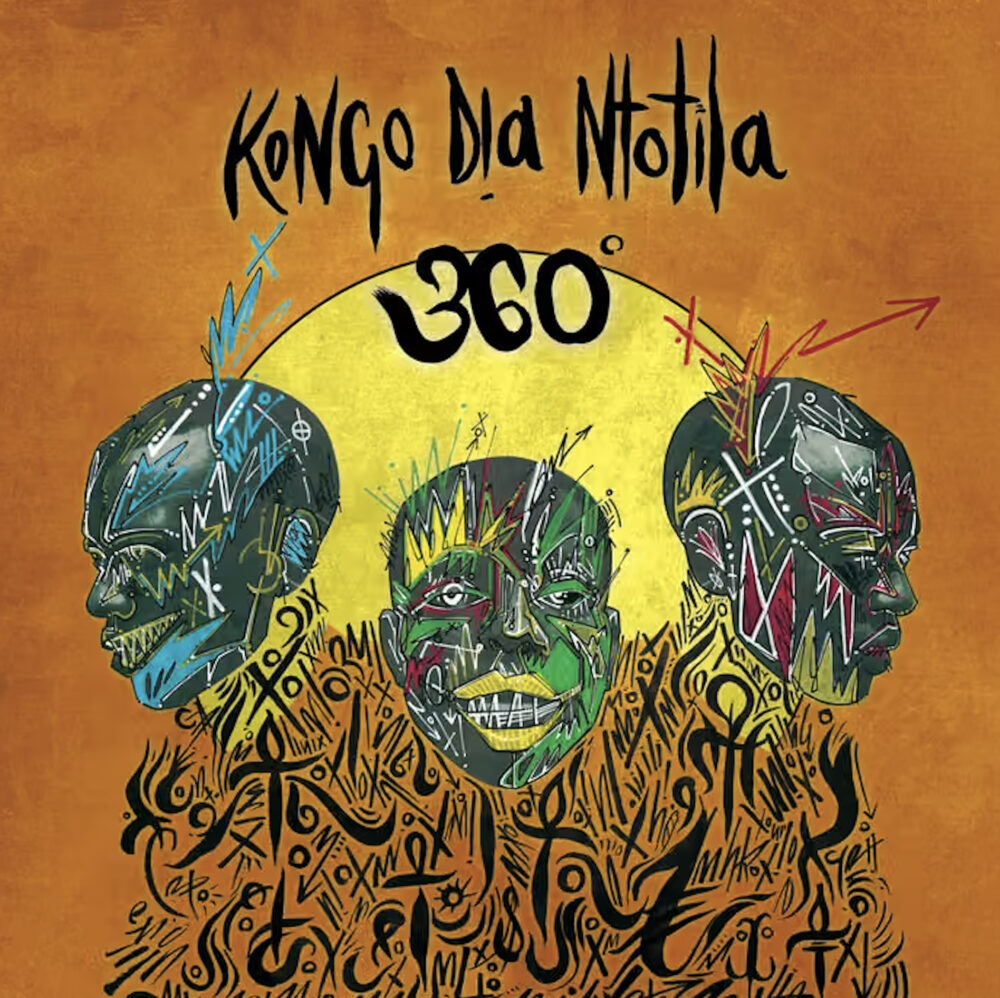
KDN shared with us an advance copy of their upcoming third album, Moving Fire. (Their second, 360o, came out in 2019.) The album drops in September, but the first single is out today, June 12. Check out "Mathrobeat."
The new album stands out for the band’s mastery of genres, its relentless high energy, and more of those surprising stylistic turns, all while keeping the music danceable. They call their music "Afro joy." Afropop’s Banning Eyre wanted to know more, so he reached Mulele Matondo, John Kelly and the band’s manager Birikiti Pegram over Zoom for a chat. Here’s their conversation.
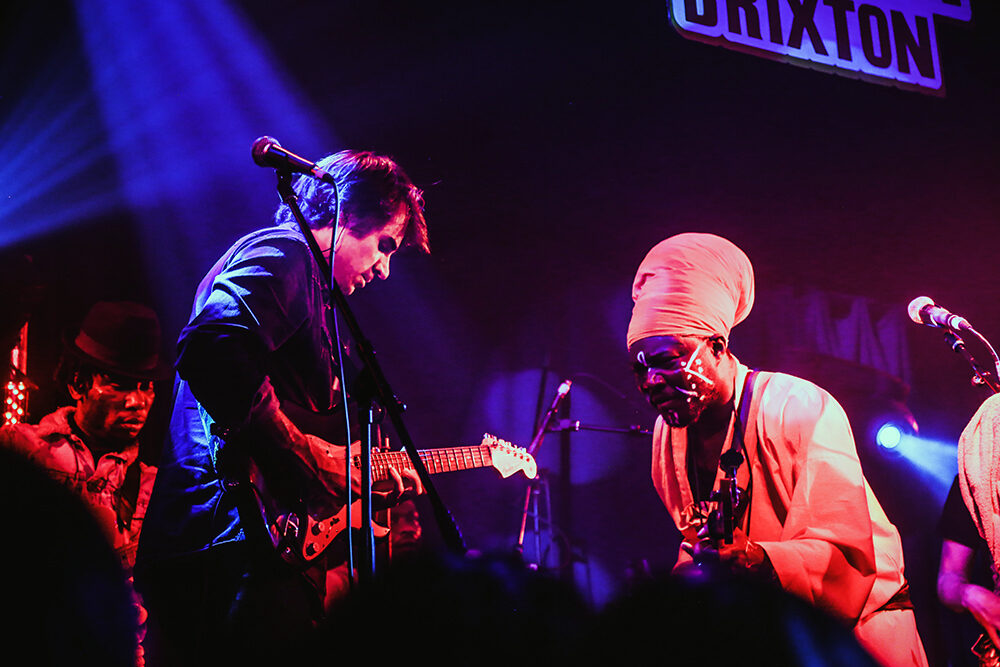
Banning Eyre: Very nice to meet you folks. I've been enjoying your music and looking forward to hearing your stories. I understand you’re in rehearsals now.
John Kelly: Yes, we did a bit. We're all scattered around. Our drummer is up north at the moment and our sax player lives in Cyprus, but we got together a couple of weeks ago and did a big, long rehearsal, and since then I've been meeting with Mulele a lot and doing bits and pieces.
Let me start with Mulele. I'm curious about your background. I first went to Kinshasa in 1987, and again in 200s, and I used to play in Congolese bands in Boston in the early ‘90s. I read you were in one of the formations of Papa Wemba’s Nouvelle Generatión, right?
Mulele Matondo: Yes, I was.
And then I was very interested that you spent time in Zimbabwe. You were in The Real Sounds and Lubumbashi Stars. How did you wind up in Zimbabwe and what that was like?
Ah, it was very interesting because we had a band in Congo called Equinox. We left Kinshasa, because we were more famous in Kasai, in the south of Congo. So we went to the south, and when we got there, one guy told us, “If you carry on this way, you're going to go to Japan.” It was a funny story, and then we started moving from next town to next town. We went to Zambia first, yes, and in Zambia I had a chance to play with Chris Chali and Amayenga Band. Chris was like one of the founders of Kalindula music.
OK. Kalindula music, the guitar band sound of Zambia in the ‘90s.
Yeah, and then I played there a bit. I learned Zambian. It was very interesting, because it was far away from my norms of Congolese music. There were different techniques.
Of course.
So I learned it a little bit, and then I had a chance to move to Zimbabwe. That's where I settled down a little bit, and I joined Lubumbashi Stars. I was first in Real Sounds. And then, because Real Sounds went down, I was solicited by the Lubumbashi Stars.
I remember them. They played something like Congo rumba, but for Zimbabweans. This is the ‘90s, right?
1996 to ’97.
Interesting. I was there just after that in 1997-98.
I was still there in ‘97-98, and then we went to Botswana, and then we come back again. That's how I started a new band, New Stars Music. So Lubumbashi was one of the bands that made me understand that music.
I was in the world of Thomas Mapfumo then. I think I saw Lubumbashi just once.
I met Thomas Mapfumo. It was a funny story. We were playing with Lubumbashi Stars and Thomas Mapfumo on the same night. Thomas Mapfumo decided to put two doors. He didn't want to share 50-50. You know Thomas Mapfumo.
Yes I do.
So he wanted to have two doors, one for Lubumbashi and one for him. And then everyone's coming for Lubumbashi, so then he changed his mind.
Oh boy. Was that in Harare?
Yes, in Harare.
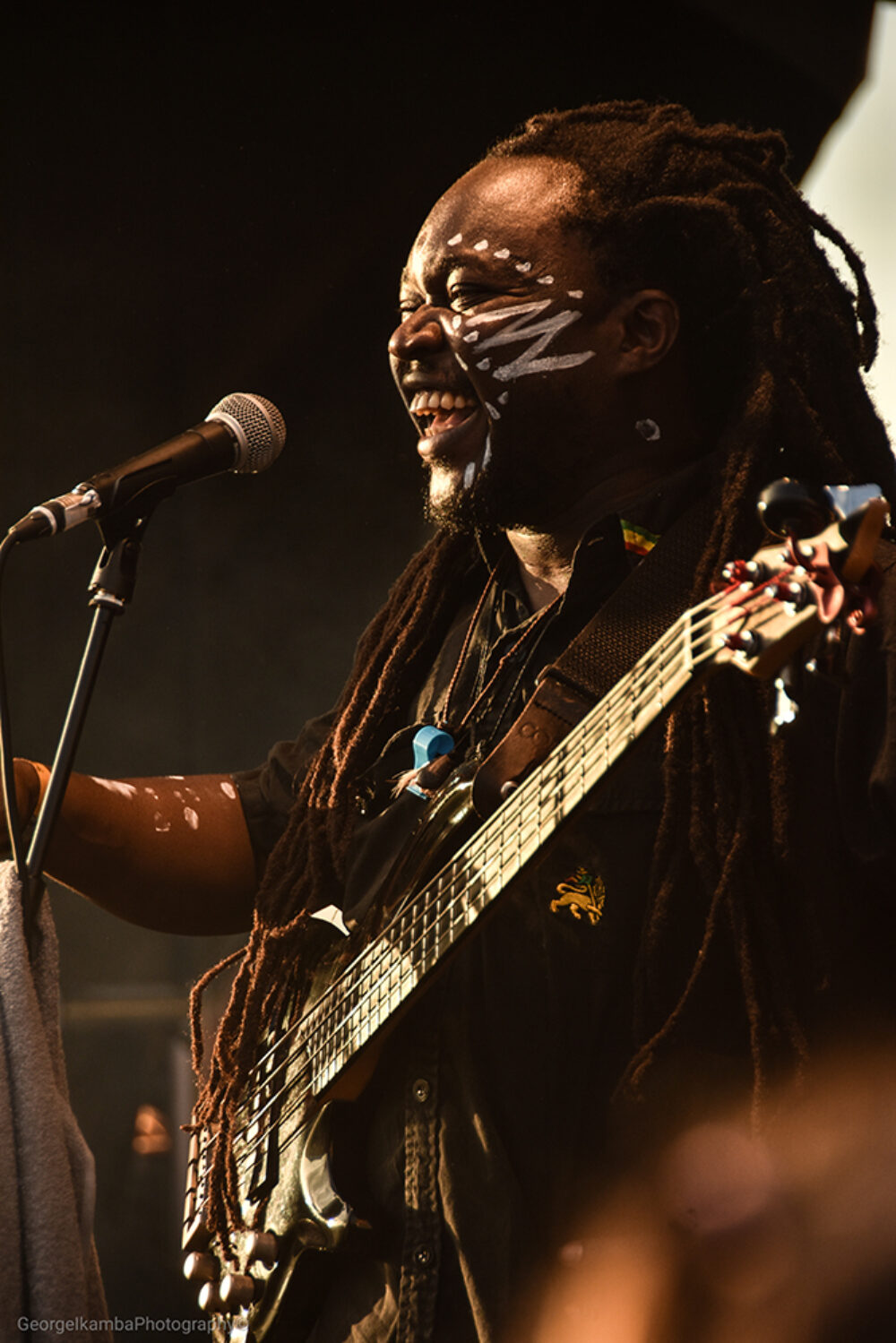
Birikiti Pegram: He played on Lubumbashi’s last album, Cyclone, and he did a lot of the arranging. You know how they do mabanga, calling out names. So you hear them shouting him out, “Ponpon Matondo.” Ponpon was his name.
[Editor’s note: I can’t find this album. Apparently it came out only as a local cassette.]
That's funny. I remember the way people perceived Congolese rumba at that time in Zimbabwe. Some people were snobby about it. When Kanda Bongo Man came, some thought that dancing was way too sexy, and there were complaints about that in the newspapers. Zimbabweans can be a little prudish that way.
Mulele: But you know, now in Zimbabwe they are playing Congolese music. It’s huge.
Yes, of course. It was very popular then too.
I had a chance to play with Aleck Macheso too. If you talk to him, just tell him you spoke to Ponpon.
Ah yes, the reigning king of sungura music. Love it. So how did you end up going to England?
I went to England because when we went to Botswana and came back, it became a problem where the Minister of Information in Zimbabwe changed the law. So they're going to play 75% local music.
Oh, I remember this. That was Johnathan Moyo, and it was very controversial.
It was really kind of shocking because Congolese music dominated the Zimbabwean music. So the business changed. It was difficult. And then I immigrated to London.
I'll switch to John now. John, you were teaching guitar, and Mulele was one of your students, right?
John Kelly: I was working at Leeds Music College, where I had studied. Leeds had a habit of giving jobs to recent graduates. So I had a job there for about four years, and Mulele walked into a session. I could tell, as soon as he walked in… I said, “Oh, where are you from and what do you play?” And he played me something. I was like: Okay, he knows what he's doing. He's not like the others. This course was a real mixture of people who were there for lots of different reasons, basically, to get through the system. You needed grade-five theory to do whatever course. I can't remember the details, but there was a mixture of mature students and teenagers, basically, there for all kinds of reasons. So I wasn't altogether sure what he was doing there.
But at the very first lesson, I said, “Play me something.” He did and I thought: Okay, he's not like the other students; he can teach mesomething. So we did the lesson. And then he said, “Okay, now you play this.” And he gave me a seben [the quick-cycling, danceable end section of a typical Congolese song]. I was like: Oh, great! Because a lot of the teaching I did on that course… I used to dread it, because a lot of the kids were just time-wasters. “I'm just going to get my head down and do this course so that I can get in the system and do the next one, the next one.” So most of it was a nightmare. I didn’t know what Mulele’s game was, but I was just glad to meet him, because I'd listened to various bits of African contemporary music.
So you knew a little about it then.
Well, not much. The thing is, I was curious. I don't know if I'd listened to any Congolese rumba. I don't think I had, but I'd listened to various bits of West African stuff. And I listened to a lot of Latin American music and when I was a student, I lived with a conga player. I was fortunate enough that when I did my jazz degree, some of the tutors around about that time were quite hot on the Latin scene, and some of them had traveled to Africa as well and did play us a lot of things. I was glad I had coincided with these tutors, because I had listened to more than the average jazz student.
This is the early 2000s, right?
Yeah, early 2000s. London had a big salsa scene leading up to then, but it sort of trailed off about 20 years ago. Anyway, I had ears for it and I was glad, because this is the kind of thing you can't… I mean with Latin music, you can study it, you can learn easily enough. Whereas with African stuff, I can grasp what I'm hearing, but unless you know someone, you can't penetrate it. So OK, I've got the opportunity to learn. And then from that, literally from the first day, the first session, I used to go over to Mulele’s quite a lot and hang in his place in Bradford a lot of evenings. We'd play loads of seben and he'd play me loads of things. And then we'd do a little bit of extra of whatever I was doing with him at college. It went two ways, and we'd just play music. I miss those days because it was a lot easier then, traveling around Leeds. I could get to his place in 20 minutes; it was no problem.
Not so much anymore?
No. But yeah, it was great. And then it just happened from there, really. I didn't know where we were heading. I was just learning stuff, and after a very short time, he said, “Do you want to make a demo?” The students in the production course were offering to make demos in their basement. They set up this little studio and they didn't do a very good job. But Mulele said, “I've got this drummer, this Congolese drummer who is going to come up from London on the megabus.”
So I'd learned like a handful of sebens. I was in the deep end. And then we went in this basement we laid down some guide tracks. That was the first time I experienced exactly where we were heading, because I'd seen him play bass once. I was playing the seben and he picked his bass up and I was like, “Wow. This is incredible.” Then when we got with the drummer, we started playing. I was just playing what I was given. But once it got going, I was literally like two feet away from both of them. And I was like, “Well, so this is what they do.” It's like being right inside it, and that was only a rhythm section, just three people.
So was that the beginning of the band you have now?
Yeah.
That's fantastic. I can relate to that. I had a somewhat similar revelation the first time I went to Kinshasa in 1987. I had a gig to write for Guitar Player magazine. As soon as I had that kind of “show me something” experience and heard how the guitar parts fit together, I was hooked. But what I find particularly interesting about your band is the way you use the horns. They’re very rhythmic. Talk a little bit about that about how the how the horns came into it.
John: Well, the horns came later.
Mulele: A first, it was just three of us. A guy called Daddy was the singer.
John and Birikiti: Beautiful voice.
Mulele: And then I realized that John is ready, so I called a drummer. I met a drummer from London in Glasgow, and I showed him a video. And he's like, “I want to meet this guy.” He didn't believe that a white man is playing this guitar. I told him, “This English guy is playing this guitar.” He said, “No, you're lying.” I showed him the video, and then he was interested. And he was a great singer as well. So that's how we started.
Now, the horns. When we moved to London, me and John, we had one gig in the Rhythm Tree Festival [on the Isle of Wight]. John wrote for the horns, but there was a problem with the horns in London. They had only one day to practice.
John: They were like an add-on. We played a lot without them and if we had a gig we'd write some horn parts, just the typical stabs that they play. But that wasn't good enough.
Mulele: Because with this music, it’s complicated. So we stayed just three, four or five and then one day, John knew these guys from playing jazz.
John: Well, I used to work with Will [Scott] regularly and I knew he was the right kind of guy mentality to do this and I knew he'd be interested so I said, “What do you think?” and he goes, “Yeah, well how about me and Mike [Soper]?” Because they worked together a lot and I said, “Okay, let's give it a go.” And then it worked.
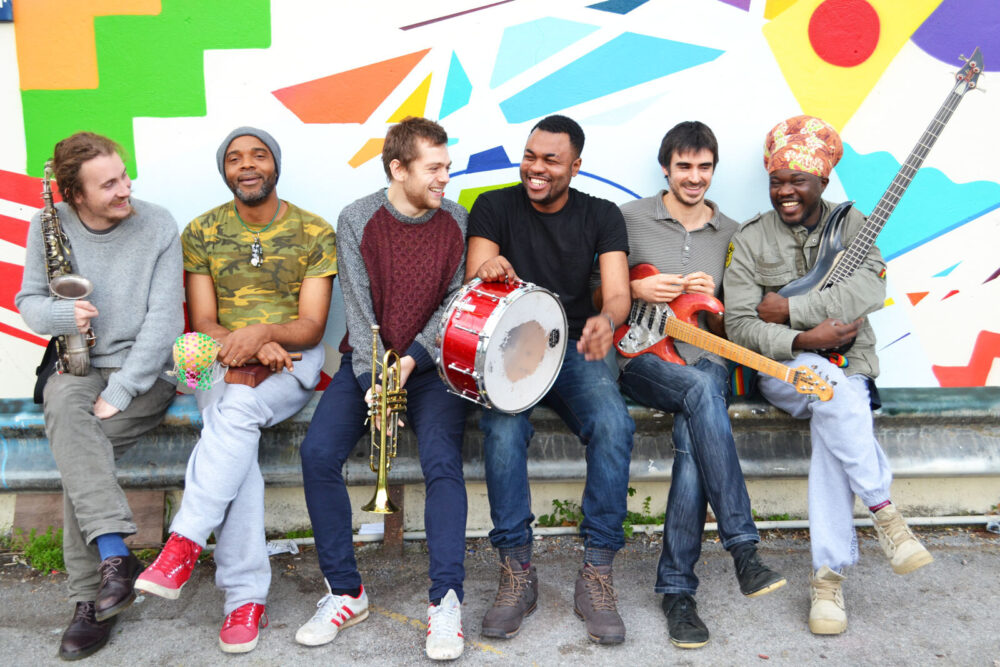
Mulele: In the beginning, I was not sure. You know, are they gonna pick it up?
John: Well, actually, I think it's interesting for us because the way we use the horns… We never had a clear idea. It just evolved. At first it was like you hear on records, horns playing breaks and typical lines. When you've got the chorus of guitars and you've got everything else, it's obvious, and a lot of music outside of African music as well in soul and funk and everything, horns have a very clearly defined role to step into. So it was quite obvious in the early days. We'll add the horns and they'll do this, but only once we've built the foundation, and then they’re the icing on the cake.
But actually, we got impatient. Mulele and David [Lessie], the original drummer, were like, “We need a catalyst to make this grow more. Let’s bring some horns.” I didn't think we were ready for them because we still only had one guitar at that point. But then once we added them, the way they play just happened. Will, especially, plays a lot of old jazz, a lot of highly contrapuntal music and that's what attracted him to the music, the counterpoint.
A lot of modern jazzers don't really think about counterpoint that much. So Will had that kind of ear, and Will and Mike work well together because they know each other. They just found a sound and I think it's still evolving. But at first, we were a bit unsure, like Mulele said, but something worked. So it was just a happy accident really, that we've found a different style, because we've allowed the jazz side to come into it where possible. It wasn't like we had a clearly defined role where they’re just going to play the obvious stabs It wasn't like that.
But neither is it like jazz where horns are just free soloing. They lock with the rhythm.
Mulele: In the beginning, we used them as rhythm because we only had one guitar. Will is a saxophone player, and I could see his potential. Because there was a gap. John’s guitar is here. The bass is here. So they came in the middle.
As if they were guitars.
And then when my brother came, the second guitarist, I don't understand how they did this. They just changed.
John: I think by the time the extra guitar came, they were inside the music in their minds that they could just do something. Will listened to a lot of Congolese stuff. They sort of found a sound. I guess it was good they had the pressure because when we had no other guitar, they had to be playing like a Mi Solo part [a mid-level accompaniment]. We were sort of getting quite dense and they were under pressure and finding a sound. Then once we had the other guitar, they were free to do whatever comes naturally.
Mulele: Even myself. When I was playing with one guitar, I used to play different things, to try to give the harmonies that I can cover now.
It’s impressive. I’ve played African music with horn players before and I remember one experience in Boston. There were a bunch of Congolese musicians who had landed there in the early ‘90s. They’d jumped ship from various bands. And the trick was to get the American horn players to play rhythmically, because they naturally wanted to just kind of sail over the top and free improvise. To really think rhythmically was a challenge.
John: 90% of the time, they're improvising solos, so that's just their MO, isn't it? It's a cultural thing with jazz. But it’s different in New Orleans jazz. I mean, Will and I play with people in London who do play that stuff. He understands counterpoint. Most reed players think that counterpoint is just playing over the top of something. Whereas Will… We can have three people already doing it, and what's he gonna do? He'll find a space, and he'll make something happen. He’s not about displaying himself; he's very selfless. He just plays something to feed the music. Even if you thought there was no space there, he'll find it. That's his strong point, playing clever counterpoint. He’s got the right attitude for it.
You mentioned New Orleans. That's definitely another tradition where horns are used very rhythmically.
Birikiti: That reminds me. You can hear that in the song “360 degrees,” the first single from the last album. It was a three minute, four minute song. And then after playing it live for a bit, Will evolved it to twice the length with this whole extended outro. It's amazing. The moment that happened was live on stage. It started being composed into a new thing. It was a second guitarist, Dior [Diaka Sakuba], who started it. They were supposed to stop at that point, like a final roll of drums and end. But then Dior just started playing this other thing. And then it was Will who added this tuneful melody. It's pretty cool to watch, if you know how it's supposed to end. The way they compose live on stage is really awesome to watch for someone who knows their music well, especially.
Well, that brings me to the question of how you guys write songs? Do you have a process or is it different every time?
John: Well that song, “360,” I remember. Mulele, you played us the demo. You played all the parts. It was only the live version that got expanded. So sometimes it's like that. But we tend to just jam it out mainly. It usually starts with some sort of idea. He just plays a line and says, “What do you think of this?” And then everyone just piles in. Very often, within one session something gets pretty much…well, not finished, because it's always evolving, but we leave the room we've got something new.
Starting with a bass line.
I think so. Most of the time.
Birikiti: As a witness to him writing songs, a lot of the time, it's something Mulele feels very strongly about, emotionally. Some of the songs that have come the fastest, whether anger about injustice back home, or in the case of 360, around 2017, 18, 19, there was this London jazz scene with all these young kids, like Ezra Collective, Kokoroko… There was just this whole like hype about the New London jazz scene. So “360” was like if they think New London jazz is that, I'm gonna show them New London. That's why you wrote it. It was from emotion.
Mulele: Yes, emotion. I played everything. It started with the drums. Then I called somebody to play the drums and I played the bass line.
John: Right. It was a fully formed composition the way I heard it off the demo that you made.
You talk about it coming from emotion. On the first few songs of the new album, Moving Fire, there are no vocals at all. And even when the vocals do come, they're more in the back-and-forth animation style, not a lot of lyrics. So if songs are coming from emotion, are there messages in the songs?
Mulele: You know, the beats don't speak, but they speak. You say they don't speak, but they speak. The way I see it, the voice is all right. You can do that, but something that can take you to the spiritual level is the instrument. I'm from a Congo tribe. For us, the beat is the most important thing. It takes us to trance. So I had that culture in me. So every guitarist I had played with, they didn't understand that concept. So when I met John, I realized that's what I was thinking. It’s the bass and guitar coming together. That's the emotion, my emotions. Like “360 Degrees” are crying. If you listen to it. Crying.
John: I mean most instrumental music is judged by that standard. People have this idea that if you're gonna be inspired by some kind of emotion, then you're likely to write a song and it's likely to come out the voice. That's the most obvious thing for most people to understand, but it doesn't matter whether it's vocal or not. It's still emotional. If it's not driven with emotion it's dead, isn't it? You know, there's quite a strong precedent for instruments to imitate the voice as well. There are instruments that are based on either animal or human sounds. Even in western classical music it's quite an accepted standard that a violinist should imitate the voice. If they're not doing that they're not playing. That’s how the ornamentation and the affectation of the way they play is judged. You should be imitating the voice in some way.
I find that's especially true in the old Congolese rumba. With Franco, there's a lot in the way the guitars are played. You don't get it so much in the modern stuff, but the way the guitars blend, playing without loads of compression and studio techniques. They're playing together live. The guitars are abrasive, and for me it's a very sad and happy emotion, just like the best music. They're crying but they're also laughing and when those guitars kick in, it's like a sort of emotional trance.
Mulele: I had a chance to study a little bit with the bass player from Franco. I'm inspired a lot by Franco’s Bakongo music, because their music is emotional. I don't listen to it as a guitar, I listen to it as a message.
John: Yeah, yeah. They just sound like they're speaking. Every section of that music sounds like some kind of code, you know? It's spoken or cried.
I get that. Congolese music feels so free and joyful, but it's actually very disciplined music, and it's coming out of a lot of very sad history, obviously. I think that’s the way most Americans and probably Europeans hear African music. When they don't understand the words, the distinction between voices and instruments becomes less important. They're all one thing, communicating emotion.
Mulele, Birikiti mentioned earlier anger about what's happening at home in Congo. I imagine you keep in touch with the Congo. you probably have lots of friends and family there. Is that emotion something that feeds into your songwriting?
Mulele: Kind of. Missing home. You’re far away from home and then you realize that you want to go and then you cannot go.
You can't go.
It’s security. Because you know, my kids, I would want them to live in the place like here. I don't want them to grow up in the ghetto like I did. I don't think it's a good life. If I was in Congo, for example, I could not be living like this. So that's how my inspiration comes.
Brikiti: Mulele does have a solo project. There's a whole album recorded but not released.
Mulele: Yeah. A lot of that emotion went into those songs. They're more political. But I don't want to put political things too much in this project. I want to put it in the guitars, in the music. I don't want to affect anyone.
Interesting. I know that there's a whole narrative about politics in Congo music. Hidden messages. Mbwakolo.
Yes. You know about that. Franco went to prison for that reason.
(Mulele’s anti-Kabila song from 2016)
Tell me about the name of the band. How does that exactly translate?
Kongo is the kingdom, the kingdom before Congo. It was a big kingdom, Gabon, Cameroon, Kinshasa, Brazzaville, Angola.
And dia Ntotila?
Ntotilo is like “ours.”
Let’s talk about the songs on Moving Fire. The first track “Moyibi” is fast six-eight. Am I hearing some mukuashi influence?
“Moyibi” is more like crying. There’s a message we sang our president. Moyibi means “thief.” We said there's no politics.
John: Except for this song.
Mulele: The message is making like a comedy, like mocking the president but he cannot know. But it’s not mutuashi.
John: We had a rough intro and then the dialogue between me and the horns started. I think we just jammed it out. I must have just improvised and then the horns responded. That’s the way music happens, isn't it? I've never been much of a composer, I never really enjoyed composing on my own. I never felt like I was satisfied with what I did, but Mulele is one of those musicians who can't leave a room without having something, even if you're jamming. Jamming means finding something that makes sense, something you're going to remember.
What about the second song, “Matondology,” which has so many different parts. It starts out with drums, and then goes into this frantic unison section before dropping into a strong Congolese ndombolo feel, then more six-eight. And then there's a section near the end that sounds to me like Mapfumo’s chimurenga music, like fast Zimbabwe jit. Have I got that right? How do you make a song that has all those different feelings in it?
Mulele: That's my journey. I went to the world, all the places that I went.
John: Okay, I didn't even know that.
But there is a little Zimbabwe section, at the end, right?
Yup, yup. At the beginning it started, I was in Holland, in Amsterdam, so I was thinking like: how come the Europeans, they can build the city in the sea? And then the Africans, they cannot even build a city on the land. And then I hear this madness, and then I recorded it on the phone, and when I saw John, we made for the jam and I said, “John, listen to this melody.”
John: I remember that song coming together. I remember doing that arpeggiated thing, and the horns harmonized what I was playing. And for the end section, I remember you just stopped and said, “Oh we need another section. How about this?”
I hear a lot of dynamism in your arrangements. I think of this as one of the innovations in Congo music that came along with the ndombolo generation, what they call the Fourth Generation. There are a lot of sudden changes of rhythm. It’s very intense. But I wonder, how does that work with dancers? What are your shows like? Can people who don't know Congolese music relate?
Mulele: I think when the change comes they are happy. They like that.
Birikiti: You can hear the shift when they hit the seben, the dancey part. You can see how they move. There are really funny stories, like there was one woman after they played she was lying down outside and she's like, “My legs hurt! I was dancing so much.” I think there are really good at engaging the crowd and getting crowd participation.
John: We get a mixture of people in our gigs, Africans and Europeans, obviously. So even if people don't know how to dance to it, it's the kind of groove that is so strong that they can't not enjoy themselves to it. When a seben kicks in, that's also relief. It's such a strong groove, they can't miss it. We play a lot of polyrhythmic stuff that might confuse them at first. And then when the seben drops in, they're so happy that they're just like, “Okay!”
Birikiti: I grew up in Zambia and Zimbabwe so I was quite familiar with that kind of music, and I was also into South African stuff, but I didn't really know Congolese music. And then I saw them play and I couldn't stop dancing. I was waiting for the song to end to go and get a drink and it didn't end for like 20 minutes. But I didn't mind. We were just jumping; that's what I remember.
John: That was a gig at a student union bar at SOAS (School of Oriental and African Studies). There were only three of us and we were just having to come up with stuff so that's why the songs never ended.
At SOAS? Well, you must know our friend Lucy Durán.
Birikiti: Yes. She was our lecturer. There's one song Mulele wrote about the conflict in Mali, “Mali La Paix.” Loads of different musicians contributed to it, and Lucy let us have footage from all her Mali travels.
That sounds like Lucy.
So I understand you had a long break because of COVID. When did you record this new album?
John: It was just when things were beginning to happen again, wasn’t it?
Mulele: Yeah, but when we released the first album we were already starting to play with new stuff.
John: Right. Even before the pandemic we were jamming some of the stuff that's on the new album, and then just as things were starting to open up again, we finished off a couple of tunes that were slightly unfinished. We got together in a couple of days and got it all done. We went straight to the studio did it all in a couple of days. I don't know why it took so long to get it out. We were on to our different situations, you know busy with post pandemic chaos and survival.
Birikiti: COVID really killed the momentum. They had such amazing momentum going and then COVID came and then the saxophone player Will went with his partner to Cyprus, and Mike had two babies and the drummer went to France. You know things just happened.
On the very last song, “On Va Danser,” you have a female vocalist.
Mulele: Yeah. China Moses. She’s a jazz singer, and the daughter of Dee Dee Bridgewater. She was a guest because that song was first sung by a woman. we realized that he needed a female vocalist. There’s a version of that song on our first recording, Seben Steps to Heaven.
Great title, by the way.
John: The thing is, that's the song we play at the end of every gig. So we wanted to rework it because we play it so much and it had taken on a few new parts. So it made sense to do a really nice good version of it on the album.
But this album is still not officially out, right?
No. It comes out in September. The first single will be coming out June 12th and there's our first show in four years in a week and a half on Saturday next week.
Well, good luck with it. I'd love to see you guys come and perform here, but as you know, that’s easier said than done these days. We started our show in 1988, and boy, in the early ‘90s, every Congolese band came here. It was just the Four Stars, Papa Wemba, Soukous Stars, Diblo Dibala, Tabu Ley, Kanda Bongo Man, on and on. It was just overwhelming. But nowadays, it's tough. Even bands with strong reputations have trouble getting visas.
In any case, it’s really great to meet you. I dig your music, and wish you well rolling out this album.
Thank you so much. Appreciate it.

Related Audio Programs
Congolese Music - The Fifth Generation
Jazz re:Freshed in London
Related Articles