Jan Wouter Oostenrijk Brings Maqam Guitar to the World
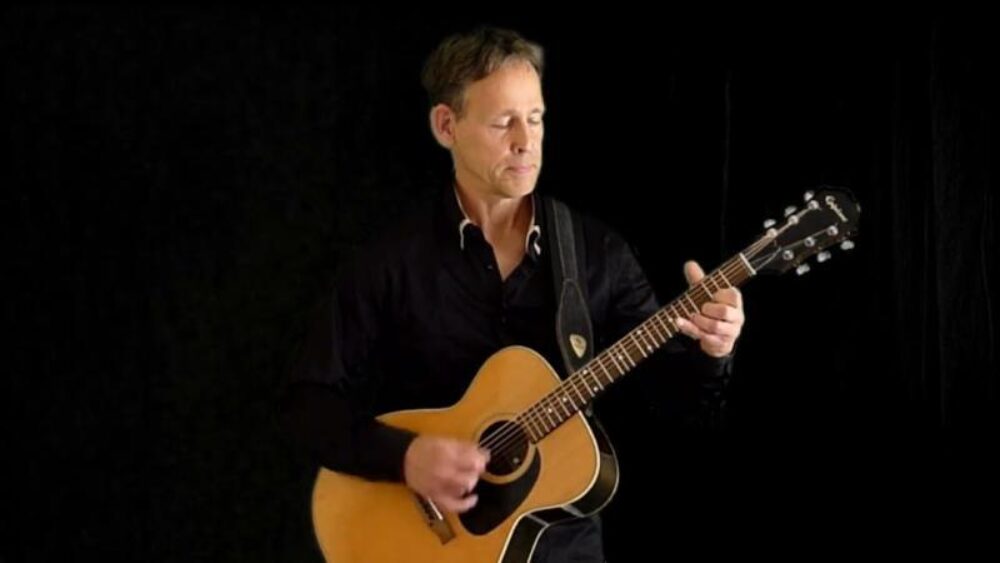
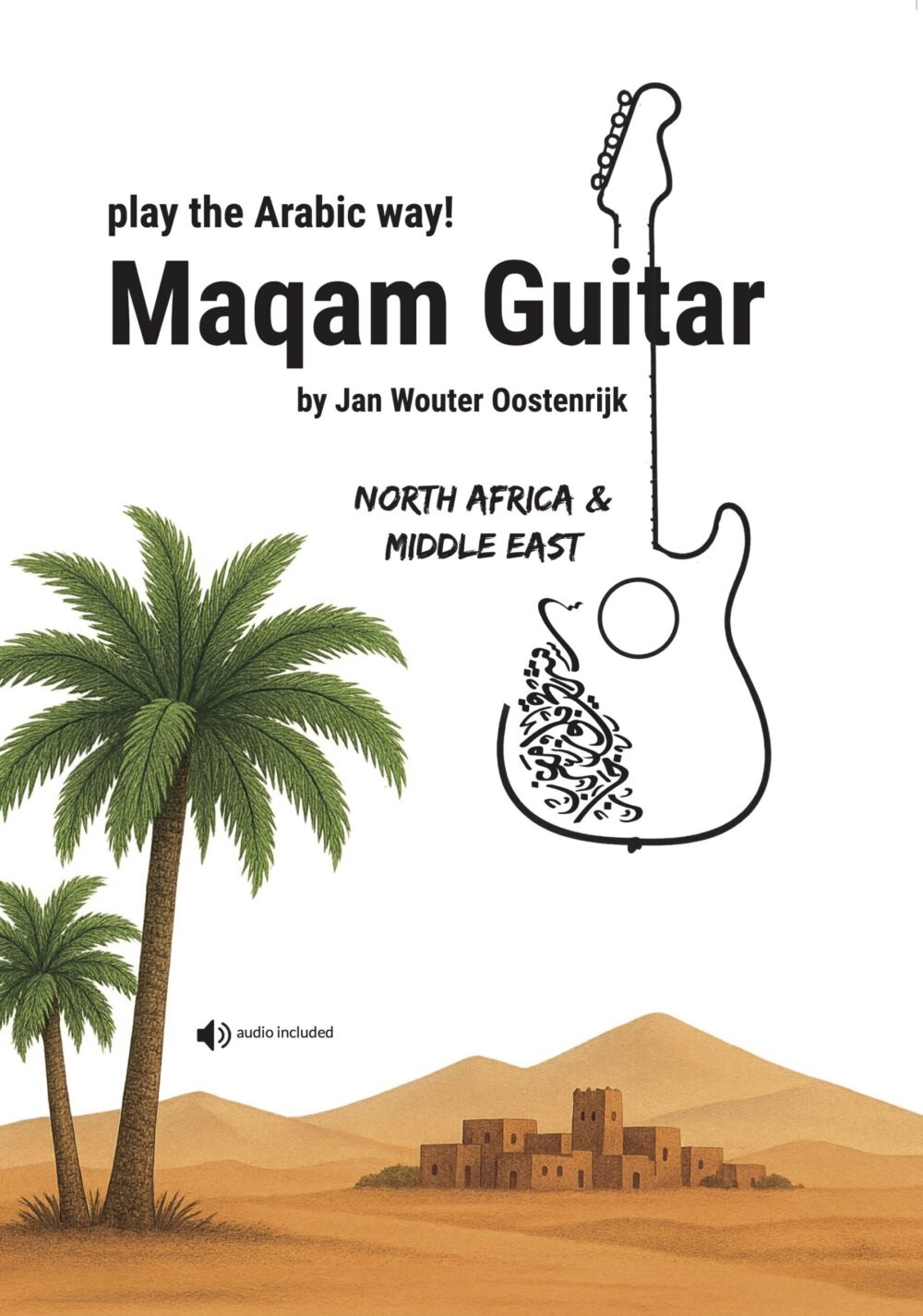
There are an infinite number of ways to play the guitar. It has to be one of the most versatile instruments ever imagined. Of course, as a guitarist, I have a bias, but truly, one never runs out of new guitar discoveries. In that quest, I recently heard from guitarist, educator and author Jan Wouter Oostenrijk in Holland, because he has recently published a book called Maqam Guitar. “Play the Arabic way!” says the tag line. But that’s no easy task. Arabic music works on the maqam system, an elaborate tradition of musical modes that use “quarter tones,” notes not found on a piano or guitar.
Oostenrijk has gone deep with this, to the point of building guitars with additional frets that allow him to play these maqams (in Arabic maqamat). That can be intimidating, but Oostenrijk starts the book out with pieces that you can play on any guitar. I learned the first one, an original composition called “Wahashtini,” and right away, I was drawn in. The book explains the maqams, shows both standard notation and guitar tablature, and provides QR code links to recordings of each piece. It is truly as welcoming entrée to a huge world of music.
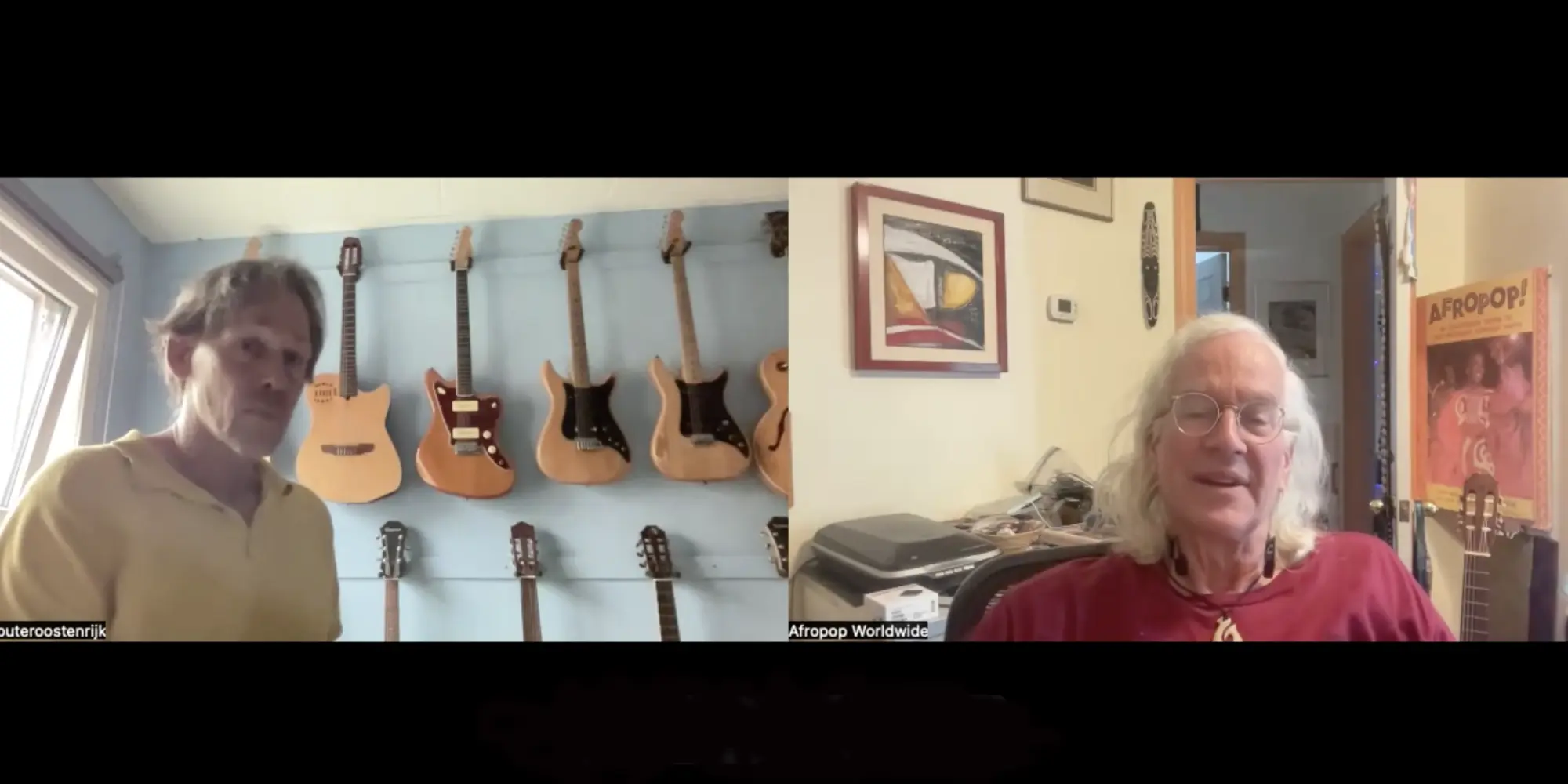
I reached Oostenrijk by Zoom in his studio in Amsterdam to learn how he came to do this remarkable work. Here’s our conversation.
Banning Eyre: I guess to start, you should tell me how you got into all this. What's your guitar history, and how did it lead to maqam?
Jan Wouter Oostenrijk: Well, actually, I'm coming from a classical music family so we were all educated with classical music. My sisters play oboe and they're singing and my parents make music, but it was more classically orientated. Then, when I became 13 or 14, I wanted to play electric guitar. In this period we had this New Wave and punk music like U2 and The Cure, The Sex Pistols… And I really got into that as a teenager. I played with a lot in bands. And then I thought, “OK, well, maybe I can make my profession of it.”
In Holland in this period, when I was 20, they started this conservatory for jazz music, and you could study on electric guitar. So my parents said, “OK, the electric guitar is fine. But then you have to do a study like this. It's better than just being uneducated.”
They required a disciplined approach.
So then I went to Amsterdam, which is a big city in Holland.
Ah. You didn't grow up in Amsterdam.
No, I'm from the north of Holland, from Groningen. So when I arrived in Amsterdam, I was just new in the city, and I knew nobody. I was in the metro, and I started talking with a guy with a keyboard. He appeared to be a Moroccan guy, and we started talking, and he said, “Oh, we have a räi band, North African räi music. And we're looking for somebody who can play electric guitar solos.” And I said, “OK, why not? Let's try.” I was interested in African music. And jazz also has a connection with Africa. So that was my start with a North African, Moroccan band. This was about 1990. Cheb Khaled was famous in that genre.
Yeah, yeah. I remember.
There were a lot of kids from the first immigrants who came to Holland to work here, and their kids, they started to play this music, and they had a lot of hits, and so I kind of became part of this Moroccan, North African scene. That's where my interest started. At first I was more of a jazz, blues, rock player that added this Western part in this North African music. And then later on I started to discover, “Oh, there's a whole system behind it. They have their own music theory, and their own instruments, and they have not only Cheb Khaled, but they have Umm Kulthum and big stars, like Michael Jacksons of the Arab world.”
Absolutely. Many of them.
And now, almost 40 years later, I’m still learning.
I would imagine. Once you get into maqam, it's pretty endless.
Say, this a side note, but do you know a Dutch guitarist in Amsterdam called Joep Pelt.
Yes, sure. I know him, yes. Very enthusiastic guy and I think he plays more like South African and West African music.
Right. I got to know him some 15-20 years ago when he was working with Malian musicians, but since then I see he's done a lot in South Africa. That all started when he was a kid playing delta blues. While you were doing punk, he was doing that. Well, we all come to these things through our different paths. So back to your story, once you had the interest and you realized there was this bigger world of maqam, how did you go about learning?
Yeah, so in the Arab world, even in the Western world, we have highly educated music, classical music, and we also have pop music. There's a kind of sense that, “Okay, pop music is more about feeling. You do it on intuition, and classical music you have to really study.” And we have the same kind of things with jazz music; you need some education to be able to follow these chord structures and all these bebop lines. So you have to study Arabic classical music, the legacy of Umm Kulthum and the big orchestras in order to understand the maqams and how to use microtones.
Räi is more in the direction of folk music with basic patterns and rhythms. It’s dance music. In the beginning when I started with räi, it was about parties and dancing and weddings and stuff. But I had done the conservatory myself, I already was good at reading and music theory. And I thought, “How come I didn't learn about these quarter tones at school?” Because when I went to the conservatory, I checked the whole library. I listened to all from Mozart to Charlie Parker and all these music and all these books, I studied them all, and nothing about microtones. And then I thought, “Oh, wow, there is even more than I found in the library of our conservatory.”
I'm talking about 30, 40 years back. So I noticed there was a gap in knowledge about each other's music and cultures. And that's when I even got more interested.
How did you go about studying? Did you have a teacher?
In beginning when I played in these Moroccan bands, it was more the street art. I learned, like the dirty words and cool licks. Street knowledge. Let's call it that way.
Sure.
Because when I played in this Moroccan band, I met other guys, and I noticed that even in this Arab world, most people don't know this theory.
It's high culture stuff. Most rock musicians don’t know Rachmaninoff.
Most of them just learn from the family to play these rhythm patterns, to play these melodies just by copying each other. Then one day I met a guy in Holland. His name is Jamil Al-Asadi. He's a qanun player from Iraq. Iraq and Egypt are both like the centers of this Middle Eastern culture. He also had a sister and they were really good in his maqam stuff. I took like 10 lessons with him, and then every lesson lesson we did just one maqam. There are a couple of maqams you can do on Western instruments, so we started with that.
Jamil Al-Asadi and Jan
Just like you do in your book.
Yeah, I use this for my book to start because I realized that if I started with this other microtone stuff, that I will not sell many copies.
I get that. I learned the first piece in your book. It's very nice, and it makes me want to learn more.
I'm happy to hear this.
So, okay, what happens when you get to the point where he wants to teach you a maqam that you don't have the notes on the guitar?
Yeah, that's where the challenge started. In that period, I played a lot of electric guitar, and I was good in bending, you know, like in blues. Sometimes in blues, you hear a little bit these microtones.
Sure, that's where that kind of sound comes from historically, Arabic music filtered through West Africa into American blues.
But in the blues context, there is not this maqam theory behind it. I thought, “OK, maybe I can find some ways to bend the strings.” And it works nicely. Once you have these pitches in your ear, you can bend to find them. But you will not be able to play the more fast passages. And then I thought, “OK, maybe it would be nice to develop a quarter-tone guitar.” They were not available in Holland.
Did guitars like that exist anywhere at that point?
Well, when I played with this Moroccan band, I saw some Moroccan guys, just adding a little fret, a tiny fret, as wide as one string. They just glued it to the fretboard of the guitar.
Okay, so they had kind of improvised a quarter-tone guitar.
And also when I traveled in Sahara, I saw these kinds of things. So that got my interest and, but it was not done in a professional way. It was just: okay we we have this note in our culture. This is the pitch we want and we just put an extra fret bit in there with a little bit of glue or a little piece of tape. Before I studied at conservatory, I studied engineering, fine mechanical engineering. So working with my hands and making things was not strange to me. So I thought, “Okay, maybe I have to do it myself and see if I can make some extra frets between the frets. So I started experimenting with that.
I tried playing with a fretless guitar, but then you lose a lot of sustain. You lose all the chord functions.
It's probably hard to be really precise with a fretless guitar too. That has to be challenging.
Yeah. So first I made a quarter tone guitar with too many frets. It was too complicated. And then I noticed, okay, Arab people don't play this music in every key, like in jazz music. They have just a couple of keys, like C, E and G, and you can apply these quarter tones in just these keys. So by the time I started to understand, there were other people busy with this. You have in the middle of the East a guy called Kamal Musallem. I mention him in the intro of the book. He is from Jordan, and he had a deal with Ibanez. So I wrote him asking him to send me one of these Ibanez oriental guitars, but I never got a reply. And then I started to do it myself. Later on, like10 years ago, I met him and he told me that this was only an experiment in the Middle East or the Far East, like in Indonesia and these countries. It was never available in the European markets.
Was the Ibanez version different than what you came up with in structure?
I added a few more frets, but it's more or less the same. And also, in the United States, especially on the West Coast, California, you have an interest in this EDO [Equal Division of the Octave] system. Do you know about that?
Does it have to do with getting rid of temperament, the system created in Bach’s time.
Yes. So the equally divided octave, you have 23 notes. So instead of 12 frets you have 23 frets, which in theory is also like quarter tones, but then you have them for every degree of your guitar neck. You know, these guys have 23 EDO, and 31 EDO, and then you have 18 EDO.
And the music probably sounds quite abstract, right?
It’s like progressive rock, this kind of stuff.
OK. Interesting.
But it's not it's not based on Arabic maqam series; it's more an interest in other tunings, so you can play eclectic music, and create other atmospheres than the usual minor and major structures.
I know that there are people who reject to the whole idea of temperament and they create instruments that don’t rely on it. I suppose this is related. But as you say, it’s more experimental than an actual musical system with a history.
In classical music you between 1920 and 1940 you had these modern electric classic composers who make really microtonal harmonies.
Yes. And I've encountered this in other forms in African music. I played for a while with a group that used a xylophone from Mozambique, timbila, and it has notes that are not on the guitar. It's not a system like maqam, but it is a certain tonality that they’ve developed. And are you at all familiar with a singer from Mauritania named Nora Mint Seymali? Her husband Jeich plays guitar and they have a unique microtonal system there. Jeich her husband is an incredible guitar player, and he told me that they have a system where they remove frets from the high part of the neck and put them in between the frets at the bottom so that they can play their scales. I don't think it's exactly based on the maqam system, although it's probably descended from that. If you go on YouTube and watch, you'll be interested in seeing this guy's guitar and the way he plays. He's quite impressive.
Well, actually it's interesting because also I was in Sudan and then when you go because all these countries like Morocco and Algeria, Tunisia, Egypt and also Sudan, they have this the influence of the Islam because the Arabs conquered there. I
It's back to history.
Yeah, yeah, and then if you go in Africa a little more in the south, you hear more pentatonic melodies. And then in some of these Bedouin musics from Sudan, but also in Mali, you hear this mixture between pentatonic music with quarter tones.
Yes, they put chromatic notes in. I've spent quite a bit of time in Mali with guitarists, and I am familiar with these things. It's very interesting. There’s an echo of the maqam system, but then integrated in their tonal systems. So, coming back to your story, when did you make your first quarter tone guitar?
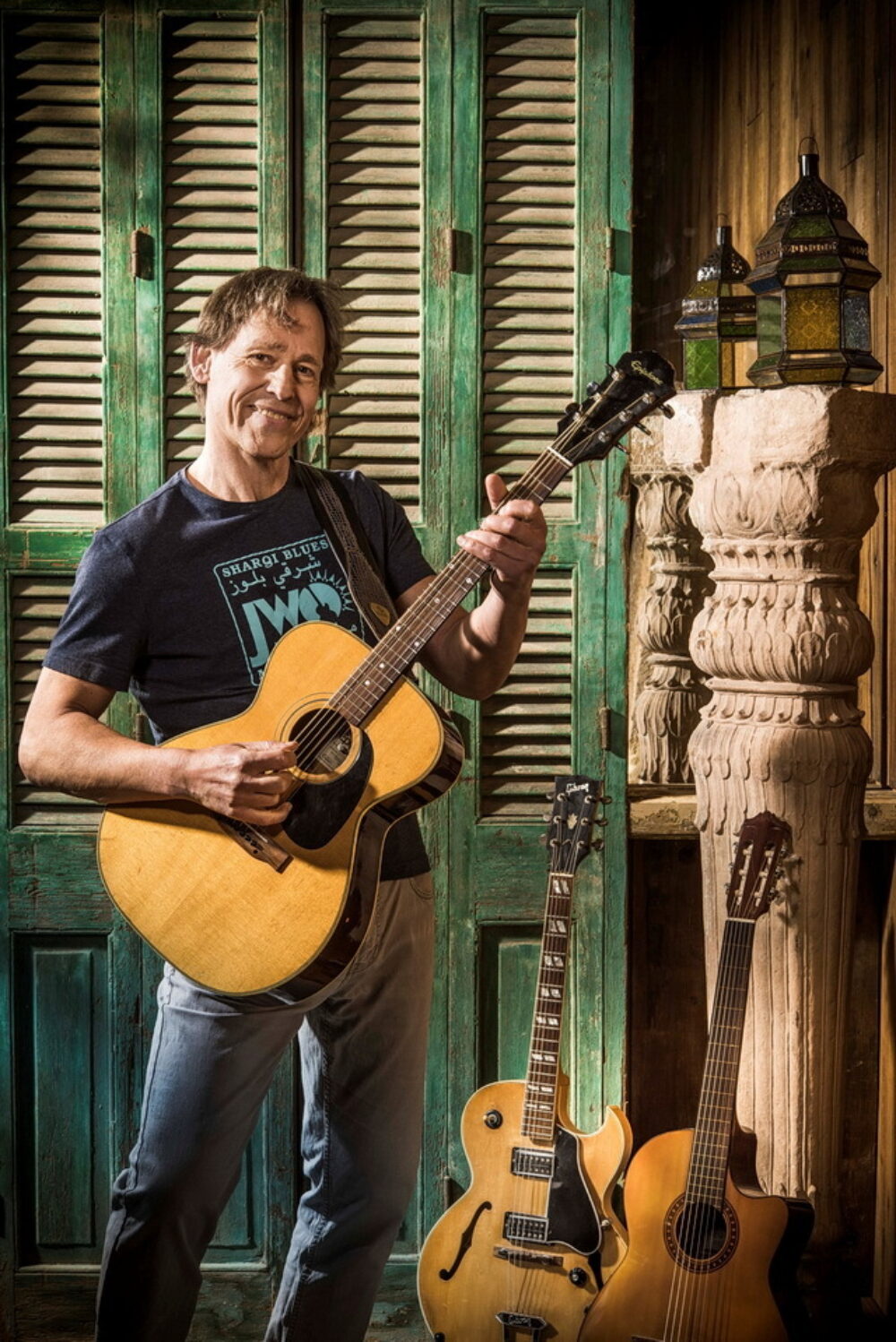
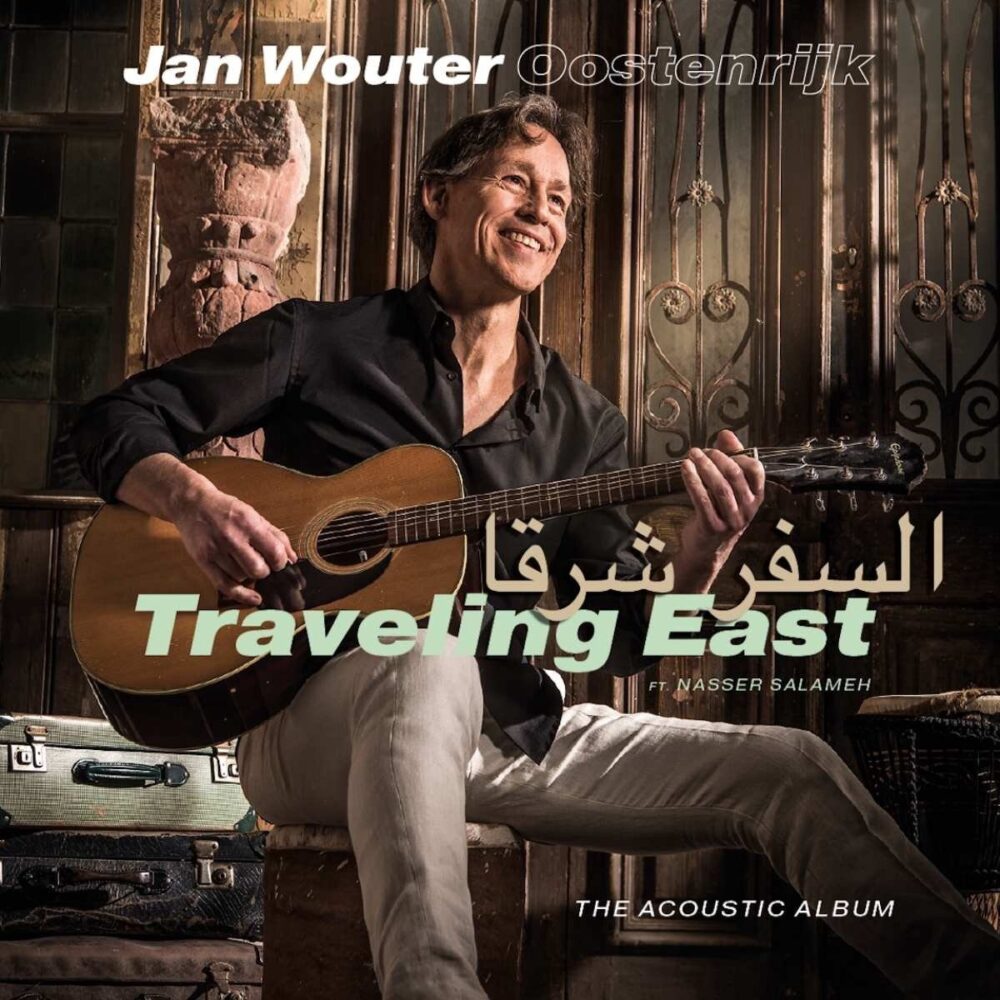
Let's see, I made an album in 2000 called Maghreb Jazz and then it was more on the jazz guitar with North African rhythms, and then I made Sharqi Blues. That was about four years later, still on the electric guitar more blues with the belly dance rhythms. Then I made an album called We Are Connected with the electric quarter tone guitar trio. That was the beginning of the quarter tone. This is the first album where I really focused on this quarter tone guitar. It was released in 2017.
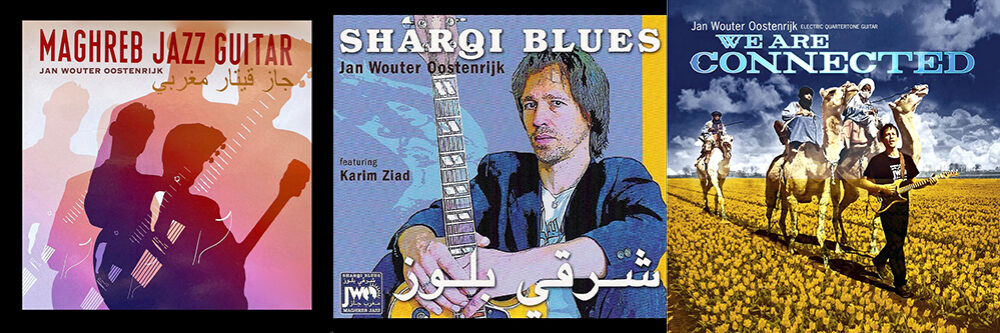
(You can listen to these albums on Spotify here.)
I can see over your shoulder a lot of guitars, some extra frets. You’ve got a nice collection there.
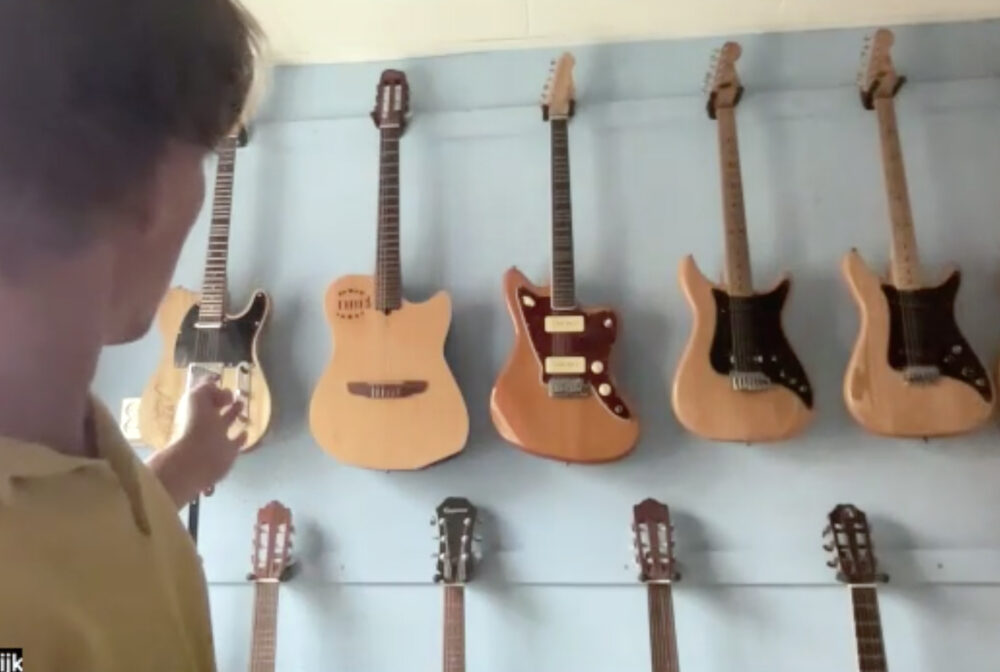
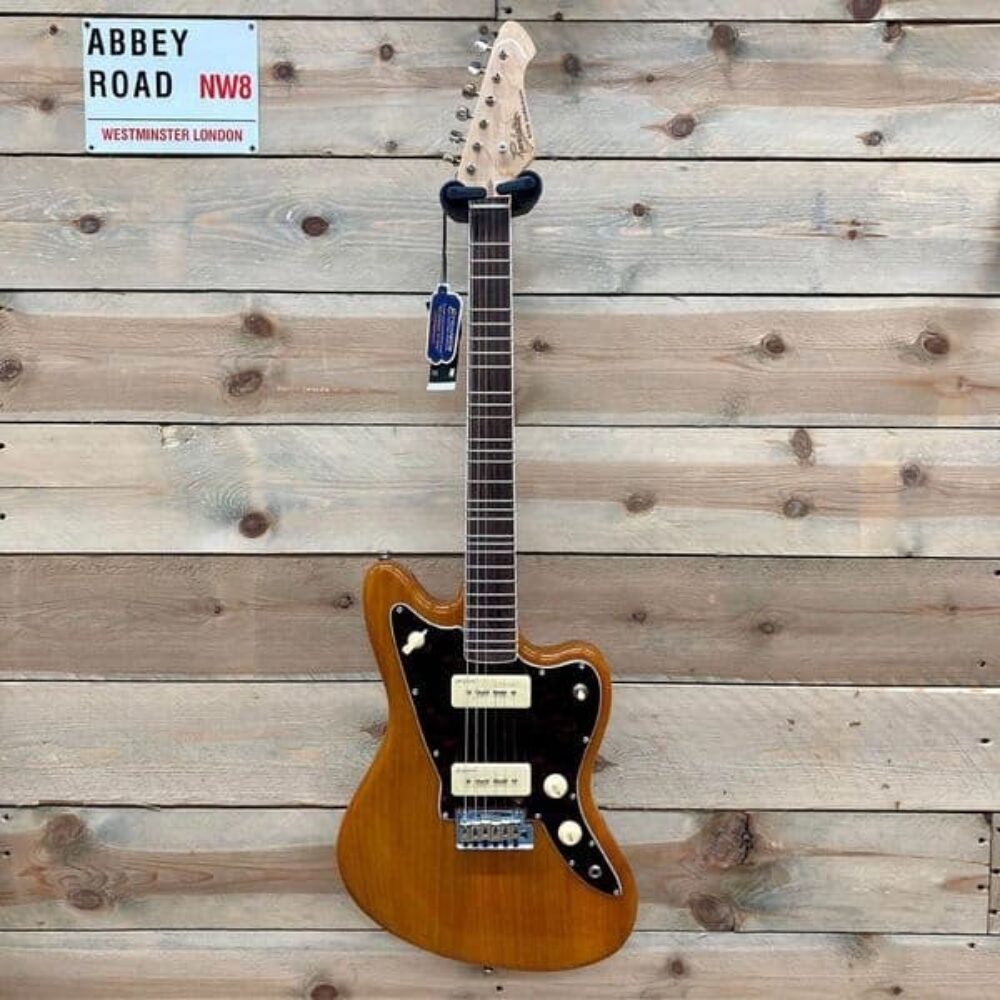
So this one is called the Fender Lead and this one I use for this We Are Connected. So the album was in 2017 but I already started in 2014 to develop this. Do you know this guitar?
I recognize the shape.
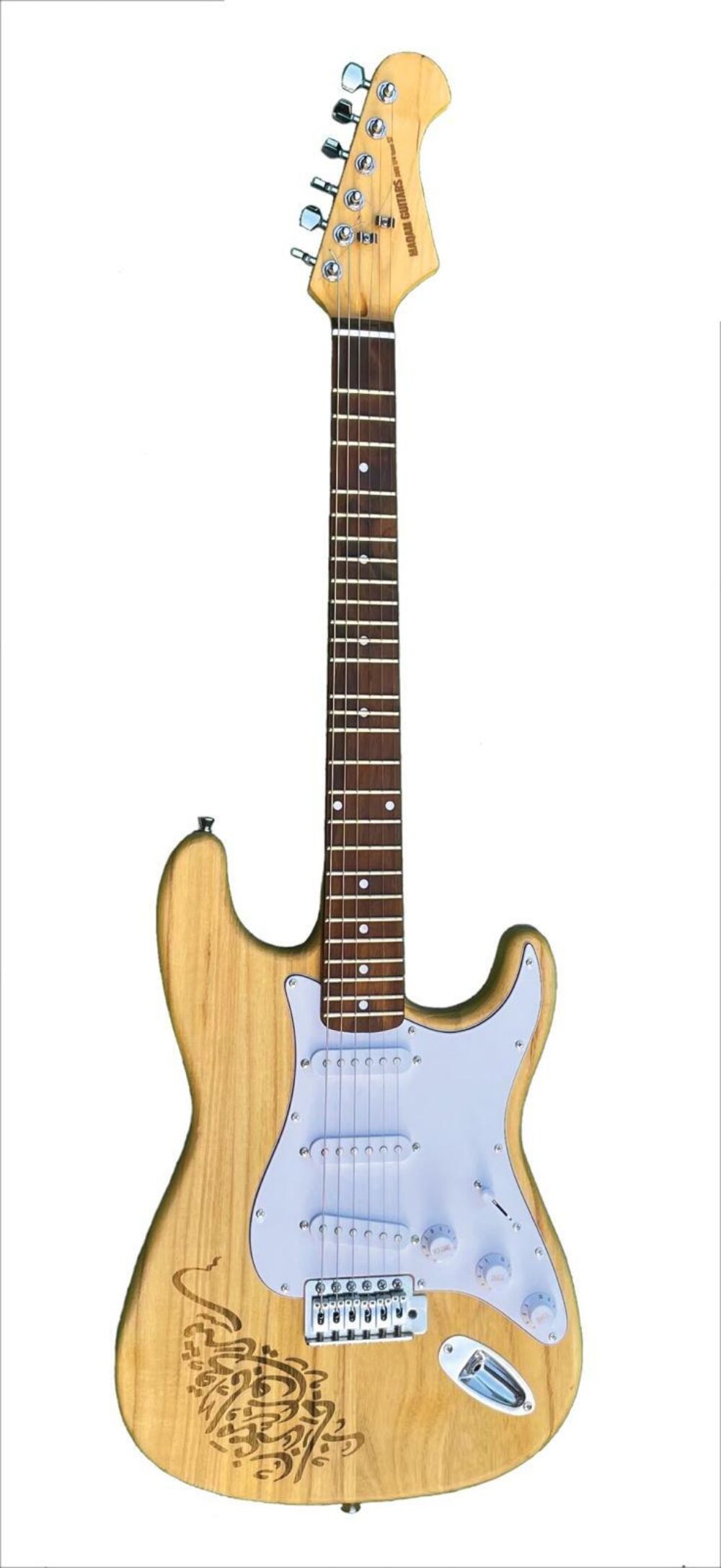
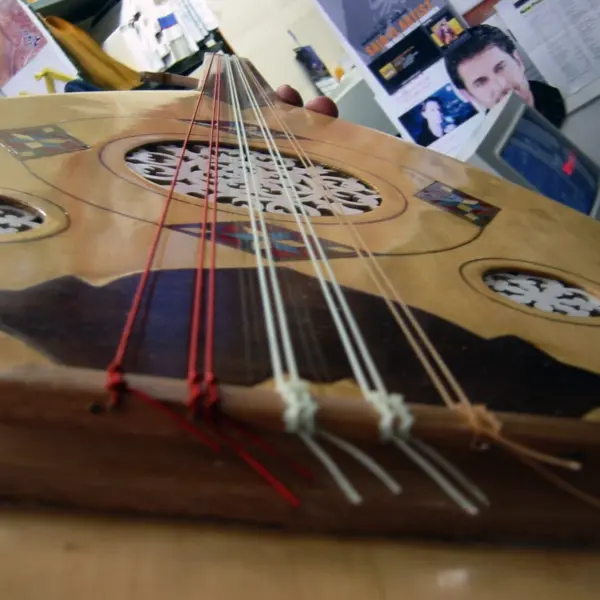
It’s like a Jazz Master but it's a model of the Revelation guitar, so they called it the Marrakesh Quarter Tone Guitar. This is actually the first one that was manufactured on a large scale. Then this one I developed myself. It’s like a Telecaster that I made myself from a Chinese “do it yourself” package. Then I made the Arabic graphics on it and a quarter tone neck.
Amazing.
(Jan filmed a demo for the Marrakesh Quarter Tone Guitar. Watch it here.)
And sometimes when somebody asks for it, I just make them one. Not on a large scale, but just when somebody requests it.
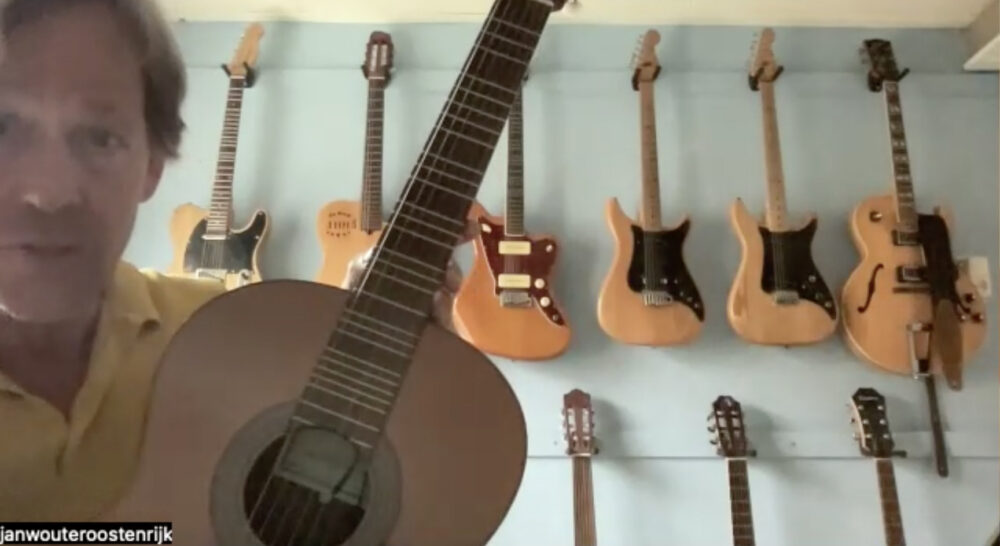
This one is also nice; it's a classical one. It's from Altamira Guitars an Australian American company. There's one other guy, a Spanish guy, Fernando Perez working with this. I mentioned him in the book. He does it more from the acoustic approach. He's not specialized in it, but he touches on it. He also does Turkish music and all these world music flavors
So slowly there are some more builders, guitar factories starting with these kind of things. And that's also why I thought it was good to make the book, because I see people are interested in these quarter tone guitars, but you see people struggle with how to play on it. I thought maybe the book would help people.
Sure. I don't think there's anything like it.
(For more on Jan's guitars and how to play them, check out his Maqam Guitar Blog.)
So this book is brand new, just out this year?
Yeah, a couple of months. I’m still working on the download version, which will be there soon.
Are the pieces in the book your own compositions?
Not all of them. Some of them are traditional, like really old folk tunes that used to be played on traditional instruments. They are the songs that everybody knows. So if you met a Turkish guy or an Arabic guy, you will mention this song, probably they will know it.
That's wonderful. I have that with Malian griot music. I know the traditional songs, so if I meet someone before I can play with them. That's a great thing to have that.
I didn't want to do that too much, because the Arab world is a bit conservative in a way that keep things always the same as they were. I like to involve European and Western people in this culture. So I thought it's also good to do some more jazz fusion pieces. And also there are these solo pieces. They were not developed for the guitar; they were developed for the oud or for the qanun, you know, for these classical Arab instruments. So I thought it was nice also to give the guitar more facets of the Arab culture because the guitar has so many possibilities.
It certainly does.
So it's a mix of tradition, a mix of crossover and some solo pieces that really focus on the guitar as an instrument in Arabic music. Because in Arabic music, the guitar is just used for comping for singers. You hear a little melody for the flavor, but we can do so much more nice stuff on the guitar.
So when you compose for this book, or when you're composing using one of the maqams, are you trying to somehow get close to what the traditional pieces would be like? Or are you just following your inspiration? What is your process for writing songs?
It depends on the song, because the first thing in the book was to become familiar with these maqams. You have families of maqams. Every maqam it has a basic name, a basic flavor, and from there you can make side paths to other maqams. So I thought every chapter of the book should be about one maqam so that you learn about these flavors and then I just took different pieces for every maqam. So one maqam is more traditional approach and in the other maqam I made my own composition. For example the one you did is more in the style of Umm Kulthum.
In another piece the “Blues in Rast,” it's more based on crossover between Blues and the Rast maqam. I introduced the structure of blues, you know, like the 1-4-5 progression
I look forward to doing more with this book. You've laid it out beautifully, and the way you have the recordings available online is very nice. You know, the way I got into this was through Afropop, our radio show, where we cover everything that touches on Africa. So at one point I ended up interviewing the oud and violin player Simon Shaheen. He was the one who really opened this whole world to me. He spoke about modulation, about how a lot of pieces combine maqams. He had done an album with an Indian musician, and in Indian music it's all about staying within your raga. You have lots of different paths through the raga, but you have to stay with that mode. Whereas for Simon, it was all about modulating between the different maqams, so they had to kind of figure out how to negotiate that. But once he explained that to me, I started to realize how unique that system is.
You mention Simon Shaheen now, and one piece in the book it's called the “Taksim Bayat.” When I started to study this music, I did a Masters in Middle East and improvisation, and I took one of the solos of Simon Shaheen, this “Taksim Bayat.” It was a piece of seven minutes and I made a transcription of it. It was meant for students. The taksim is the Arabic solo performance. He played it in a really good, qualitative, educational way, which is suitable for students. So I made a transcription of the whole thing. Then I started to play it on the quarter tone guitar. It took me like a year or so to play this whole thing. And then from there, I started to make my own taksim of it. But if you listen to this “Taksim Bayat” in the book, you still hear some influences of Simon Shaheen.
And also, he had another oud master from Egypt. I think it was Farid al-Atrash. All these oud players have the same legacy and they learn from each other, these lines.
Oh yes. Farid al-Atrash from Egypt. We did a program about the oud, which Simon speaks in. It’s called Journeys with the Oud, and Farid is there. Simon goes through a lot of the major oud players in that program.
He was popular and famous, especially of that generation.
You know, later this week, I'm going to speak to the Lebanese trumpet player Ibrahim Maalouf.
Yeah. Nice.
You know his father developed the quarter tone trumpet. I’ve been listening to his new album, which is wonderful. He's an interesting guy. Plays with everybody.
Yes, and also he does some shows with a guitar player only. By the way, did you see my blog yet? I’ve been developing that. So you have to book Maqam Guitar book, and now you also have the website maqamguitar.com. On this website, there's the blog section, so i'm trying to create a community there for people who are have interest with guitar and maqam trying to to connect them and see if i can get this to be more visible, you know?
Well, hopefully folks who read this will check it out. I think it will grow. I think this music is not well understood in general. But I know by the responses we've had to some of the Arabic music radio programs that people are kind of blown away when they start to understand it. It's a beautiful thing. For me, just playing that first piece, I can sort of feel the guitar sounding a little like an oud. I can see people like me getting hooked on that. My whole journey has mostly been about African guitar. I've always been interested in the way people with older traditions take the guitar and change the way they play it, the way they tune it or whatever, in order to play their own music on it.
I understand this trip because I also I like Ali Farka Toure. Very cool stuff.
With African music, so much is about rhythm, the subtleties of how you phrase things. Mande music sounds different from Bambara music or Songhai like Ali Farka’s. I don't know if you've checked out any of the guitars of Madagascar. That's another whole crazy world of guitar music. It's endless. But I salute you for opening this avenue, because it's a great service to guitar players.
Yeah, I hope it will inspire some people, because I live in Amsterdam, you know, and I see so many people having trouble understanding other cultures. It’s always about Arabs and it's about Muslims, and of course there's the language problem, but once you understand the culture better, it's easier to relate.
And music is such a powerful way to open those doors and give people that perspective.
Absolutely. That's it.
Well, I hope I'll make it to Amsterdam one of these days, and we can meet in person. Thanks so much for this, and best of luck with the book and the website.
Thank you.
Related Audio Programs
Journeys with the Oud
Related Articles