Kossi Mawun: Jazz Courageous
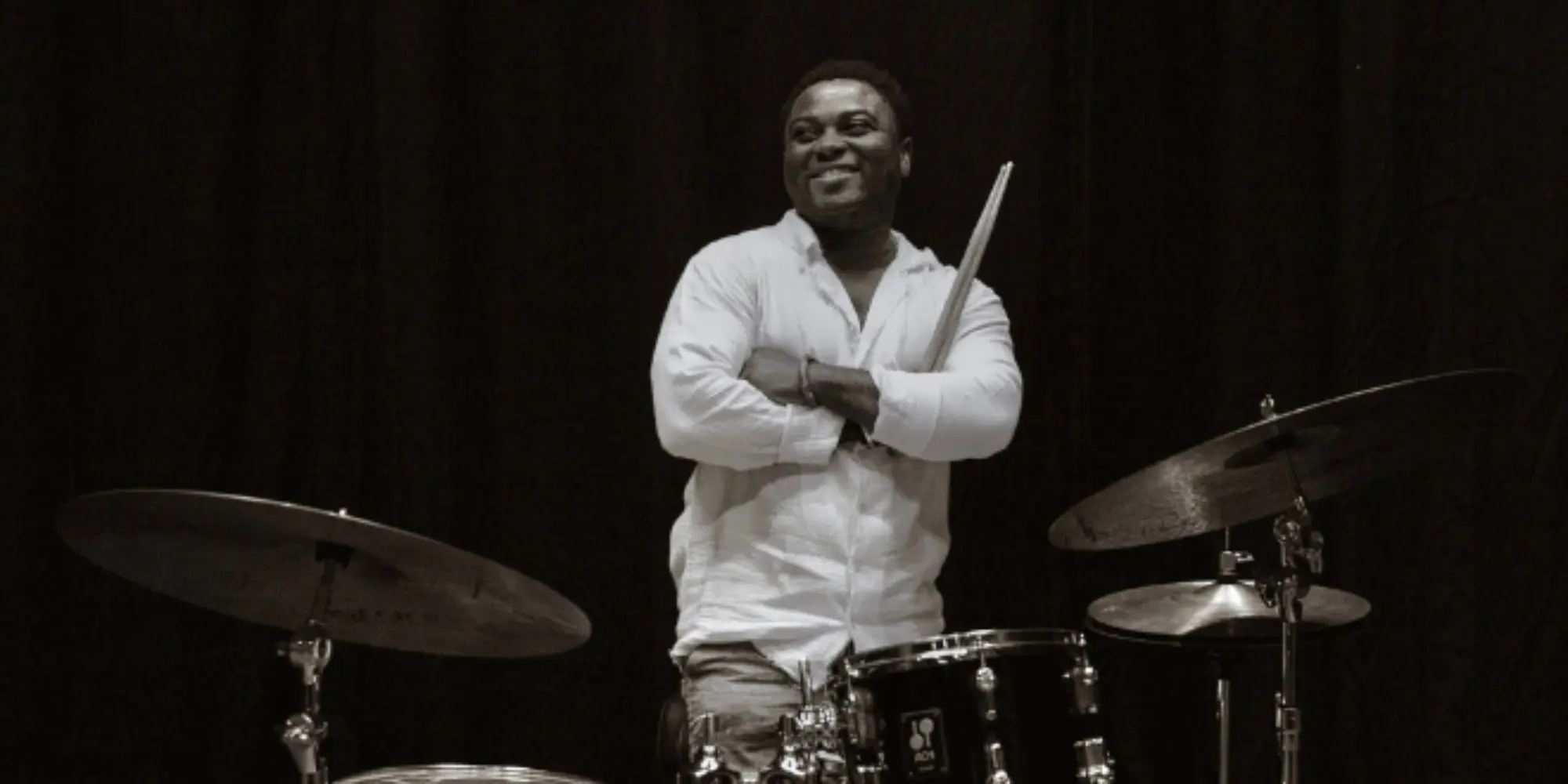
The journey of Kossi Mawun, from the impoverished country of Togo to a global showcase at the 20th anniversary Jazzahead conference in Bremen, Germany, begins like many stories: with a boy and a drum.
Mawun began playing the traditional drum in the capital city of Lomé in the late 1980s, in church and in a brass band. Growing up, he was hearing traditional Voudou music of his Watchi tribe along with the popular music of his country, and Western pop, rock and reggae music. Then at 20 years old, by fate or chance, he met Dano Ella, a bass player from Cameroon, at a recording session that Mawun had been hired to play percussion.
“He saw something in me,” Mawun recalls, “and gave me some records. It was my first time to hear this music—Billy Cobham, George Benson, Miles Davis, Max Roach and others. He was the one who turned me on to jazz. Immediately I wanted to figure out how to play it. When I heard Billy Cobham on the drum, it was a revelation. I didn't know if it was a spiritual thing, but I felt a connection with this kind of music, in my heart. And I started to listen to this music every day, every day.”
And while Dano, who became a kind of mentor to Mawun, was able to teach him some basics, he would need a drum kit—something he couldn't afford. “So I would set up things on a table,” Mawun demonstrates with paper napkins on the table we're sitting at. “This would be the snare. This would be the tom. This would be another tom. And then I used broomsticks. I would listen to Billy Cobham, trying to copy what he was doing, every day.” He laughs, “So I learned to play drums without drums.”
“There was a jazz club in Lomé,” he recalls, “the Mandingué Jazz Club, but it's closed now. Dano would take me there and I would just sit and watch. But then it was four years of practicing at home before they told me I was good enough to play.”
Meanwhile, he was becoming recognized as a premier percussionist and landed a gig with the most well known band in the country, Toofan.
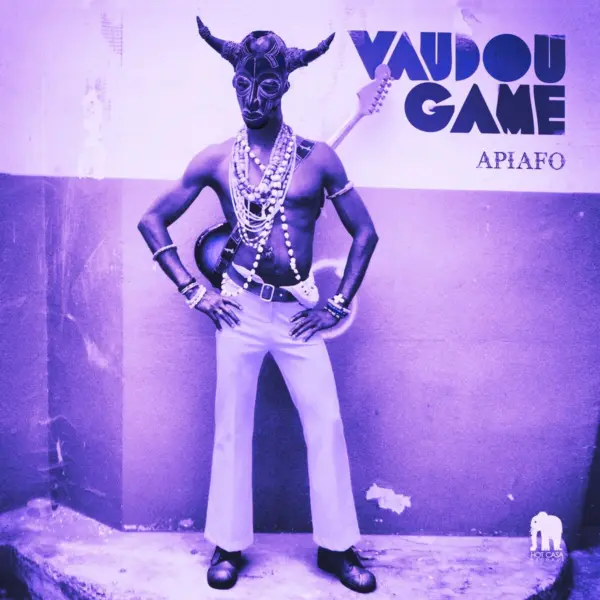
He was also getting gigs on recordings, including playing percussion on French-based afro-funk band Vaudou Game's 2018 album, Otodi. (Vaudou Game's founder, Peter Solo, is also Togolese.)
But the opportunity to play jazz in Togo was very minimal. “Life for a jazz musician in Togo,” Mawun explains, “is very, very difficult. You don't have any jazz clubs and people are not very interested in jazz music.” But it didn't deter him or quash his dream.
Then fate, or chance, enters the picture again. “I was invited by a Congolese sound engineer to just play percussion for a movie soundtrack,” he recalls. “And when the engineer heard me play, he said I was talented and if I could find some money, he'd record a jazz album for me. This was my dream. So I applied for grants and eventually brought together a pianist and a saxophonist to record my first album. And so, I became the first Togolese musician to release a jazz album.”
The album, titled Wedo, means “rainbow” in the Mina language of southeast Togo. As mentioned, Mawun is self-taught, so his technique of drumming is very much his own. He is also heavily influenced by traditional Togo drumming, and specifically drumming used in Voudou rituals.
“I see it as spiritual jazz,” Mawun says. “You will definitely hear the traditional rhythms. The rhythms come from my tribe, the Watchi. It's a mix as well of Hausa that began in Niger and then came into Ghana then moved to Togo. It's called brekete. Also rhythms of Agbadja. It's traditionally used for the ceremonies and spirituals.” He adds that while his jazz is based on “American jazz,” he brings his ancestral identity directly into it. Every composition he writes, he believes comes to him as a message from the spirit realm, such as the divinity known in Yoruba as Sakpaté. “When I play the music, it is always connected to the spiritual and the ritual. My music is a tribute to my ancestors. It's always about that, a way to invoke my ancestors and pay tribute to them.” So Mawun is not just borrowing rhythms, but it is directly connecting him to ancient rituals.
Wedo was recorded in 2019 and unfortunately saw its release just as COVID-19 descended on the world. “And so it wasn't until 2023, when the French Institute in Lomé launched a big festival with music, theater, dance, and I was selected to play at three different venues. So it was the first time I was able to play with this band and showcase the album. The French Institute director told me I was very courageous, because of the 20-year journey to pursue my dream.”
These encouragements gave Mawun the drive and help to move forward. In June 2025, he was invited to play outside of Togo for the first time at the Jazz and World Music Festival of the French Institute in Accra, Ghana. And his sophomore album, Culte, was released in July 2025.
On this track you can hear the voice of a woman from the countryside that Mawun first heard at a Voudou ritual. He fell in love with her voice and later, approached her and asked if he could record her for the album. She agreed under the circumstances that she couldn't just come in and sing, but that it had to be a part of a ritual. So when she arrived at the studio, she performed a ritual ceremony asking permission from the gods do allow this. After she left, the trio built the song around her voicings.
The year 2025 also took him to Senegal to showcase at the Dakar Music Expo (DMX). There, Mawun explains, he met Götz Bühler, the artistic director of Jazzahead, “who was with a delegation from the European Jazz Network and told me I could submit our project. And that's how we got here.”
The audience at Jazzahead we absolutely thrilled by Mawun's set, as were we. When asked what's next, Mawun proudly answered: “I want to play all around the world.” We feel pretty confident that he will continue to do so for many years to come.